
Desserts
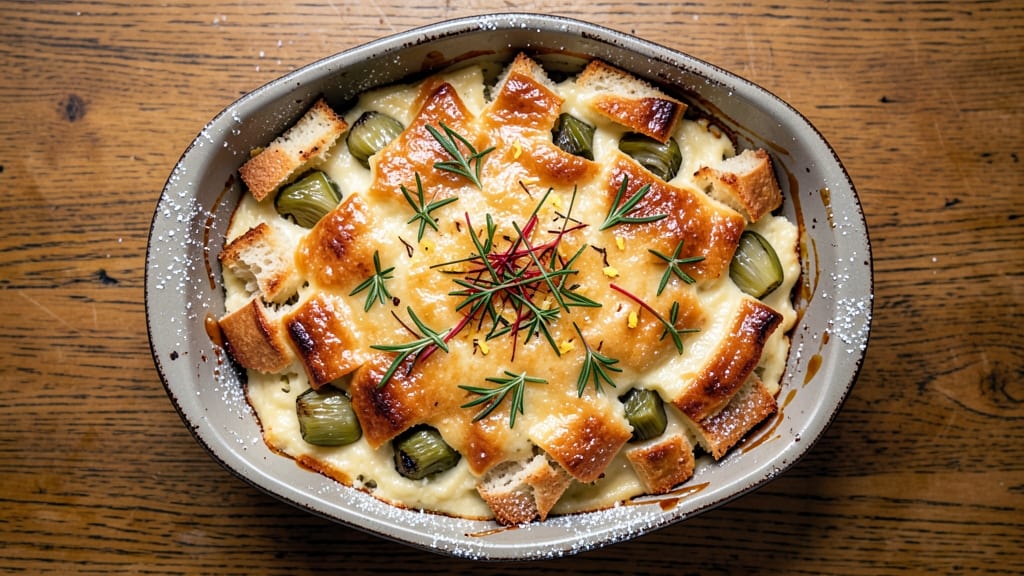
This artichoke bread pudding recipe redefines dessert by blending savory artichoke heart richness with the comforting warmth of vanilla-infused custard. The magic happens when toasted bread cubes soak up a creamy egg-milk mixture, while artichokes and fresh herbs add an unexpected Mediterranean twist that keeps every bite interesting.
I developed this recipe after realizing how little we explore savory desserts—until now.
The key to perfect texture lies in the balance: staling bread just enough to absorb moisture without turning mushy, while baking until the top is golden and the custard sets to a silky finish.
Fresh herbs like rosemary or thyme elevate the artichoke flavor, while a touch of lemon zest brightens the sweetness. This isn't your grandmother's bread pudding—it's a sophisticated dessert that feels indulgent yet light, with just 30 minutes of active prep followed by 45 minutes of hands-off baking.
What you'll end up with is a dish that surprises and satisfies: crisp edges framing a velvety custard filled with tender artichoke hearts and herbaceous notes. The aroma alone will have your kitchen smelling like a Mediterranean bistro, while the first bite delivers that perfect harmony of savory and sweet.
This recipe proves desserts can be creative without sacrificing comfort.
Serve warm with a drizzle of honey or a sprinkle of flaky sea salt to enhance the flavors, or offer it as a make-ahead dessert that reheats beautifully.
The possibilities for customization are endless—add goat cheese for tang, swap artichokes for roasted garlic, or top with toasted nuts for crunch. Let's create something unexpected together.
Ingredients for artichoke bread pudding
Fresh herbs and artichokes transform simple bread into a Mediterranean-inspired dessert masterpiece.
| Ingredient | Amount | Notes |
|---|---|---|
| Stale Baguette 🍞 | 8 cups | Cubed, 1-inch pieces preferred |
| Fresh Artichoke Hearts 🥬 | 1 cup | Chopped, jarred or fresh |
| Large Eggs 🥚 | 6 whole | Room temperature preferred |
| Whole Milk 🥛 | 2 cups | Full-fat for creaminess |
| Granulated Sugar 🍚 | ½ cup | Adjust to taste |
| Pure Vanilla Extract 🍯 | 1 tbsp | High-quality preferred |
| Fresh Rosemary 🌿 | ¼ cup | Chopped, stems removed |
| Lemon Zest 🍋 | 1 tbsp | From 1 medium lemon |
| Unsalted Butter 🧈 | ½ cup | Melted, for topping |
| Flaky Sea Salt 🧂 | ½ tsp | For garnish |
| Honey 🍯 | ¼ cup | For drizzling |
| Ground Cinnamon 🌶️ | ½ tsp | Optional, for warmth |
The bread is the foundation—stale baguette works best, but any crusty loaf will do. Look for fresh artichoke hearts at Trader Joe's or Whole Foods—jarred ones are convenient, but fresh ones have more flavor. Rosemary is key here; farmers markets often have fresh sprigs at a fraction of the grocery store price. If you can't find fresh, dried rosemary at one-third the amount works in a pinch. The lemon zest should be vibrant yellow—zest more than juice—so grab a bright lemon if possible.
No fresh rosemary? Thyme or oregano are great swaps, though rosemary's piney note is ideal. Skip the artichokes? Roasted garlic or sun-dried tomatoes add savory depth. For a sweeter touch, add chopped dates or dried figs to the bread cubes. The honey should be liquid at room temperature—raw honey adds extra depth. If you can't find flaky sea salt, Maldon or Jacobsen are solid brands, but any good-quality salt will work. Need to make this ahead? The bread cubes can be prepped 1 day ahead and stored in the fridge.
This keeps beautifully for 3 days in the fridge, covered tightly. Reheat at 350°F for 15 minutes until warmed through. For a restaurant-worthy finish, broil for 2 minutes at the end to get that golden crust. Leftovers? Portion into single servings—perfect for quick breakfasts or dessert reheats. The flavors actually improve overnight as everything melds together.
Why You'll Love This Recipe
- No Waste Magic: I swear by this trick—turning yesterday’s baguette into something golden and irresistible. No need to buy fresh bread or toss out leftovers; just tear, soak, and bake.
- Unexpected Richness: That artichoke heart tang cuts through the sweet custard like a bright, herby surprise. The milk and eggs make it creamy, but the artichokes keep it from feeling too heavy—like a fancy dessert with a secret savory twist.
- Weeknight Crowd-Pleaser: I’ve served this at dinner parties and family dinners—no one ever guesses it’s bread pudding until the first bite. The texture’s addictive: crispy edges, custardy center, and those tender artichoke pockets.
- Budget-Friendly Luxury: Eggs, milk, and a stale baguette? This costs pennies to make but tastes like you spent hours. Plus, leftovers reheat perfectly—my go-to for breakfast the next morning.
Instructions for artichoke bread pudding with savory-sweet harmony
Here's how to transform stale bread and artichokes into a rich, comforting dessert with perfect texture every time.
Prepare the Artichoke and Herb Mixture
In a large bowl, combine the 1 cup chopped fresh artichoke hearts with the 0.25 cup chopped fresh rosemary and 1 tablespoon lemon zest. This trio creates the perfect savory-sweet base. I like to press the artichoke hearts with my fingers to break them down slightly—this ensures they blend seamlessly into the custard later. Add the 0.5 cup granulated sugar and 0.5 teaspoon ground cinnamon (if using) and toss everything together until evenly coated. The sugar will begin caramelizing the artichokes right in the bowl, intensifying their natural sweetness.
Set this mixture aside while you prepare the bread cubes. The artichokes will soften slightly as they sit, which helps them absorb the custard better during baking. If you're using jarred artichoke hearts, drain them well first—excess moisture makes the bread pudding soggy instead of custardy.
Assemble the Bread Pudding Layers
In a separate large bowl, whisk together the 6 whole large eggs, 2 cups whole milk, 1 tablespoon pure vanilla extract, and 0.5 teaspoon flaky sea salt. The eggs should be at room temperature for the smoothest texture—if they're cold, whisk them vigorously for about 1 minute to warm them slightly. This mixture forms the custard base that will soak into every bread cube.
Now, gently fold the artichoke-herb mixture into the egg-milk combination. Be careful not to overmix—just combine until the artichokes are evenly distributed. In a 9x13-inch baking dish, arrange half of the 8 cups stale baguette cubes in an even layer, then pour half of the custard mixture over them. Repeat with the remaining bread and custard, pressing down lightly to ensure all cubes are saturated. This layering creates that signature bread pudding texture—tender custard pockets surrounded by crispy edges.
Bake Until Golden and Set
Preheat your oven to 350°F while you prepare the pudding. Once assembled, bake uncovered for 45-50 minutes until the top is deep golden brown and the edges are set but still slightly jiggly in the center. Here's the thing—bread pudding should look almost underdone when you take it out. It continues cooking as it rests, and you want that perfect custard texture, not a dry one.
About 10 minutes before the pudding is done, broil it for 1-2 minutes to achieve that beautiful caramelized crust. Watch it closely—broilers can be aggressive! The moment the top turns golden and slightly crisp, remove it from the broiler and let it cool for 5 minutes before serving. This resting period allows the custard to fully set while preventing a runny center.
Finish with Butter and Honey
While the pudding rests, melt the 0.5 cup unsalted butter in a small saucepan over low heat. Once fully melted, brush this golden butter generously over the top of the warm bread pudding. The butter will seep into the crust, adding richness and helping to create that perfect balance between savory and sweet.
Drizzle the 0.25 cup honey evenly over the butter in a zigzag pattern. The heat from the pudding will make the honey glaze slightly, creating a beautiful sheen. Let it sit for 2-3 minutes before serving so the honey can partially absorb. Each bite should deliver tender bread soaked in velvety custard, bright artichoke flavor, and a perfect contrast of crispy edges and creamy centers.
Serve Warm with Vanilla Touches
Slice the bread pudding into 4 equal portions (since this recipe serves 4) and serve immediately. The contrast of warm, custardy pudding with the cool honey glaze is what makes this dessert truly special. I like to add a dollop of whipped cream on the side for those who want extra richness, or a sprinkle of extra flaky sea salt to enhance the flavors even more.
This bread pudding keeps well in the refrigerator for 3-4 days, but I promise you won't have any leftovers. The artichokes add a unique texture and subtle bitterness that cuts through the sweetness beautifully, making this a standout dessert that's perfect for brunch or a special dinner treat.
Pro Tips For Making Artichoke Bread Pudding
- TOAST THE BREAD: Cut the baguette into 1-inch cubes, toss them in a dry skillet over medium heat for 3-4 minutes until golden and crisp in spots. This step prevents a gummy pudding—trust me, I’ve made the soggy version, and it’s a crime.
- CHOP ARTICHOKES SMALL: Quarter the artichoke hearts and slice them into thin half-moons before folding them into the batter. Larger chunks sink to the bottom and leave you with a pudding that’s heavy on one side. Even distribution is key.
- DON’T OVERMIX THE BATTER: Stir the egg-milk mixture just until the bread cubes are lightly coated—lumps are fine. Overmixing makes the pudding dense and rubbery, and nobody wants that. Think "just combined," not "fluffy pancake batter."
- BAKE UNTIL GOLDEN: Pull the pudding from the oven when the top is deep golden brown, not just lightly toasted. If it looks pale, crank the oven to 375°F and broil for 2-3 minutes—just watch it like a hawk to avoid burning. That crust is what makes it worth it.
Troubleshooting perfect results
Soggy Bread Fix
If your bread pudding turns out soggy instead of custardy, the issue is almost always excess moisture. First, ensure your stale bread cubes are properly dried—pat them with a paper towel before assembling. I also recommend using jarred artichoke hearts (well-drained) rather than fresh, as they release less moisture.
For an extra insurance policy, sprinkle ½ cup uncooked instant rice or ½ cup crushed cornflakes over the bottom of your baking dish before adding the bread mixture. This creates a dry base that absorbs excess liquid during baking. 💡
Undercooked Center
An undercooked center happens when the pudding isn't baked long enough or the oven temperature fluctuates. Always use an instant-read thermometer to check the internal temperature—it should reach 160°F at the center.
If your pudding feels jiggly when you take it out, return it to the oven for 5-10 minutes at 325°F until set. For even cooking, place your baking dish on the middle rack of the oven, where heat is most consistent.
Preheating the dish for 10 minutes before adding the mixture also helps with even heat distribution.
Artichoke Flavor Disappears
If the artichoke taste fades, you likely didn’t incorporate them properly into the custard mixture. Chop the artichokes finely (about ¼-inch pieces) so they distribute evenly. Toss them with 1 tablespoon lemon juice before mixing into the custard—this brightens their flavor and prevents them from sinking to the bottom.
For extra depth, fold in 1 tablespoon chopped fresh parsley along with the artichokes. If using jarred artichokes, rinse them under cold water to remove any preservatives that might mute their taste. 🌿
Custard Too Thin
A runny custard usually means the eggs weren’t cooked long enough or the milk was too hot when mixed. To thicken it up, whisk 1 extra egg yolk into the custard mixture before baking.
For a firmer texture, reduce the milk slightly by simmering it for 2-3 minutes before mixing with the eggs. I also recommend baking at 325°F instead of 350°F—the lower temperature allows the custard to set more gradually.
If the pudding is still too thin after baking, broil it for 1-2 minutes at the end to help it firm up.
Bread Not Browning
For a golden crust, don’t skip the butter topping—it’s essential for browning and flavor. Brush the top generously with melted butter twice: once before baking and again 10 minutes before the end. For extra color, sprinkle ¼ cup breadcrumbs or crushed pistachios over the butter before baking.
If your oven runs hot, reduce the temperature to 325°F and bake for 5-10 minutes longer. A light broil for 1-2 minutes at the very end will give you that perfect caramelized finish without burning. 🔥
Herbs Burn Before Baking Finishes
Fresh herbs like rosemary can burn if exposed to direct heat too long. To prevent this, fold them into the bottom layer of bread cubes rather than the top. For extra protection, cover the pudding loosely with aluminum foil for the first 30 minutes of baking, then uncover to broil.
If you notice the herbs darkening too quickly, reduce the oven temperature to 325°F and extend the baking time by 5-10 minutes. Dried herbs are a safer bet if you’re worried about burning—use ½ teaspoon dried rosemary instead of fresh for the same flavor intensity.
Nutrition facts
Frequently asked questions
Can I make this artichoke bread pudding without fresh artichoke hearts?
Jarred artichoke hearts work perfectly—just drain them well to avoid excess moisture. For a more intense flavor, rinse them under cold water first to remove any preservatives. If you can't find artichokes at all, try roasted garlic or sun-dried tomatoes for a similar savory depth. The key is balancing that earthy flavor with the sweet custard.
How do I keep the bread from getting soggy?
Use properly stale bread (at least 2-3 days old) and pat the cubes dry with paper towels before assembling. For extra insurance, sprinkle ½ cup crushed cornflakes or uncooked instant rice on the bottom of your baking dish first. This creates a dry base that absorbs excess liquid during baking. Also, avoid overmixing the custard—just fold gently to maintain texture.
Can I make this ahead of time?
Yes! Assemble the bread pudding up to 24 hours ahead and refrigerate uncovered. When ready to bake, add 10-15 minutes to your baking time (about 55-60 minutes total). The flavors actually improve overnight as everything melds together. For best results, bring it to room temperature before baking to ensure even cooking.
What's the best way to reheat leftovers?
Reheat at 350°F for 15 minutes until warmed through. For a restaurant-quality finish, broil for 1-2 minutes at the end to restore crispiness. Store leftovers in an airtight container for up to 3 days. The texture holds up well when reheated properly—just avoid microwaving, which can make it gummy.
How can I make this version sweeter or richer?
For extra sweetness, increase the sugar to ¾ cup and add ½ cup chopped dates or dried figs to the bread cubes. For richness, substitute half the milk with heavy cream, or fold in ½ cup whipped cream before baking. A sprinkle of toasted nuts (like pistachios) on top also adds texture and depth.