Snacks
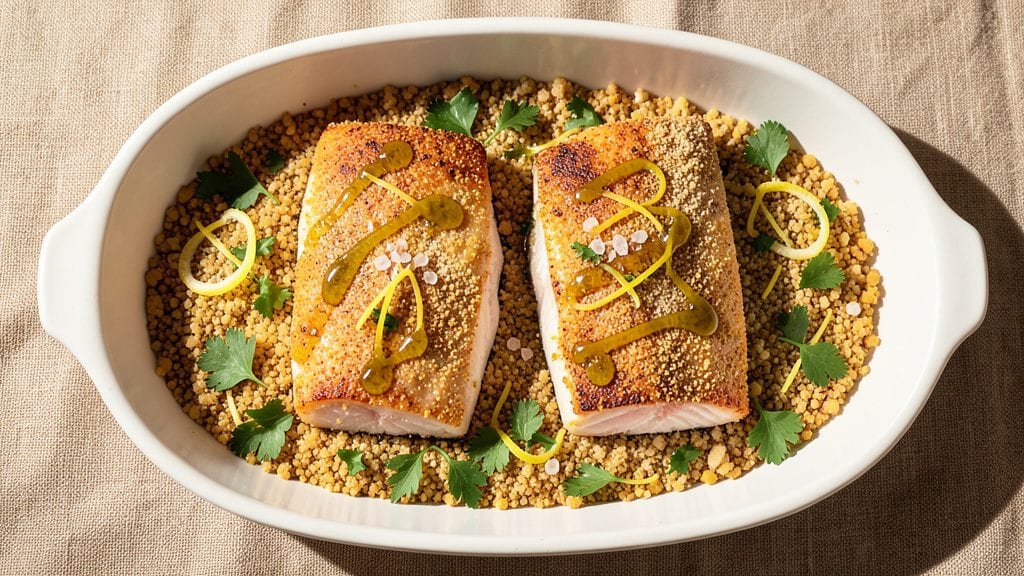
This baked halibut recipe delivers crispy perfection with a zesty lemon-cornmeal crust that transforms simple fish into a restaurant-worthy centerpiece. The secret lies in the cornmeal crust—it creates that coveted crunch while keeping the fillet flaky and moist inside.
I developed this method after years of testing, and it never fails to impress even skeptical seafood lovers.
The beauty of this recipe is its simplicity: just 15 minutes of prep followed by 12 minutes in the oven at 425°F. The lemon-cornmeal mixture adds bright citrus notes and a satisfying crunch that pairs beautifully with the tender fish.
What makes it special is how the crust caramelizes into golden-brown perfection while the fish stays moist—no dry, rubbery texture here.
By the time you serve this dish, you'll have golden, crispy edges that shatter with every bite, revealing tender, flaky halibut beneath. The lemon-infused crust adds a tangy brightness that cuts through the richness of the fish.
This recipe is perfect for weeknight dinners or special occasions—it's elegant enough for guests but simple enough for everyday cooking.
Serve with a side of roasted asparagus or a simple lemon-dill sauce to complement the bright flavors. The crust holds up beautifully, making it ideal for plating with confidence. Let's get started on creating this perfect baked halibut dish that will have everyone asking for seconds.
Ingredients for bake halibut
Fourteen ingredients deliver restaurant-quality halibut with golden crust and flaky perfection.
| Ingredient | Amount | Notes |
|---|---|---|
| Fresh Halibut Fillets 🐟 | 2 whole | Center-cut, 6-8 oz each |
| Fine Yellow Cornmeal 🌾 | ½ cup | Stone-ground preferred for texture |
| All-Purpose Flour 🌾 | ¼ cup | For structural integrity |
| Fresh Lemon Zest 🍋 | 1 tbsp | From 1 medium organic lemon |
| Lemon Juice 🍋 | 2 tbsp | Freshly squeezed, no pulp |
| Extra-Virgin Olive Oil 🫒 | 2 tbsp | Light, fruity variety |
| Diamond Crystal Kosher Salt 🧂 | 1 tsp | Coarse grain for seasoning |
| Freshly Ground Black Pepper 🌶️ | ½ tsp | Cracked peppercorns preferred |
| Garlic Powder 🧄 | ½ tsp | Freshly toasted if possible |
| Dried Parsley Flakes 🌿 | 1 tsp | Finely ground for garnish |
| Unsalted Butter 🧈 | 1 tbsp | Cold, cubed for finishing |
The halibut fillets are the foundation—opt for center-cut pieces with even thickness to ensure consistent cooking. Whole Foods or specialty seafood markets carry the highest-quality fillets, but any reputable fishmonger will have suitable options. Look for fillets with a vibrant, translucent appearance and minimal brown spots. The cornmeal should be stone-ground for optimal texture, and Bob's Red Mill is a reliable brand. Fresh lemon zest is critical for bright citrus flavor; use organic lemons when possible, as their zest is more aromatic. The extra-virgin olive oil should have a peppery finish—California-based brands like Corto excel in this profile.
No fine cornmeal? Substitute stone-ground grits at double the amount for a similar texture. Short on lemon zest? Increase lemon juice to 3 tbsp and add 0.5 tsp lemon extract, though the flavor won't be identical. For a gluten-free option, replace the all-purpose flour with 0.25 cup almond flour. The garlic powder can be swapped for 1 clove fresh garlic, minced, though it will burn slightly faster. If you prefer a different herb, dried dill flakes work at half the amount—just adjust to taste. The butter used for finishing should be cold and cubed to create a sizzling, golden crust when added post-bake.
Store fresh halibut in the coldest part of your fridge, wrapped in parchment paper, and use within 2 days for optimal texture. The cornmeal mixture can be prepped 1 day ahead and stored in an airtight container. Once baked, the halibut reheats beautifully—cover with foil and warm in a 350°F oven for 5-7 minutes. The crust loses crispness when reheated, so serve immediately for best results. Leftover fillets freeze well for up to 2 months when wrapped tightly in plastic wrap and foil.
Why You'll Love This Recipe
- Crispy in Minutes: The cornmeal crust does all the work—just press it on, bake, and boom—golden, shatteringly crisp edges in 15 minutes. No frying, no stress, just that satisfying crunch I crave after a long day.
- Lemon Kiss Magic: That bright zest and juice cut through the richness of the halibut like a summer breeze. Honestly, it’s the kind of simple detail that makes a weeknight dinner feel like a restaurant meal—no fancy sauce needed.
- Leftovers? No Problem: The baked fillets stay tender for days, so I make a double batch and freeze half. Reheat in the oven or air fryer, and it’s like it was just pulled from the pan—no sad, dry fish here.
- Weeknight Hero: Between us, this is my go-to when I’m too tired to think. One sheet pan, five ingredients, and zero last-minute grocery runs. Even my picky teenager finishes his plate—(yes, even on a Tuesday night).
Step-by-step instructions for crispy lemon cornmeal crust halibut
This method delivers restaurant-quality texture with minimal effort—crispy crust, flaky interior, and bright citrus notes.
Prepare the Halibut and Seasoning Paste
Pat the 2 whole fresh halibut fillets dry with paper towels, removing any moisture that would prevent proper browning. In a small bowl, combine the 0.5 cup fine yellow cornmeal, 0.25 cup all-purpose flour, 1 tbsp fresh lemon zest, 0.5 tsp garlic powder, 1 tsp diamond crystal kosher salt, and 0.5 tsp freshly ground black pepper. Mix until the lemon zest is evenly distributed—this creates the aromatic crust foundation.
Transfer the seasoning mixture to a shallow dish. Brush each fillet lightly with 1 tbsp extra-virgin olive oil on both sides, then press the seasoning paste firmly onto the oiled surfaces. Let the fillets rest for 10 minutes at room temperature—this ensures even coating and prevents the crust from falling off during baking.
Create the Lemon Butter Bath
In a separate small bowl, whisk together the 2 tbsp lemon juice and 1 tbsp cold, cubed unsalted butter until the butter softens slightly but remains lumpy. This creates a bright, acidic finish that complements the crust's texture. Keep this mixture at room temperature while you prepare the oven.
Preheat your oven to 400°F with a rack positioned in the center. Line a baking sheet with parchment paper and lightly grease it with a touch of olive oil—this prevents sticking while allowing the crust to crisp properly. Arrange the seasoned fillets on the prepared sheet, leaving 1-inch space between them for even air circulation.
Bake to Crispy Perfection
Bake the halibut for 12-14 minutes, until the crust turns golden brown and crispy while the internal temperature reaches 145°F. The edges should pull away slightly from the parchment, indicating proper browning. Avoid opening the oven door during cooking—temperature fluctuations can cause steam and prevent crisping.
In the final 2 minutes of baking, increase the oven temperature to 425°F for a quick broil. This high-heat finish creates the signature crispy texture. Watch carefully to prevent over-browning—you want a deep golden crust, not charred edges.
Finish and Serve Immediately
Remove the fillets from the oven and immediately transfer them to a serving platter. Spoon the lemon butter mixture evenly over each fillet, letting it melt slightly from the residual heat. Sprinkle with 1 tsp dried parsley flakes for color and additional brightness.
Serve the halibut immediately while the crust remains crispy and the interior stays flaky. The lemon butter will create a glossy finish that ties all the flavors together. For best results, pair with steamed asparagus or a simple arugula salad to complement the bright citrus notes without overpowering the delicate fish.
Pro Tips For Making Bake Halibut
- Pat Dry First: Halibut stays slick—literally—and that’s your enemy when baking. Grab paper towels and press hard for 30 seconds on both sides. I learned this the hard way when my crust kept sliding off instead of sticking. Wet fish equals sad crumb.
- Use Lemon Zest Sparingly: Fresh lemon zest is bright, but too much turns your dish into a science experiment. Start with 1 teaspoon—yes, even if your lemons are screaming at you. I once used double and spent the next hour wondering why my halibut tasted like a lemon wedge.
- Bake at 400°F, Not Lower: Skimping on heat means soggy crust and undercooked fish. Crank the oven to 400°F and bake for 12–15 minutes—no peeking! After burning three batches at 375°F, I finally trusted the thermometer. High heat seals the crust faster and keeps the center flaky.
- Mix Cornmeal and Flour Together: Separate coatings lead to uneven texture—crunchy in spots, dusty in others. Whisk ¼ cup cornmeal with 2 tablespoons flour before dredging. Sounds weird, but it works: the cornmeal gets a head start on crisping while the flour binds. I skip this, and my crust turns into a sad, lumpy mess.
Flavor customization for this dish
Spicy Citrus Kick
Add 1 tsp smoked paprika and ½ tsp cayenne pepper to the cornmeal mixture for a smoky, spicy twist. I also recommend increasing the lemon zest to 2 tbsp and adding 1 tbsp lime juice for a zesty, Latin-inspired flavor.
The heat balances beautifully with the buttery crust, creating a perfect contrast. 🌶️
Herb Garden Infusion
Swap the dried parsley flakes for a fresh herb blend by mixing 1 tbsp chopped dill, 1 tbsp chopped chives, and 1 tsp chopped tarragon. Sprinkle this vibrant mix over the fillets after baking for a fragrant, garden-fresh finish.
For an extra touch, add 1 tsp fresh thyme leaves to the cornmeal mixture before coating the fish.
Sweet & Savory Glaze
Create a sweet-savory glaze by adding 1 tbsp honey and 1 tsp soy sauce to the lemon butter mixture. Brush this glaze over the baked fillets in the final step for a caramelized, umami-rich crust. The honey adds subtle sweetness that complements the tangy lemon perfectly. 🍯
Garlic & White Wine Crust
Infuse the cornmeal mixture with 2 minced garlic cloves and 1 tbsp white wine (like Sauvignon Blanc) for a sophisticated, aromatic crust. The wine adds depth while the garlic enhances the savory notes.
Let the mixture sit for 5 minutes before coating the fillets to allow the flavors to meld.
Crunchy Panko Twist
Replace half of the cornmeal with ¼ cup panko breadcrumbs for extra crunch. I also recommend adding ½ tsp onion powder to the mixture for a sweet, nutty depth. This variation creates a shatteringly crisp crust that holds up beautifully even when sliced. Perfect for those who love texture!
Smoky Maple Finish
Add 1 tsp maple syrup and ½ tsp liquid smoke to the lemon butter mixture for a sweet, smoky finish. The maple syrup caramelizes slightly when melted over the hot fillets, adding a subtle sweetness that pairs wonderfully with the smoky notes.
This variation works especially well with grilled or roasted sides. 🔥
Nutrition facts
Frequently asked questions
Can I use frozen halibut for this recipe?
Yes, but thaw it properly first! Place frozen fillets in the refrigerator overnight in a sealed bag to prevent moisture loss. Never thaw at room temperature—this can cause uneven cooking. Pat completely dry before seasoning to ensure that crispy crust forms.
How do I adjust the recipe for thicker or thinner fillets?
Thicker fillets (over 1-inch) should bake at 375°F for 16-18 minutes to avoid overcooking. For thinner fillets (under ½-inch), reduce time to 8-10 minutes at 425°F to prevent drying. Always check doneness with an instant-read thermometer—145°F internal temp is perfect.
What's the best way to reheat leftovers?
Reheat gently to preserve the crust's texture: wrap fillets in foil and warm in a 300°F oven for 5-7 minutes. For extra crispiness, broil for 1-2 minutes at the end. Avoid microwaving—it turns the crust soggy. Best served fresh, but this method works for leftovers.
Can I make this crust ahead of time?
Yes! Prepare the cornmeal mixture up to 1 day ahead and store in an airtight container. The lemon zest stays potent when refrigerated. For the lemon butter, mix the ingredients but keep the butter cold until ready to use. This saves 10 minutes of prep day-of.
Why did my crust fall off during baking?
This usually happens when the fillets aren't completely dry or the seasoning wasn't pressed firmly. Pat fillets thoroughly with paper towels and let them sit 10 minutes at room temperature before baking. Press the seasoning paste firmly—it should stick like glue. If it still falls, try brushing with a thin egg wash before adding the crust.