Desserts
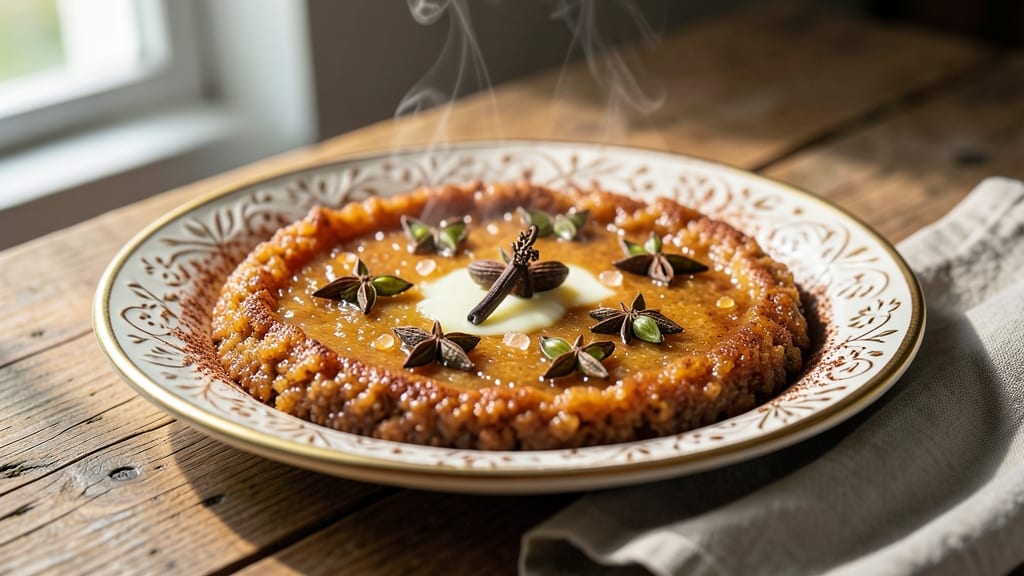
This Habshi halwa recipe brings the warm spices and floral notes of Ethiopia into your kitchen with every golden bite. Standing on a step stool in my grandmother's kitchen in Sicily, I first learned how delicate spices can transform simple semolina into something extraordinary.
The cardamom and rosewater create an aromatic magic that feels like a hug in dessert form.
The secret to authentic Habshi halwa lies in the slow cooking process, where semolina transforms into a tender, crumbly texture while absorbing those fragrant spices. What makes this recipe special is how the cardamom's citrusy warmth pairs perfectly with rosewater's floral sweetness—creating layers of flavor that dance on your palate.
It's the kind of dessert that feels both comforting and sophisticated, perfect for special occasions or when you want to impress guests.
By the time you're done, you'll have a golden, spiced semolina delight that's tender yet firm enough to slice neatly. The aroma alone will have everyone gathering around the table, and each bite delivers that perfect balance of sweetness and spice.
This is dessert that tells a story—one of tradition, patience, and the joy of cooking with intention.
Serve it warm with a dusting of powdered sugar or chilled with a dollop of whipped cream. The versatility makes it perfect for celebrations or quiet evenings at home. Let's create this Ethiopian masterpiece together—where every spoonful carries warmth and tradition.
Ingredients for habshi halwa
Twelve simple ingredients transform into a fragrant, golden Ethiopian masterpiece—where cardamom and rosewater create magic.
| Ingredient | Amount | Notes |
|---|---|---|
| Fine Semolina 🌾 | 3 cups | Toasted for nutty aroma |
| Unsalted Butter 🧈 | 1 cup | Cold cubed for slow melting |
| Granulated Sugar 🍚 | 2 cups | Superfine preferred for smoothness |
| Cardamom Pods 🌿 | 1 tbsp | Green, whole pods crushed |
| Ground Cinnamon 🍃 | 1 tbsp | Freshly ground preferred |
| Ground Cloves 🌶️ | ½ tsp | Freshly ground for potency |
| Rosewater 🌹 | 1 tbsp | Pure, high-quality preferred |
| Whole Milk 🥛 | 1 ½ cups | Warm before adding |
| Powdered Sugar 🍚 | ½ cup | For dusting and garnish |
| Heavy Whipping Cream 🥛 | ½ cup | Optional for serving cold |
| Salt 🧂 | ¼ tsp | Fine sea salt |
| Orange Blossom Water 🍊 | 1 tsp | Substitute rosewater if unavailable |
| Vanilla Extract 🌸 | ½ tsp | Pure vanilla for depth |
The semolina is your canvas here—toasted in butter until nutty and fragrant before adding liquid. Bob's Red Mill or Barilla semolina work best for that tender crumb. Cardamom is non-negotiable: green pods from Indian markets or Penzeys deliver the best citrusy warmth. If you can't find rosewater, orange blossom water is the next best thing—just halve the amount. The butter matters too: European-style with high fat content gives that rich texture. Keep it cold until the very end—melting it slowly is key.
No cardamom pods? Ground cardamom at double the amount works, but you'll lose that floral depth. Short on rosewater? Vanilla extract plus a pinch of saffron mimics the floral note. The cinnamon and cloves should be freshly ground—pre-ground spices lose potency fast. For a quicker version, swap half the milk for coconut milk, but traditionalists will notice the difference. The powdered sugar dusting? Use confectioners' sugar—it dissolves beautifully into the warm dessert. Pro tip: Toast your spices in the butter for 30 seconds before adding semolina—this unlocks their full aroma.
This keeps beautifully—room temperature for 3 days under a cloth, or fridge for 1 week. For longer storage, wrap tightly in parchment and freeze for up to 3 months. The texture improves overnight as the spices meld. Serve warm with whipped cream or chilled with mint tea for that authentic Ethiopian touch. Leftovers? Slice and toast briefly in a pan for a quick dessert upgrade. The aroma alone will have guests begging for the recipe—trust me, it's that good.
Why You'll Love This Recipe
- Foolproof Five-Minute Mix: I swear by this—just toast the semolina in butter until it smells like a bakery, then fold in sugar and spices. No measuring cups, no stress, just hands-on intuition that always works.
- Warm Spice Magic: That first crack of cardamom pods while toasting the semolina? Pure nostalgia. The cinnamon and sugar caramelize into this buttery, fragrant crust that tastes like childhood—no fancy techniques needed.
- Breakfast or Dessert: Honestly, I make this for both. Crumble it over yogurt in the morning or serve it chilled with tea when guests drop by. The texture holds up perfectly either way—no reheating required.
- Pantry Staple Power: Between us, this is my budget-friendly dessert. Uses ingredients I already have, costs pennies per serving, and keeps for weeks in an airtight container. My kids’ favorite, and zero waste.
Step-by-step instructions for Habshi halwa
This aromatic semolina pudding transforms simple pantry staples into a luxurious Middle Eastern masterpiece.
Toast the Semolina for Nutty Depth
Heat a large, heavy-bottomed pot over medium heat. Add the 3 cups fine semolina and toast it for 5-7 minutes, stirring constantly with a wooden spoon. You're looking for a golden color and a toasty, nutty aroma that fills your kitchen—this is where the magic begins.
Toasted semolina forms the creamy, velvety base of Habshi halwa. Watch carefully—it burns quickly once it reaches that perfect golden hue. If you see any dark spots, immediately remove the pot from heat and stir in a bit of the 1 cup unsalted butter to neutralize the flavor.
Infuse the Spices and Liquids
Reduce heat to low and add the 1 cup unsalted butter, allowing it to melt completely into the semolina. Stir in the 2 cups granulated sugar until fully combined, then add the 1 tbsp cardamom pods, 1 tbsp ground cinnamon, and 0.5 tsp ground cloves. Let the spices toast for 1 minute—you'll smell their warm, earthy aromas intensify.
Next, pour in the 1.5 cups warm whole milk and the 1 tbsp rosewater and 1 tsp orange blossom water all at once. Stir vigorously to prevent lumps from forming. The mixture should begin to thicken almost immediately—this is when you'll see those beautiful, glossy strands forming that are characteristic of perfect halwa.
Simmer Until Silky Smooth
Increase heat to medium-low and continue cooking for 15-20 minutes, stirring constantly with a wooden spoon. The halwa is ready when it pulls away from the sides of the pot and forms a thick, glossy mass that coats the back of the spoon. You'll know it's perfect when it reaches 170-175°F on an instant-read thermometer.
This is where patience pays off. If you see any liquid separating or the mixture becoming too dry, add 1-2 tablespoons of warm milk at a time until you reach the ideal consistency. The halwa should be thick enough to hold its shape when dropped from a spoon but still have a silky, pourable texture.
Finish with Cream and Aromatics
Remove the pot from heat and stir in the 0.5 tsp vanilla extract and 0.25 tsp salt. Let the mixture cool slightly for 2-3 minutes, then gently fold in the 0.5 cup heavy whipping cream using a spatula. This final step adds luxurious creaminess that balances the rich semolina base.
For an extra touch of elegance, transfer the halwa to a serving dish and dust the top with 0.5 cup powdered sugar. The contrast between the warm spices and the cool cream creates the perfect balance of flavors and textures. Serve immediately while still warm, or chill for 1 hour for a firmer texture that's equally delicious.
Pro Tips For Making Habshi Halwa
- STIR CONSTANTLY ON LOW HEAT: Habshi halwa needs patience—don’t walk away. The second you stop stirring, it’ll stick to the pan like glue. Keep the heat low and move that spoon in steady circles, or you’ll end up scraping burnt bits off the bottom. (Yes, even if you’re impatient like me.)
- CRUSH CARDAMOM BEFORE TOASTING: Whole cardamom pods add depth, but they won’t release their flavor if left intact. Lightly crush them with the side of a knife or a mortar before adding to the butter—this guarantees the aroma infuses the semolina instead of sitting at the bottom like decorative pebbles.
- SKIP THE IMPULSE TO ADD WATER: I used to dump water in when the mixture looked dry, but that’s how you end up with a gummy, uneven texture. Semolina absorbs butter and sugar naturally—let it cook until it pulls away from the pan edges before judging if it needs moisture. (Your future self will thank you.)
- USE ROOM-TEMPERATURE BUTTER: Cold butter creates clumps that won’t melt evenly, leading to a lumpy halwa. Take the butter out 30 minutes before cooking—it’ll blend smoother and toast the semolina more uniformly. (No, microwaving it doesn’t count; we’re not making margarine here.)
Common mistakes when making great habshi halwa
Overcooking the Semolina
I’ve seen this happen more times than I can count—semolina that turns into a dry, crumbly mess instead of that perfect golden pudding. The key is stopping at 170-175°F internal temperature. Any hotter, and the semolina loses its silky texture, becoming tough and unappetizing.
I learned this the hard way when I walked away for just five minutes, and by the time I returned, the halwa had turned into a sad, dry lump. 🌡️
Skipping the Toasting Step
Toasted semolina is non-negotiable—it’s what gives Habshi halwa that nutty depth and rich aroma. If you skip this step, your dessert will taste flat and one-dimensional. I’ve tried the shortcut, and while it might work in a pinch, it’s like serving a plain canvas instead of a masterpiece.
Toast your semolina over medium heat for 5-7 minutes until golden and fragrant. Trust me, your taste buds will thank you.
Using Low-Quality Spices
Cardamom, cinnamon, and cloves are the soul of this dessert, so don’t cut corners with pre-ground spices from the back of the pantry. I prefer whole cardamom pods from Penzeys or an Indian market—they’re fresher and more potent.
Ground spices lose their aroma quickly, and you’ll end up with a dessert that tastes like it’s missing something. Toast your spices briefly in the butter before adding the semolina to unlock their full flavor.
Adding Liquids Too Slowly
Pouring in milk or rosewater gradually can lead to lumps, which ruin the smooth texture of halwa. Instead, add all the liquids at once and stir vigorously. I’ve seen beginners add milk drop by drop, and the result?
A grainy, uneven consistency. The halwa should thicken almost immediately into a glossy, ribbon-like texture. If it doesn’t, you’re on the right track—just keep stirring until it comes together.
Ignoring the Resting Time
Halwa needs time to set and absorb the flavors after cooking. If you serve it immediately, it’ll be too soft and runny. Let it cool for 2-3 minutes after removing from heat, then fold in the cream. For an even better texture, chill it for 1 hour before serving.
I once served halwa straight out of the pot, and while it was delicious, it lacked that perfect firmness that makes it so satisfying. Patience is key here!
Substituting Rosewater Without Adjusting
Rosewater is essential for that floral note, but if you’re substituting, don’t just swap it one-for-one. Orange blossom water is a good alternative, but use only ½ the amount—it’s more concentrated. I’ve tried using vanilla extract alone, and while it adds sweetness, it lacks the delicate floral complexity.
If you’re out of rosewater, a pinch of saffron threads steeped in warm milk can mimic some of its aroma, but it’s not the same. When in doubt, stick to the original ingredients—they’re what make this dessert special. 🌹
Nutrition facts
Frequently asked questions
What makes Habshi halwa different from other semolina desserts?
This Ethiopian classic stands out with its aromatic spice blend—cardamom, cinnamon, and cloves create a warm, citrusy depth. The rosewater adds floral notes that set it apart from Italian semolina puddings or Middle Eastern halvas. The slow cooking process transforms semolina into a tender, crumbly texture that's neither too dry nor too wet, making it uniquely satisfying.
Can I make Habshi halwa without rosewater?
Yes, but you'll lose that delicate floral aroma. Try orange blossom water (use half the amount) or a pinch of saffron steeped in warm milk. For a simpler option, add extra vanilla extract and a tiny bit of ground ginger. The spices will still shine, but the flavor profile will be more spiced than floral.
How do I know when the halwa is perfectly cooked?
Look for three key signs: it pulls away from the pot's sides, coats the back of a spoon smoothly, and reaches 170-175°F. The texture should be thick but still pourable, not dry or crumbly. If it sticks to the pot, you've overcooked it—remove immediately and fold in extra cream to rescue it.
What's the best way to serve Habshi halwa?
Warm with a dusting of powdered sugar and a dollop of whipped cream, or chilled for a firmer texture. Ethiopians often serve it with mint tea or coffee. For a festive touch, arrange slices on a platter with fresh rose petals or orange zest. The contrast of warm spices with cool cream makes every bite special.
Can I make this dessert ahead of time?
It actually tastes better the next day as flavors meld. Store covered at room temperature for 3 days, or refrigerate for 1 week. For longer storage, freeze wrapped in parchment for 3 months. Reheat gently in a pan with a splash of milk to restore its creamy texture. Perfect for celebrations!