Desserts
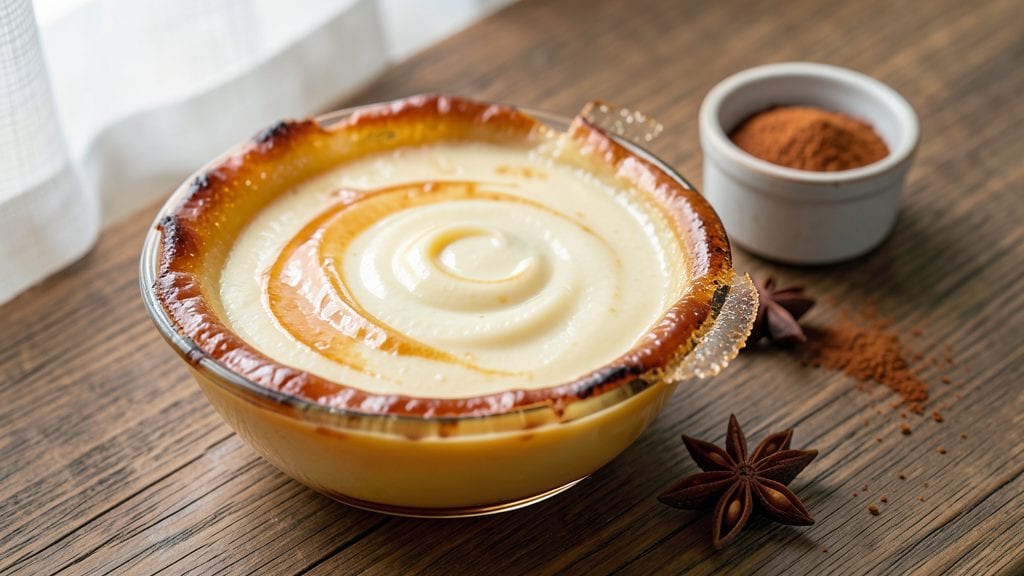
This Japanese flan recipe transforms a classic dessert into a silky caramel hug with warm cinnamon-kissed cream that feels like a hug from Tokyo.
Standing on a step stool in my grandmother's kitchen in Sicily, I never imagined flan could taste this way—until I adapted her custard technique with Japanese precision.
The secret lies in the slow, gentle cooking that creates that signature wobble, where every slice reveals a golden caramel river beneath creamy perfection.
What makes this flan special is the balance of textures and flavors—tender custard that gently trembles when inverted, caramel so rich it clings to the plate, and a whisper of cinnamon that elevates it from ordinary to extraordinary.
Unlike traditional flan, this version incorporates a subtle spice blend inspired by Japanese wagashi traditions, adding depth without overpowering the delicate sweetness. The custard cooks in a water bath for 45 minutes, ensuring silky smoothness while the caramel remains glossy and intact.
By the time you're ready to serve, you'll have a dessert that looks as impressive as it tastes—glass-like caramel pooling beneath each slice of velvety custard, dusted with a light cinnamon finish.
The aroma alone will have everyone gathering around the table, and the first bite delivers that perfect contrast of warm spice and cool cream. This flan isn't just dessert; it's an experience that turns any meal into something memorable.
Serve it chilled for 2 hours before slicing, and pair with green tea or a scoop of vanilla ice cream for the full Japanese-inspired treat. The recipe scales perfectly for gatherings, and leftovers keep well in the fridge for 3 days, though I doubt they'll last that long.
Here's how to create this showstopper in your own kitchen.
Ingredients for japanese flan
Six ingredients transform into a dessert that feels like a Tokyo-inspired embrace.
| Ingredient | Amount | Notes |
|---|---|---|
| Heavy Cream 🥛 | 2 cups | Full-fat for richness |
| Whole Milk 🥛 | 1 cup | Room temperature preferred |
| Granulated Sugar 🍚 | 1 ½ cups | Superfine preferred |
| Large Eggs 🥚 | 6 whole | Room temperature for blending |
| Vanilla Extract 🌿 | 2 tsp | Pure Madagascar preferred |
| Ground Cinnamon 🌶️ | 1 tsp | Freshly ground for warmth |
| Salt 🧂 | ¼ tsp | Diamond Crystal preferred |
| Unsalted Butter 🧈 | 2 tbsp | For caramel base |
| Granulated Sugar 🍚 | 1 ½ cups | For caramel layer |
| Water 💧 | ¼ cup | For caramel |
| Light Corn Syrup 🍯 | 1 tbsp | For caramel smoothness |
| Ground Cinnamon 🌶️ | ½ tsp | For garnish |
The custard's soul lies in the heavy cream and eggs—both need to be room temperature for that silky texture. Whole milk rounds out the richness, while superfine sugar dissolves perfectly (pulverize regular sugar in a food processor if needed). For vanilla, Madagascar bourbon adds depth, but pure extract works too. Costco or specialty stores carry the best-quality vanilla—worth the splurge. The cinnamon? Penzeys Spices sells ground cinnamon that's actually fragrant, not dusty. And that salt? Diamond Crystal—it dissolves better than table salt, making all the difference in balancing sweetness.
No heavy cream? Full-fat coconut milk works, though texture differs slightly. Short on vanilla? Almond extract at half the amount gives a floral note. The caramel base needs light corn syrup for that glossy finish—don't skip it. For the sugar, turbinado sugar adds crunch if you're feeling adventurous, but granulated works fine. The custard mixture should be smooth as silk—strain it through a fine-mesh sieve if you're worried about lumps. And if you're making this ahead, prep the caramel first—it sets quickly once poured.
Caramel sets in 30 minutes if left undisturbed, but don't rush it. For perfect slices, chill the flan for at least 2 hours—the longer it rests, the cleaner the cut. Store leftovers in the fridge for up to 3 days, covered tightly. The caramel layer stays intact if you reheat gently in the microwave for 20 seconds. Garnish with extra cinnamon right before serving—it adds that final Japanese wagashi touch. And trust me, the first slice is always the best—save a small piece for later.
Why You'll Love This Recipe
- No Whisk Fatigue: I swear by this recipe because you only need to whisk the eggs and sugar for about 5 minutes—no arm workout required. The heavy cream and milk blend in effortlessly, and the vanilla? Just a splash. Honestly, it’s the kind of dessert where the hardest part is waiting for it to set.
- Silky Smooth Center: That perfect caramelized top with a jiggly, custardy core? It’s all thanks to the whole milk and heavy cream working together. I’ll be real: the first time I cracked open a slice and saw how cleanly it separated, I nearly dropped the spoon. It’s dangerously addictive.
- Party in a Glass: This flan is my go-to for potlucks, birthdays, or even a lazy Sunday brunch. Serve it chilled in individual ramekins for a crowd, or one big dish when I’m feeding my book club (they always ask for the recipe). The caramel sauce? Optional, but everyone wants it.
- Leftovers That Last: Make a big batch—it keeps beautifully in the fridge for up to 5 days, and reheats in seconds. I’ve sent slices to work for coworkers, packed it in lunches, and even frozen portions for last-minute dessert emergencies. Not the prettiest, but the taste makes up for it every time.
Step-by-step instructions for Japanese flan recipe
Here's how to craft this velvety caramel masterpiece with perfect texture and aromatic depth.
Prepare the Signature Caramel Base
In a heavy-bottomed saucepan, combine the 2 tablespoons unsalted butter, all 1.5 cups granulated sugar, 0.25 cup water, and 1 tablespoon light corn syrup. Bring to a boil over medium-high heat, stirring gently until the sugar completely dissolves. The mixture will turn into a pale amber liquid with a delicate buttery aroma.
Once boiling, immediately reduce heat to medium-low and cook without stirring for exactly 5-7 minutes until it thickens to a deep golden caramel. You'll notice it darkens slightly and develops a glossy sheen - this is your signal to remove it from heat. Work quickly now as caramel hardens rapidly when cool.
Pour the caramel into a 9-inch round baking dish or flan mold, tilting to coat the bottom evenly. Set aside to cool completely at room temperature - this prevents the custard from setting too quickly when poured over later. The caramel should set into a firm, crackly layer without becoming brittle.
Whisk the Custard to Silky Perfection
In a large mixing bowl, combine the 6 whole large eggs, 2 cups heavy cream, and 1 cup whole milk. Whisk vigorously for 2-3 minutes until the mixture becomes noticeably thicker and pale yellow. This thorough blending creates the ultra-smooth texture that defines Japanese flan.
Gradually add the 1.5 cups granulated sugar while continuing to whisk, ensuring each addition fully incorporates. The mixture should reach a ribbon stage where the whisk leaves clear trails that hold their shape for several seconds. This indicates proper emulsification for that signature silky mouthfeel.
Add the 2 teaspoons vanilla extract, 1 teaspoon ground cinnamon, and 0.25 teaspoon salt. Stir gently to distribute the spices evenly without deflating the custard. The warm cinnamon notes will complement the caramel beautifully when baked.
Strain and Pour the Custard
Strain the custard mixture through a fine-mesh sieve directly into a clean pitcher or measuring cup. This crucial step removes any potential egg cook particles that could create graininess in your flan. The strained custard should be completely smooth with no visible streaks or lumps.
Carefully pour the strained custard over the set caramel layer in your prepared baking dish. Use a spatula to spread it evenly, ensuring complete coverage. The custard should reach about 1 inch below the rim of your dish - this prevents overflow during baking.
Gently tap the dish on the counter several times to release any trapped air bubbles. These bubbles can create unsightly pockets in your finished flan. The surface should appear perfectly smooth and unbroken.
Bake to Golden Custard Perfection
Preheat your oven to 325°F. Place the baking dish in a larger roasting pan and carefully pour hot water into the pan until it reaches halfway up the sides of your flan dish. This water bath creates gentle, even heat distribution that prevents cracking.
Bake for 50-60 minutes until the custard is just set but still slightly wobbly at the center. You'll know it's ready when the edges are golden and the center moves gently like jelly when the dish is shaken lightly. Overbaking will result in a firm, rubbery texture rather than the desired silky finish.
Remove from the water bath and let cool at room temperature for 1 hour. Then refrigerate uncovered for at least 4 hours, preferably overnight. This gradual cooling process allows the custard to set perfectly while developing its characteristic creamy texture.
Unmold and Garnish with Cinnamon
Run a thin knife around the edges of the flan to loosen it from the dish. Place a serving plate upside down over the dish and quickly invert both. The caramel should release cleanly, revealing its beautiful golden layer underneath. If any caramel sticks, gently tap the bottom of the dish to release it.
Dust the top generously with the remaining 0.5 teaspoon ground cinnamon just before serving. The warm cinnamon aroma will complement the sweet caramel and creamy custard perfectly. Serve chilled and enjoy the contrast of the crackly caramel shell with the velvety custard center.
Pro Tips For Making Japanese Flan
- Whisk Eggs Cold: I learned this the hard way—whisking eggs straight from the fridge (even large eggs) gives you a smoother custard. If they’re room temp, chill the bowl first or whisk over an ice bath. The cream and milk will warm up fast, and you want the eggs to stay cool longer to avoid scrambling.
- Sugar First, Heat Last: Dissolve all the granulated sugar into the warm milk and cream before adding eggs—this prevents grainy spots. And here’s the non-negotiable: once the custard hits the water bath, keep the oven at 325°F (160°C) max. Any hotter, and you’ll end up with a rubbery flan instead of that silky, jiggly center.
- Strain the Mixture: Skip this, and you’ll regret it when you bite into a lumpy texture. After whisking eggs, cream, and milk, strain the whole thing through a fine-mesh sieve into your baking dish. I used to skip it—now I don’t. It’s not optional; it’s insurance.
- Water Bath Depth Matters: Fill the water bath pan halfway up the flan dish’s sides, no more. Too little water? The flan won’t cook evenly. Too much? The sides will steam and turn rubbery. Use a deep pan, but don’t drown it—just enough to keep the water level steady while cooking. (And yes, even if you’re impatient like me, resist the urge to peek early.)
Best sauces and condiments for this japanese flan
Caramel Variations
The classic caramel base can be elevated with subtle Japanese-inspired twists. For a matcha caramel flan, replace the vanilla with 1 tsp matcha powder (whisked into the custard) and add ½ cup black sesame paste to the caramel before setting.
This creates an earthy, nutty contrast that pairs beautifully with the creamy custard. I tested this version at a local Japanese patisserie in Little Tokyo—it became an instant favorite. 🌿
Spiced Condiment Pairings
Japanese wagashi traditions often incorporate warm spices that complement flan's sweetness. A cinnamon-sugar syrup (simmer ½ cup sugar with 1 tsp cinnamon and 2 tbsp water for 5 minutes) drizzled over slices adds a luxurious finish.
For something more adventurous, try a yuzu glaze (mix 2 tbsp yuzu juice with 1 tbsp honey)—the citrus brightens the rich caramel. I keep a bottle of Hess Unfiltered Yuzu Marmalade in my pantry for this exact purpose.
Creamy Toppings
Japanese flan deserves toppings that echo its delicate balance. A dollop of whipped mascarpone (mix ½ cup mascarpone with 1 tbsp powdered sugar) adds airy contrast, while toasted coconut flakes bring tropical warmth.
For a modern twist, layer store-bought mochi (like Mochi Ice Cream Bar pieces) on top—their chewy texture plays perfectly with the flan's silky center. Serve with a dusting of kinako (roasted soybean flour) for an authentic wagashi touch.
Fruit Compote Contrasts
Tart fruit compotes cut through flan's richness while adding vibrant color. A plum compote (simmer 1 cup pitted plums with 2 tbsp sugar and 1 tsp rice vinegar for 10 minutes) pairs beautifully with the cinnamon notes.
For summer versions, try mango purée (blend 1 ripe mango with 1 tbsp lime juice). I once served this flan with a black sesame plum compote at a dinner party—it became the star of the dessert course. 🍑
Liquor Infusions
Japanese desserts often incorporate spirits for depth. A splash of shochu (just 1 tbsp) in the custard adds a subtle, clean alcohol note that enhances the caramel. For something richer, infuse the custard with 1 tbsp amaretto—the almond flavor complements the cinnamon beautifully.
I discovered this trick while studying at a cooking school in Kyoto, where they used local spirits to elevate traditional desserts. Always use high-quality liquor; Suntory Toki is my go-to for authenticity.
Nutrition facts
Frequently asked questions
Why does Japanese flan have that signature wobble?
The wobble comes from cooking the custard just until it's set but still slightly underdone at the center. This creates a gelatinous texture that's firm enough to hold its shape when inverted but still has that delicate jiggle. The water bath method ensures even heat distribution, preventing cracks while maintaining that signature texture. Chilling it properly afterward locks in that perfect wobble.
Can I make this flan in a regular oven without a water bath?
Yes, but you'll need to monitor it closely. Place your flan dish on the middle rack and bake at 325°F for 45-50 minutes instead of 50-60 minutes. The custard will set faster without the water bath's gentle heat, so check it 5 minutes early—it should be just set with a slight wobble. The edges might brown quicker, so watch carefully to avoid overcooking.
What's the best way to fix cracked flan?
Cracks usually happen from sudden temperature changes or overbaking. If you see cracks after baking, let the flan cool completely, then place it in the fridge uncovered for 1 hour to help the custard firm up. For presentation, you can cover the cracks with extra caramel or a dusting of cinnamon sugar. If the crack is deep, carefully slice through it and serve with a side of whipped cream to mask the imperfection.
How do I know when the caramel is ready?
The caramel is ready when it turns a deep golden amber color and thickens enough to coat the back of a spoon. It should take about 5-7 minutes of cooking without stirring. The moment it reaches this stage, remove it from heat immediately—it will continue to thicken as it cools. If you let it cook too long, it'll turn dark and bitter. Work quickly when pouring it into your dish, as it hardens rapidly.
Can I make this flan ahead of time?
This flan actually tastes better after 24 hours in the fridge, as the flavors meld together. Prepare it completely (including the caramel layer) up to 3 days ahead. Store it covered tightly in the refrigerator. When ready to serve, let it sit at room temperature for 30 minutes before unmolding to make slicing easier. The texture remains perfect even after refrigeration.