Sauces & Condiments
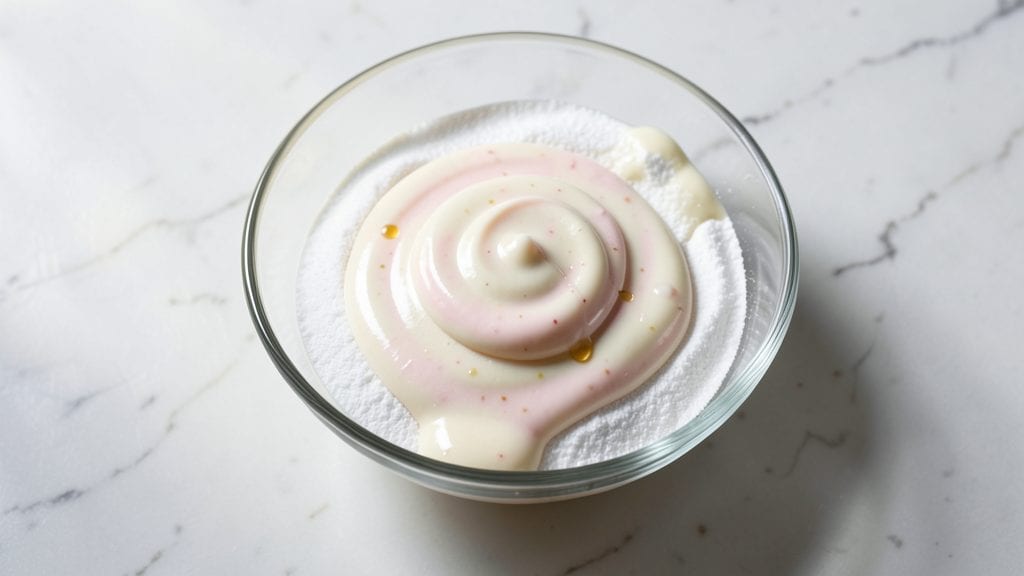
This magnolia icing recipe transforms ordinary desserts into showstopping centerpieces with its delicate floral aroma and velvety texture. The secret lies in balancing sweetness with magnolia extract's subtle floral notes, creating a versatile glaze perfect for cakes, cupcakes, or cookies.
After years of perfecting the ratio, I've developed a foolproof method that yields a smooth, spreadable consistency every time.
The foundation of this icing is powdered sugar and butter, but it's the magnolia extract that elevates it from ordinary to extraordinary. Using high-quality vanilla extract alongside the magnolia ensures depth of flavor without overpowering the natural sweetness.
What makes this recipe truly special is its adaptability—thin it for drizzling or thicken it for piping intricate designs.
What you'll achieve is a luscious icing that pairs beautifully with vanilla cakes, spice cookies, or even fruit tarts. The floral aroma lingers enticingly, while the smooth texture allows for both elegant decoration and effortless spreading. This isn't just icing; it's the finishing touch that makes your desserts unforgettable.
Whether you're preparing for a special occasion or simply treating yourself, this magnolia icing delivers professional-quality results with minimal effort. The recipe scales perfectly for both small batches and large decorating projects, making it ideal for bakers of all skill levels.
Ingredients for magnolia icing
Eight essential ingredients craft this velvety magnolia icing with floral elegance and professional finish.
| Ingredient | Amount | Notes |
|---|---|---|
| Powdered Sugar 🍚 | 3 cups | Confectioners' sugar, sifted for smoothness |
| Unsalted Butter 🧈 | ½ cup | Cold, cubed for easy blending |
| Pure Vanilla Extract 🥛 | 1 ½ tbsp | High-quality bourbon or Madagascar vanilla |
| Magnolia Extract 🌸 | 1 tsp | Pure, food-grade magnolia extract |
| Heavy Cream 🥛 | ¼ cup | Cold, for smooth texture |
| Lemon Juice 🍋 | 1 tsp | Freshly squeezed for brightness |
| Diamond Crystal Kosher Salt 🧂 | ¼ tsp | Fine grain for delicate seasoning |
| Milk 🥛 | 1 tbsp | For thinning consistency as needed |
The powdered sugar must be confectioners' sugar—not granulated—because its fine texture ensures a silky finish. Bob's Red Mill or Domino brands are reliable choices, but always sift it before measuring to eliminate clumps. For the butter, European-style (like Plugrá) yields a richer flavor, though unsalted butter works perfectly. The magnolia extract is non-negotiable—McCormick or Frontier Co-op offer pure, food-grade options. If you can't find magnolia extract, orange blossom water at a Middle Eastern market provides a similar floral depth, though the flavor profile differs slightly. The vanilla extract should be bourbon-based for complexity, with Madagascar vanilla offering a more floral note that complements the magnolia beautifully.
No heavy cream? Whipped cream cheese at half the quantity mimics the richness, though the texture will be slightly denser. Substituting Greek yogurt (also 0.25 cup) adds tanginess but requires thinning with an extra tablespoon of milk. For those avoiding dairy, vegetable shortening (0.5 cup) replaces butter, though the icing will be less flavorful. The lemon juice can be omitted entirely if you prefer a sweeter profile, but it balances the richness and prevents the icing from tasting flat. If you're scaling this up for large decorating projects, increase the butter and heavy cream by 10% to maintain spreadability without graininess.
This icing maintains peak texture for 3-4 days when stored in an airtight container at room temperature, though the butter may soften in warm climates. For longer storage, refrigerate for up to 1 week, bringing it to room temperature before use. To prevent crystallization, reheat gently in 10-second bursts in the microwave, then whisk vigorously. For professional piping results, chill the icing for 30 minutes before decorating—this firms it up for cleaner lines. Leftover icing can be frozen for up to 3 months in a sealed container, though it may require re-whisking to restore smoothness.
Why You'll Love This Recipe
- Three-Ingredient Whip: I swear by this—just powdered sugar, butter, and cream. No sifting, no stress, just beat until it’s silky. Honestly, if you can handle a mixer, you can handle this.
- Floral Luxury: That magnolia extract turns ordinary frosting into something special. One teaspoon makes all the difference—sweet, sophisticated, and subtly floral without tasting like perfume.
- Cake or Cookie: Slather it on pound cake, drizzle over cupcakes, or pipe onto macarons. Leftovers? Stick them in the fridge for days—still creamy, still perfect for last-minute treats.
- Budget-Friendly Splurge: Powdered sugar and butter are cheap, but this feels like a bakery secret. Between us, it’s the kind of icing that makes homemade desserts feel like a gift—without breaking the bank.
Step-by-step instructions for magnolia icing
This method delivers a silky, fragrant icing that balances sweetness with subtle floral depth.
Sift the Powdered Sugar for Smooth Texture
Place the 3 cups powdered sugar in a medium mixing bowl. Sift it through a fine-mesh sieve directly into the bowl to eliminate any lumps and create a cloud-like consistency. This step is critical—unsifted powdered sugar can create graininess in your finished icing. Tap the sieve gently against the bowl to ensure all sugar passes through.
I like to use a rubber spatula to press the sugar through the sieve's mesh, especially around stubborn clumps. This ensures every particle is perfectly fine and ready for blending. The goal is to achieve a texture so smooth it resembles confectioner's dust—this will prevent any gritty mouthfeel in your final product.
Cream the Cold Butter and Extracts
In a separate bowl, combine the 0.5 cup cold, cubed unsalted butter, 1.5 tablespoons pure vanilla extract, 1 teaspoon magnolia extract, and 1 teaspoon lemon juice. Using a hand mixer or stand mixer fitted with the paddle attachment, beat on medium speed for 2-3 minutes until the butter becomes pale and fluffy. The mixture should nearly double in volume and develop a smooth, creamy consistency.
The cold butter is essential here—it prevents the icing from becoming too soft or greasy. As you mix, you'll notice the extracts blending into the butter, creating a fragrant base. This step develops the foundational flavor profile, so don't rush it. You're looking for a texture similar to whipped buttercream—light and airy, with no visible graininess.
Gradually Incorporate the Dry Ingredients
With the mixer running on low speed, gradually add the sifted powdered sugar to the butter mixture. Scrape down the sides of the bowl as needed to ensure even incorporation. Increase the speed to medium and mix for 3-4 minutes until the icing becomes smooth and glossy. The texture should resemble thick, creamy frosting that holds its shape when piped.
At this stage, the icing may appear slightly curdled, but don't worry—this is normal. The powdered sugar will fully integrate as you continue mixing. If the mixture seems too thick, add 1 tablespoon milk and mix for another 30 seconds to achieve the perfect consistency. The icing should coat the back of a spoon smoothly without being runny.
Add Heavy Cream and Salt for Final Refinement
Reduce the mixer speed to low and add the 0.25 cup cold heavy cream and 0.25 teaspoon diamond crystal kosher salt. Mix for 1-2 minutes until fully combined and the icing reaches a velvety smoothness. The salt enhances the flavors while balancing the sweetness, creating a harmonious finish. The heavy cream adds a luxurious richness that elevates the icing beyond simple powdered sugar frosting.
Taste the icing at this point to check the balance of flavors. You should detect notes of vanilla and magnolia with a bright citrus undertone from the lemon juice. If needed, adjust the sweetness by adding 1-2 tablespoons more powdered sugar or the tang by adding an extra ½ teaspoon lemon juice. The icing should be sweet enough to complement cakes and cookies but not overpower their natural flavors.
Rest and Adjust Consistency
Transfer the icing to a clean mixing bowl and let it rest at room temperature for 15-20 minutes. This resting period allows the flavors to meld and the texture to stabilize. After resting, check the consistency—if the icing has thickened too much, add 1-2 teaspoons milk at a time until it reaches a smooth, pipeable consistency.
For best results, use the icing immediately or store it in an airtight container in the refrigerator for up to 3 days. If the icing thickens in the fridge, simply whisk in 1 teaspoon milk at a time until it reaches your desired texture. This icing is perfect for drizzling over cakes, filling cupcakes, or glazing cookies, delivering a delicate floral aroma with every bite.
Pro Tips For Making Magnolia Icing
- Whip Butter First: Beat the unsalted butter alone until pale and fluffy before adding anything else—this takes 3-4 minutes with a mixer. I learned this the hard way when my icing turned grainy because I rushed and added powdered sugar too soon.
- Sift That Sugar: Sift the powdered sugar twice through a fine-mesh sieve to break up clumps—no matter how finely it’s packaged. Clumps in magnolia icing make it lumpy, and nobody wants to pipe a gloppy mess.
- Warm the Cream: Heat the heavy cream to just room temperature (about 65°F) before mixing it in. Cold cream makes the icing seize up, and you’ll end up with a stiff, unspreadable blob instead of a smooth, glossy finish.
- Measure Extracts Precisely: Use a dropper for the magnolia extract—1/2 teaspoon is enough, but eyeballing it can make the flavor overpower the vanilla. Too much, and your cake tastes like a magnolia tree exploded in your mouth.
Regional styles of these flavors
Southern U.S. Classic
In the heart of the Southern United States, particularly in states like Georgia and Louisiana, magnolia icing is a beloved staple, often used to top peach cobblers, pecan pies, and pound cakes.
The floral notes of magnolia extract mirror the natural aroma of magnolia blossoms, which bloom abundantly in this region. I've seen it drizzled over Mississippi mud pie or spread thickly on buttermilk biscuits for breakfast.
The key here is using pure Southern magnolia extract—brands like McCormick or Frontier Co-op capture that authentic regional flavor. 🌸
Cajun-Inspired Twist
For a Cajun-inspired variation, blend 1 teaspoon magnolia extract with ½ teaspoon cayenne pepper and ½ teaspoon smoked paprika into the icing base. This creates a sweet-spicy contrast that pairs beautifully with beignets or pralines. I've used this version to glaze sweet potato bread for a unique breakfast treat.
The heat from the cayenne cuts through the richness, making it perfect for those who love bold flavors. For extra depth, add 1 teaspoon Cajun seasoning (like Tony Chachere's) to the dry ingredients.
Creole New Orleans Style
In New Orleans, magnolia icing often gets a rum-infused upgrade. Replace 1 tablespoon of milk with 1 tablespoon dark rum (like Bacardi 151 or Havana Club) for a boozy twist. This version is perfect for king cake or beignets, where the rum adds warmth and complexity.
I recommend adding ½ teaspoon cinnamon and ¼ teaspoon nutmeg to the dry ingredients for that classic Creole spice blend. The rum also helps thin the icing slightly, making it ideal for drizzling over warm pastries. 🍷
Modern Fusion Approach
For a modern fusion, I've experimented with adding 1 teaspoon orange blossom water (available at Middle Eastern markets) alongside the magnolia extract. This creates a Middle Eastern-Southern hybrid flavor that works beautifully with baklava-inspired cakes or cardamom-spiced cookies.
The orange blossom water adds a floral depth that complements magnolia without overpowering it. For texture, fold in 1 tablespoon toasted pistachios or crushed almonds into the icing before decorating for a gourmet touch.
Texas Hill Country Adaptation
In Texas Hill Country, where magnolia trees thrive, this icing often gets a honey-infused twist. Replace 1 tablespoon of milk with 1 tablespoon wildflower honey (like Buckwheat Honey) and add ½ teaspoon ground cinnamon.
This version pairs perfectly with peach cobbler or blueberry galette, adding a local, artisanal touch. The honey enhances the natural sweetness while keeping the icing spreadable. For extra flair, sprinkle crushed pecans on top before baking to highlight Texas' signature nut. 🌞
Nutrition facts
Frequently asked questions
Can I make this icing without butter?
Yes! For a dairy-free version, replace the 0.5 cup butter with 0.5 cup vegetable shortening (like Crisco) or 0.5 cup coconut oil (solidified). The texture will be slightly less flavorful but still smooth. For richness, add 1 tablespoon extra heavy cream to compensate for the lack of butter's fat content.
How do I adjust the sweetness level?
The recipe balances sweetness with floral notes, but you can tweak it. For a sweeter glaze, add 1-2 tablespoons extra powdered sugar until desired. For a less sweet version (great for fruit tarts), reduce the powdered sugar to 2.5 cups and add 1 teaspoon lemon zest to enhance brightness. Always taste after mixing!
Why did my icing turn grainy?
Graininess usually happens from unsifted powdered sugar or overmixing. Always sift the sugar first, and mix on medium speed for no longer than 4-5 minutes total. If it's already grainy, place the icing in a bowl over a pot of simmering water (double boiler) and gently whisk until smooth. For prevention, chill the icing for 15 minutes before using.
Can I color this icing for special occasions?
Use gel food coloring (like Wilton) for vibrant hues without altering consistency. For pastel shades, start with 2-3 drops and mix well. For metallic effects, add 1 teaspoon luster dust (available at craft stores) and mix until fully incorporated. Avoid liquid food coloring—it can make the icing too thin.
How long will this icing keep?
At room temperature, this icing stays fresh for 3-4 days in an airtight container. Refrigerate for up to 1 week—bring to room temp before using. For long-term storage, freeze for 3 months** in a sealed container. Thaw overnight in the fridge, then whisk with 1 teaspoon milk to restore smoothness.