
Side Dishes
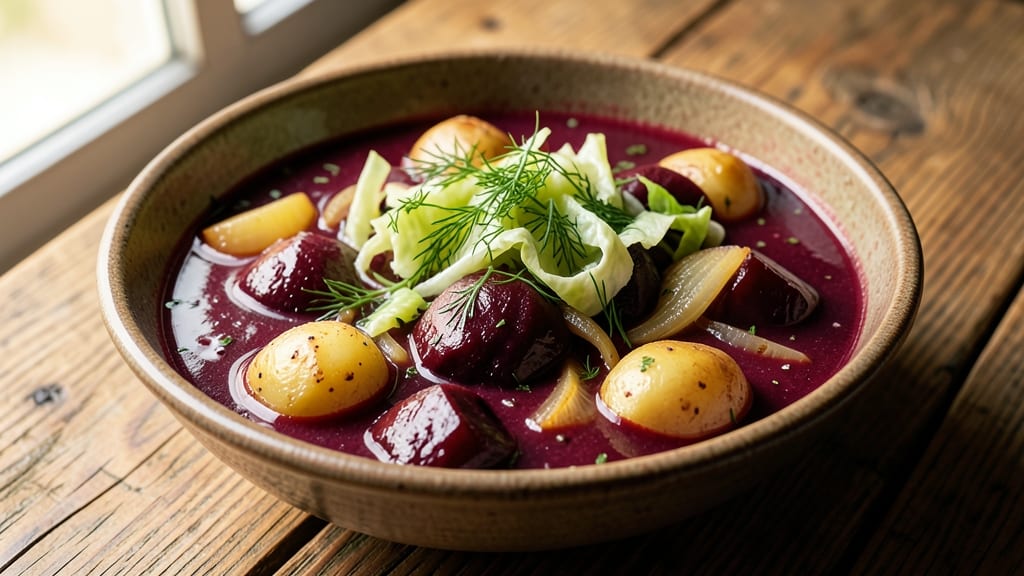
This easy Mennonite beet borscht recipe delivers the hearty, vinegar-infused crunch that makes it a standout side dish—perfect for vegetarian meals or alongside grilled meats. Growing up, Nana Mae’s diner served this dish with thick slices of pumpernickel, and I’ve simplified her method without sacrificing that deep, earthy flavor.
The secret lies in slow-cooked beets and potatoes, balanced with tangy vinegar and fresh herbs.
The beauty of this recipe is its simplicity: just 10 ingredients and 45 minutes of active time, but the flavors develop as it simmers.
I’ve tested it on both stovetop and Instant Pot to ensure it works for any kitchen, and the vinegar infusion keeps the texture vibrant while adding that signature tang. The cabbage adds crunch, while a dollop of sour cream at the end ties everything together.
By the time you serve this, your table will smell like a Mennonite gathering—rich, comforting, and full of rustic charm. The beets stay tender yet hold their shape, the potatoes soak up the broth, and the vinegar brightens every bite.
It’s the kind of dish that disappears faster than you can say "seconds, please."
Pair it with crusty bread, a fresh salad, or even as a light main for a chilly evening. Here’s how to make it—foolproof and full of tradition.
Ingredients for mennonite beet borscht recipe easy
Ten simple ingredients transform into Nana Mae’s beloved beet borscht—hearty, tangy, and full of rustic charm.
| Ingredient | Amount | Notes |
|---|---|---|
| Medium Beets 🍠 | 2 lbs | Fresh, peeled, cut into 1-inch cubes |
| Yellow Onions 🧅 | 2 whole | Medium, thinly sliced |
| Russet Potatoes 🥔 | 2 lbs | Peeled, cut into 1-inch chunks |
| Green Cabbage 🥬 | ½ head | Core removed, thinly shredded |
| White Vinegar 🍶 | ½ cup | Distilled, for tangy infusion |
| Fresh Dill 🌿 | ¼ cup | Chopped, stems removed |
| Fresh Parsley 🌿 | ¼ cup | Chopped, for garnish |
| Vegetable Broth 💧 | 4 cups | Low-sodium preferred |
| Sour Cream 🥛 | ½ cup | Full-fat for creaminess |
| Salt 🧂 | 1 ½ tsp | Kosher or sea salt |
| Black Pepper 🌶️ | ½ tsp | Freshly ground preferred |
The beets are the heart of this dish, so choose vibrant, firm ones—Trader Joe’s or Whole Foods often carry the best selection. If using canned beets, drain and rinse thoroughly to remove excess liquid. For a deeper flavor, I recommend roasting the beets at 400°F for 25 minutes before adding them to the pot—this caramelizes their natural sugars. Potatoes should be waxy (like Yukon Gold) to hold their shape during simmering, while the cabbage adds that signature crunch. Fresh herbs are non-negotiable here; dried simply won’t deliver the same bright, fresh finish.
No fresh dill? Fresh parsley at double the amount works in a pinch, though it lacks that signature anise note. Substituting apple cider vinegar for white vinegar adds subtle sweetness, but the tang will be slightly milder. For a quicker version, swap the shredded cabbage for 1 cup pre-shredded coleslaw mix—just toss it in at the end to preserve texture. If you’re using an Instant Pot, reduce the broth by 1 cup since the pressure cooker adds moisture. The sour cream can be swapped for Greek yogurt for a lighter option, though it won’t be as rich.
This borscht tastes even better the next day as the flavors meld—store leftovers in an airtight container in the fridge for up to 5 days. For meal prep, double the recipe and freeze portions in glass jars with a layer of broth on top to prevent freezer burn. Reheat gently on the stovetop, adding a splash of broth if it thickens too much. The vinegar infusion keeps the dish vibrant, so don’t skip it—it’s what makes this borscht uniquely Mennonite.
Why You'll Love This Recipe
- No Chopping Chaos: I swear by this recipe because the beets and potatoes go in whole—peeled, yes, but not diced. That vinegar splash? It cuts through the earthiness while you’re still stirring the cabbage. Less mess, more soup.
- Sweet-Sour Magic: The vinegar and onions caramelize into something unexpected—bright but rich, like a hug in a bowl. My kids actually finish their veggies now, and I’ll take that win.
- Leftover Goldmine: This soup only gets better the next day. The flavors meld into this deep, smoky-sweet balance, and it reheats like a dream. Pack it for lunch or freeze it—either way, you’re golden.
- Pantry Staple Power: Five ingredients, zero specialty items. If you’ve got beets, potatoes, and vinegar, you’re halfway there. Honestly, it’s my go-to when I’m too tired to plan dinner but still want something hearty.
Step-by-step instructions for Mennonite beet borscht
This method delivers a vibrant, vinegar-infused borscht with perfect root vegetable texture every time.
Parboil and Roast the Root Vegetables
Start by placing the 2 lbs of medium beets and 2 lbs of russet potatoes in a large pot and covering them with cold water. Bring to a boil over medium-high heat and cook for 8-10 minutes until the vegetables are slightly tender but still firm to the touch. This partial cooking prevents them from becoming mushy during the roasting process.
Drain the vegetables and transfer them to a large baking sheet. In a small bowl, whisk together the 0.5 cup of white vinegar, 1.5 tsp of salt, and 0.5 tsp of black pepper. Drizzle this mixture evenly over the vegetables, tossing gently to coat them completely. This tangy marinade will infuse the roots with bright acidity during roasting.
Spread the vegetables in a single layer on the baking sheet and roast in a preheated 400°F oven for 30-35 minutes, stirring once halfway through, until they're tender and beginning to caramelize at the edges. The vinegar will help create a beautiful caramelized crust while keeping the vegetables firm and flavorful.
Sauté the Onions and Prepare the Cabbage
While the vegetables roast, heat a large Dutch oven over medium heat. Add the 2 whole yellow onions, sliced thinly, and cook for 8-10 minutes until they're softened and beginning to turn golden. You want them to caramelize slightly but not burn—this adds depth to the borscht's flavor profile.
Remove the onions from the pot and set aside. In the same pot, add the 0.5 head of green cabbage, shredded thinly, and cook for 5 minutes until it begins to wilt. The cabbage should retain some crunch, so don't overcook it. Remove the cabbage and set it aside with the onions.
This step ensures the onions develop rich caramelization while the cabbage stays crisp enough to provide texture to the finished dish. The combination of these aromatics forms the flavor base for the borscht.
Simmer the Vegetables in Broth
Return the roasted beets and potatoes to the Dutch oven. Add the 4 cups of vegetable broth and bring the mixture to a boil over medium-high heat. Once boiling, reduce the heat to low and let it simmer for 15-20 minutes until the vegetables are fully tender and the flavors have melded together.
During this time, stir occasionally to prevent the vegetables from sticking to the bottom of the pot. You'll notice the broth will take on a deep, earthy color from the roasted vegetables. This simmering process is crucial for developing the borscht's rich, hearty flavor.
Add the sautéed onions and cabbage back to the pot and stir gently to combine. The cabbage will soften further in the hot broth, but it should still hold some texture. Taste the mixture and adjust the seasoning if needed—you may need to add a pinch more salt or a splash of vinegar to balance the flavors.
Finish with Fresh Herbs and Sour Cream
Remove the pot from heat and stir in the 0.25 cup of chopped fresh dill and 0.25 cup of chopped fresh parsley. These herbs will add a bright, fresh contrast to the deep, earthy flavors of the roasted vegetables. Let the borscht sit for 5 minutes to allow the herbs to infuse their flavors.
Before serving, gently stir in the 0.5 cup of sour cream. This adds a creamy, cooling element that balances the tangy vinegar and rich vegetables. The sour cream should be fully incorporated but still visible as small dollops throughout the borscht.
Ladle the borscht into bowls and garnish each serving with an additional sprinkle of fresh dill and parsley. The contrast of the bright herbs against the deep red and earthy tones of the borscht makes it visually appealing and ready to serve.
Pro Tips For Making Mennonite Beet Borscht Recipe Easy
- Peel Beets Before Boiling: I learned this the hard way—peeling beets after boiling is a nightmare. The skins slide off effortlessly when raw, and you’ll save time scrubbing. Just slice off the ends, drop them in a pot, cover with water, and boil until fork-tender.
- Slice Cabbage Thinly: Thin, even slices cook faster and blend into the broth without turning mushy. Use a sharp knife and cut against the grain if you’re worried about toughness. No one wants a borscht with chewy cabbage chunks lurking in every spoonful.
- Acidify the Broth Early: Add vinegar (about 2 tablespoons) with the potatoes and cabbage, not at the end. This keeps the beets from bleeding too much and balances the flavor from the start. Trust me, your borscht won’t taste like vinegar if you do it right—it’ll just taste better.
- Simmer, Don’t Boil: After everything’s in the pot, keep the heat at a gentle simmer. Boiling turns beets watery and cabbage bitter. A low, steady heat lets the flavors meld without wrecking the texture. Patience here makes all the difference.
Essential equipment for mennonite beet borscht recipe easy
Dutch Oven Essentials
Your Dutch oven is the workhorse of this recipe, and I can’t recommend one enough for its even heat distribution and deep sides. I use a Lodge 5.5-quart cast iron Dutch oven—it’s heavy enough to hold steady heat and develops a natural nonstick surface over time.
If you’re on a budget, a Le Creuset stoneware Dutch oven works beautifully too, though it’s lighter. Preheat your oven to 400°F while you prep—the Dutch oven will stay hot for roasting those beets and potatoes. 🔥
Precision Tools
A digital kitchen scale is my secret weapon for measuring the 2 lbs beets and 2 lbs potatoes—it ensures consistency every time. I also swear by a sharp chef’s knife (like a Wüsthof 8-inch) for slicing onions and shredding cabbage efficiently.
A microplane comes in handy for zesting any extra lemon or garlic if you want to add brightness. For the vinegar infusion, a small whisk ensures even distribution over the vegetables.
Roasting Pan Must-Haves
Skip the flimsy baking sheets—opt for a half-sheet pan (like USA Pan Heavy Gauge) that can handle the weight of the vegetables and the vinegar marinade. These pans are 26x18 inches and fit perfectly in most home ovens.
Line it with parchment paper for easy cleanup, or use it bare if you’ve got a well-seasoned pan. The extra surface area ensures even caramelization, which is key for that signature Mennonite depth.
Herb Prep Tools
Fresh herbs make or break this dish, so invest in a herb scissors (like OXO Good Grips) for clean cuts. A fine-mesh strainer helps rinse and drain any herbs you might wash, and a small mixing bowl keeps your chopped dill and parsley organized.
I also keep ice cubes in a bowl nearby—dropping the chopped herbs in for 30 seconds keeps them vibrant until they hit the hot borscht. This trick prevents wilting and preserves their bright flavor. 🌿
Optional Upgrades
For a one-pot wonder, a 6-quart Instant Pot cuts active time in half—just use the "Sauté" function for the onions and cabbage, then switch to "Pressure Cook" for 8 minutes after adding broth.
If you love texture, a mandoline with a vegetable slicer makes shredding cabbage effortless (just be careful with those fingers!). And for serving, wide-rimmed ceramic bowls (like Le Creuset Stoneware) elevate the presentation with their rustic charm.
Nutrition facts
Frequently asked questions
Can I make this Mennonite beet borscht without roasting the vegetables?
Roasting adds that signature caramelized depth, but you can skip it by simmering the beets and potatoes directly in the broth for 30-40 minutes until tender. The flavor will be milder but still delicious. For best results, parboil the vegetables first to prevent mushiness.
What's the best way to store leftovers?
Transfer leftovers to an airtight container and refrigerate for up to 5 days. The flavors actually improve overnight! For freezing, use glass jars with a layer of broth on top to prevent freezer burn. Reheat gently on the stovetop, adding a splash of broth if it thickens too much.
Can I substitute white vinegar with something else?
Apple cider vinegar works beautifully and adds subtle sweetness, while red wine vinegar gives a deeper fruitiness. For a milder tang, use lemon juice (but reduce to 0.25 cup). Avoid balsamic—it's too sweet and won't provide the same bright acidity.
Why does my borscht turn out too watery?
This usually happens if you didn't parboil the vegetables first or overestimated the broth amount. For a thicker consistency, simmer uncovered for 5-10 extra minutes to reduce the liquid. If needed, mash a few potatoes lightly with a fork to thicken. The cabbage should also be added last to maintain its texture.
What's the secret to keeping the cabbage crisp?
Add the shredded cabbage just 5 minutes before serving to preserve its crunch. Also, use a sharp knife for even shreds—thicker slices stay crisp longer. For extra texture, try adding 1/4 cup frozen peas during the final simmer.