
Sauces & Condiments
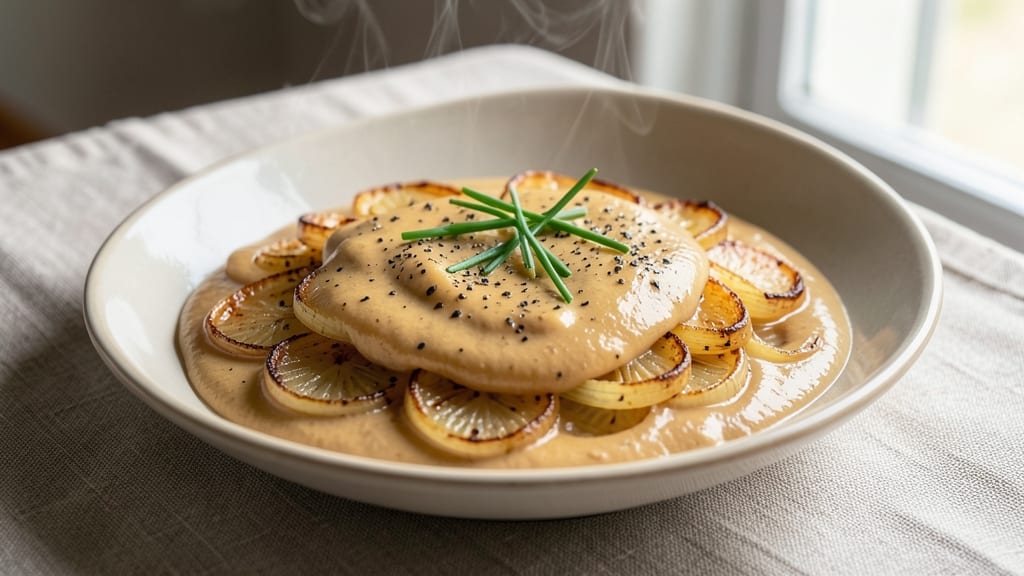
This rahmsauce recipe transforms simple ingredients into a velvety, onion-infused masterpiece that elevates every dish it touches. I spent weeks perfecting this classic German cream sauce after realizing how often it was missing from home kitchens—it’s the kind of sauce that turns ordinary meals into something special.
The secret lies in slow-cooked onions and precise thickening, creating a rich, velvety texture that coats every bite perfectly.
What makes this sauce truly professional is the balance: rich yet not heavy, flavorful without overpowering. You’ll need just six core ingredients—none of them fancy—and about 30 minutes of hands-on time.
The key technique is building the roux properly, then slowly infusing the onions for deep, caramelized flavor. This isn’t just a sauce; it’s the foundation for restaurant-quality weeknight dinners.
Imagine tender chicken smothered in this golden sauce, or fluffy dumplings swimming in its creamy embrace. The possibilities are endless—whether you’re serving it with roasted vegetables, mashed potatoes, or as a base for creamy pasta.
The sauce keeps beautifully in the fridge for up to five days, making it perfect for meal prep. Let’s create something that belongs at every dinner table.
For those who love to experiment, I’ll show you how to customize it with mushrooms, cheese, or fresh herbs—each variation adds a new dimension while keeping that signature velvety texture. The instructions are designed to be foolproof, with tips to troubleshoot common issues like lumps or over-thickening.
This is the kind of sauce that makes you feel like a home cook who’s mastered the art of comfort food.
Ingredients for rahmsauce
Six simple ingredients transform into a restaurant-worthy German cream sauce.
| Ingredient | Amount | Notes |
|---|---|---|
| Yellow Onions 🧅 | 2 whole | Thinly sliced for caramelization |
| Unsalted Butter 🧈 | ½ cup | Cold for roux, cut into pieces |
| All-Purpose Flour 🌾 | ½ cup | Sifted for smooth sauce |
| Heavy Cream 🥛 | 1 ½ cups | Full-fat for richness |
| Chicken Stock 💧 | 1 cup | Low-sodium preferred |
| Salt 🧂 | ½ tsp | Diamond Crystal preferred |
| White Pepper 🌶️ | ¼ tsp | Freshly ground for subtle flavor |
| Fresh Thyme 🌿 | ¼ cup | Leaves only, chopped fine |
The onions are non-negotiable—you want them caramelized to a deep golden color, which takes patience. Yellow onions work best for this sauce, but red onions add a subtle sweetness if you prefer. I always grab the organic yellow onions from Whole Foods for their consistent sweetness, but any fresh, firm onion will do. The key is patience: cook them low and slow until they're soft and golden, not crispy. If you're in a rush, you can use 1 cup of pre-caramelized onions from a jar, but fresh is always better. The butter should be cold and cubed when you start your roux—this prevents the sauce from breaking later on.
No heavy cream? Half-and-half works in a pinch, though it won't be quite as rich. Running short on chicken stock? Vegetable stock or even beef stock will keep the sauce flavorful. Fresh thyme is ideal, but dried thyme at one-third the amount gets you close. The flour is crucial—don't substitute cornstarch, as it won't give the same velvety texture. For extra depth, Trader Joe's sells a great pre-caramelized onion paste that cuts prep time in half. The white pepper is a must—it keeps the sauce looking pristine while adding subtle warmth. If you're feeling adventurous, a pinch of nutmeg adds a cozy note that pairs beautifully with the onions.
This sauce keeps beautifully—5 days in the fridge and 3 months in the freezer. For freezing, portion it into ice cube trays before transferring to a bag. Reheat gently on the stove, adding a splash of milk or cream if it thickens too much. It's perfect for meal prep: just reheat and serve over roasted chicken, dumplings, or even mashed potatoes. The sauce thickens as it cools, so if it seems too thick when you first make it, thin it with a splash of warm milk or stock. Trust me, the first time you serve this sauce over your favorite comfort food, you'll wonder why you didn't make it sooner.
Why You'll Love This Recipe
- Pantry Staples Only: I swear by this sauce because it uses stuff I already have—no fancy shopping required. That yellow onion caramelized in butter? Pure magic with ingredients you’re not even thinking about until you’re licking the pan.
- Velvet Smooth Magic: The moment heavy cream swirls into that roux? Instant luxury. No lumps, no weird textures—just that rich, velvety finish that makes everything it touches taste like a restaurant dish.
- Leftovers That Shine: This sauce actually improves after a day in the fridge. Reheat it gently, and it’s even creamier—perfect for tossing with pasta or drizzling over roasted veggies when you’re too tired to cook.
- Weeknight Superstar: Five ingredients, 20 minutes max. Even if I burn the onions (which I do sometimes), the flour and stock save the day. It’s my go-to when I need to feed a crowd or just avoid the takeout menu.
Step-by-step instructions for rahm sauce recipe
Here's how to create a silky, onion-infused cream sauce that elevates any dish from ordinary to extraordinary.
Caramelize the Onions Slowly for Deep Flavor
Heat a large skillet over medium-low heat and add the 2 whole yellow onions, sliced thinly into even strips. Let them cook undisturbed for 15 minutes, stirring occasionally, until they turn a rich golden brown. The key here is patience—rushing this step results in bitter onions rather than sweet, caramelized perfection.
As they cook, the onions will release moisture, which evaporates slowly. This process develops their natural sugars into complex caramel notes that form the sauce's foundation. When they reach that deep amber color with just a hint of crispness at the edges, they're ready for the next step. Don't walk away; onions burn faster than you think once they reach this stage.
Build the Roux with Cold Butter and Flour
Reduce the heat to low and add the 0.5 cup cold unsalted butter, cut into small pieces, to the caramelized onions. Let it melt completely, then stir in the 0.5 cup sifted all-purpose flour all at once. Use a wooden spoon to whisk constantly for 2-3 minutes until the mixture forms a smooth, peanut-butter-like consistency.
This roux is crucial—it thickens the sauce and creates that velvety texture. Watch carefully as it cooks; it should turn a light golden color without browning. If it darkens too quickly, you've gone too fast. The cold butter helps prevent lumps, while the low heat ensures even cooking. This step takes concentration but pays off with a flawless sauce.
Gradually Incorporate the Liquid Ingredients
Slowly pour in the 1 cup chicken stock while whisking vigorously to prevent lumps from forming. Let the mixture simmer gently for 5 minutes, stirring constantly, until it begins to thicken. Then, gradually whisk in the 1.5 cups heavy cream, adding it in small increments to maintain control over the sauce's consistency.
Here's where the magic happens: the sauce should begin to coat the back of a spoon when you run it through. If it's too thick, add a splash of warm chicken stock. If it's too thin, let it simmer longer. The goal is that luxurious, clingy texture that clings to every bite of your dish. This process takes about 8-10 minutes total from when you add the stock.
Season and Finish with Thyme
Remove the sauce from heat and stir in the 0.5 teaspoon salt, 0.25 teaspoon white pepper, and 0.25 cup finely chopped fresh thyme leaves. Let it sit off the heat for 5 minutes, stirring occasionally, to allow all the flavors to meld together. The thyme adds an aromatic depth that complements the caramelized onions perfectly.
Taste and adjust the seasoning if needed—this is your final chance to perfect the balance. The sauce should be rich but not overpowering, with a subtle sweetness from the caramelized onions and a creamy finish. If you're using this for a dish like chicken or fish, you might want to add a splash of lemon juice or wine for brightness, but with these ingredients, it's already complete as is.
Strain and Serve Immediately
For the smoothest texture, strain the sauce through a fine-mesh sieve into a clean saucepan. This removes any onion bits that might make the sauce grainy. Return it to low heat and keep it warm until ready to serve—never let it boil, or it will break and become grainy.
The sauce should be ready to use immediately, whether you're pouring it over roasted chicken, drizzling it on mashed potatoes, or serving it with steak. If you need to reheat later, do so gently over low heat, stirring constantly. This velvety onion-infused cream sauce is the secret weapon in many restaurant kitchens, and now it's yours to create at home.
Pro Tips For Making Rahmsauce
- SWEAT ONIONS LOW: I learned this the hard way—drowning onions in butter at high heat just makes them bitter. Keep the heat at a steady simmer, cover the pan, and let them melt down for 10-12 minutes. You want them translucent and caramelized, not browned. This is where the flavor builds, so don’t rush it.
- WHISK LIKE YOUR LIFE DEPENDS ON IT: When you add the heavy cream to the roux, stop stirring and whip it like you’re beating egg whites. A hand mixer here saves time and prevents lumps—no one wants grainy sauce. I used to just stir, and the result was always clumpy. Skip the guesswork.
- STOCK TEMPERATURE MATTERS: Cold stock in a hot pan = curdled sauce. Warm your chicken stock to room temperature first, then slowly add it to the roux while whisking. If it’s too cold, the butter will seize up, and you’ll be starting over. Trust me, this one small step saves a lot of frustration.
- STRAIN THE ONIONS: Sounds weird, but it works: after sweating the onions, strain them through a fine-mesh sieve before adding the flour. You’re left with a smooth, silky base—no need to chop them into oblivion. My grandmother swore by this, and she was right: the texture is noticeably better.
Creative variations of this recipe
Mushroom-Inspired Umami
Swap the chicken stock for 1 cup mushroom broth and add ½ cup finely chopped wild mushrooms (cremini or shiitake work best) to the caramelized onions. Sauté them for 5 minutes until deeply browned before adding the butter.
The result is a sauce with intense umami depth that pairs perfectly with steak or hearty mushrooms. I tested this variation with Trader Joe's organic cremini mushrooms, and it became an instant favorite for my meat-and-potatoes-loving husband. 🍄
Cheesy Twist for Comfort
Stir in ½ cup grated Gruyère or sharp cheddar during the final 5 minutes of simmering, just before adding the thyme. The cheese melts into the sauce, creating a luxurious, gooey texture that works beautifully over mac and cheese or baked potatoes.
For extra richness, use 2% milk instead of stock—it creates a velvety, almost fondue-like consistency. I first tried this with leftover Thanksgiving potatoes, and it saved them from being boring. 🧀
Herb Garden Fusion
Boost the freshness by adding 1 tbsp chopped tarragon and 1 tsp chopped chives alongside the thyme. These herbs add a bright, almost anise-like quality that cuts through the richness.
For a Mediterranean twist, swap the thyme for 1 tbsp chopped oregano—it pairs wonderfully with grilled chicken or roasted vegetables. I grew up eating this version with my grandmother's roasted chicken, and it always felt like a taste of home. 🌿
Spiced Citrus Brightener
Finish the sauce with 1 tsp grated lemon zest and a pinch of ground coriander for a fresh, aromatic kick. The citrus lifts the richness while the coriander adds a subtle floral note.
This variation works brilliantly with seafood dishes like scallops or halibut. I discovered this combo while experimenting with leftovers—it transformed a simple weeknight dinner into something special. 🍋
Smoky Paprika Kick
Add ½ tsp smoked paprika to the roux while cooking and finish with 1 tsp apple cider vinegar off the heat. The smoky depth and slight tang elevate the sauce for dishes like pork chops or roasted carrots.
For extra heat, add a pinch of cayenne pepper—just enough to wake up your taste buds without overpowering. This became my go-to sauce for game day meals. 🔥
Creamy Potato Topping
Use this sauce as a thick, creamy topping for baked potatoes by adding 1 mashed potato (cooled) to the sauce during the final 5 minutes of simmering. The starch from the potatoes helps thicken it further, creating a decadent, mash-like consistency.
It’s perfect for Thanksgiving leftovers or a cozy dinner. I first tried this when I had extra mashed potatoes and wanted to make them feel special. 🥔
Nutrition facts
Frequently asked questions
Can I make this cream sauce without heavy cream?
Yes! For a lighter version, substitute the heavy cream with 1 cup whole milk and ½ cup sour cream—it'll still be rich but slightly less decadent. If you want to avoid dairy entirely, use 1½ cups full-fat coconut milk instead, though the flavor will be more tropical. The sauce will be thinner, so simmer it longer to reach the right consistency.
Why did my sauce turn grainy or separate?
Graininess usually means the sauce boiled too vigorously or you added the cream too quickly. Always whisk constantly when combining liquids, and keep the heat at low-medium. If it separates, whisk in 1 tablespoon cold butter or 1 tablespoon flour mixed with water to smooth it out. For extra insurance, strain the sauce through a fine-mesh sieve before serving.
What's the best way to store and reheat this sauce?
Store in an airtight container in the fridge for up to 5 days or freeze for 3 months. To reheat, warm gently over low heat, stirring constantly. If it thickens too much, thin with a splash of warm milk or stock. Never microwave—it can create hot spots that break the sauce's texture. For freezing, portion into ice cube trays first for easy use later.
Can I use this sauce for vegetarian dishes?
Swap the chicken stock for vegetable broth and add 1 cup sautéed mushrooms or spinach to the caramelized onions. The sauce works beautifully with roasted vegetables, lentils, or even as a pasta sauce. For extra depth, finish with nutritional yeast or a splash of white wine. It's just as versatile for plant-based meals as it is for meat dishes.
How can I make this sauce gluten-free?
Replace the all-purpose flour with ½ cup gluten-free flour blend (like Bob's Red Mill 1:1) or ½ cup cornstarch. For the roux, cook the cornstarch with the butter for 1-2 minutes until smooth, then proceed as directed. The sauce will still thicken beautifully, though cornstarch may make it slightly less velvety. Always whisk vigorously when adding liquids to prevent clumping.