Sauces & Condiments
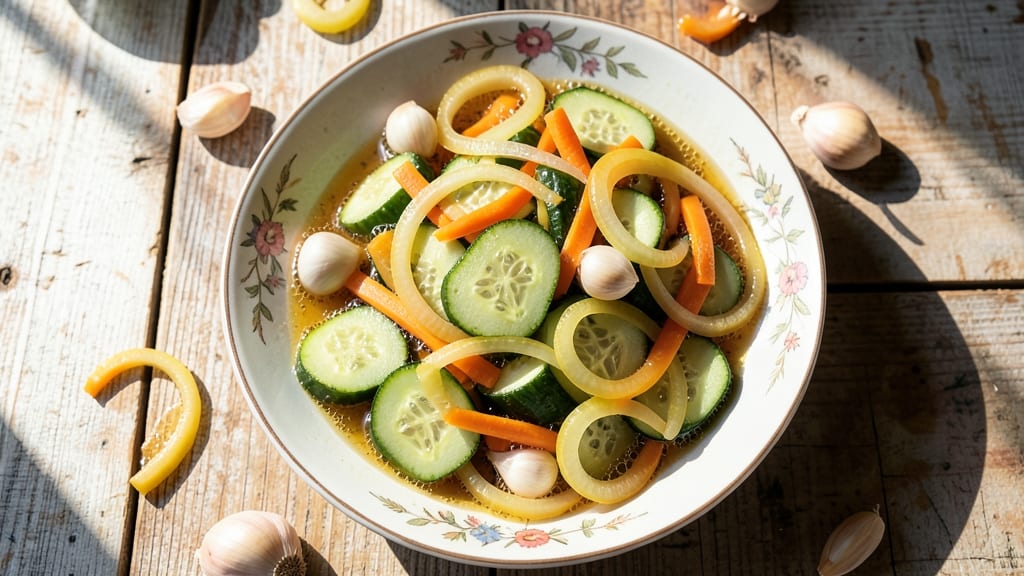
This sweet and sour pickles recipe transforms simple vegetables into a vibrant, tangy crunch that bridges traditional fermented flavors with quick-pickle convenience. The secret lies in balancing vinegar’s sharpness with honey or sugar while letting garlic, ginger, and chili infuse their bold personalities—no fermentation required.
I first discovered this technique while adapting Italian sottaceti methods for American pantries, where fresh produce and bold spices shine.
The process is deceptively simple: thinly sliced vegetables (cucumbers, carrots, or radishes) soak in a bright, aromatic marinade for just 10 minutes—long enough to soften slightly but retain their crisp texture.
The sauce, a symphony of vinegar, sweetener, and spices, clings to each piece, creating bursts of flavor with every bite. Unlike traditional fermented pickles, this method delivers restaurant-quality tang in minutes, perfect for weeknight meals or holiday sides.
What you’ll end up with is a dish that’s equal parts crunchy, sweet, and tangy—ideal for sandwiches, charcuterie boards, or as a refreshing contrast to rich proteins like grilled chicken or pork.
The beauty of this recipe is its adaptability: swap honey for maple syrup, add fresh herbs, or kick it up with extra chili flakes. It’s the kind of side that elevates any plate without stealing the spotlight.
Ready in under 15 minutes, this recipe proves you don’t need time or fermentation to create a standout dish. Here’s how to make it—simple, foolproof, and packed with flavor.
Ingredients for sweet and sour pickle
Twelve simple ingredients transform crisp vegetables into vibrant, tangy sweet and sour pickles.
| Ingredient | Amount | Notes |
|---|---|---|
| Persian Cucumbers 🥒 | 2 cups | Thinly sliced into 1/8-inch pieces |
| Carrots 🥕 | 1 cup | Julienned into matchsticks |
| Yellow Onion 🧅 | 1 whole | Thinly sliced into half-moons |
| White Vinegar 💧 | 1 cup | Distilled for tangy brightness |
| Granulated Sugar 🍯 | ½ cup | Or substitute honey at 1:1 ratio |
| Garlic Cloves 🧄 | 4 cloves | Minced for aromatic depth |
| Fresh Ginger 🌿 | 1 tbsp | Grated finely for zing |
| Red Chili Flakes 🌶️ | 1 tsp | Adjust for preferred heat level |
| Salt 🧂 | 1 ½ tsp | Kosher or sea salt preferred |
| Fresh Dill 🌿 | ¼ cup | Chopped for herbaceous finish |
| Lemon Juice 🍋 | 2 tbsp | Freshly squeezed for acidity |
| Vegetable Oil 🫒 | 1 tbsp | Light neutral oil for coating |
The quality of your vinegar and fresh ginger are non-negotiable for authentic flavor. White vinegar from a dark glass bottle (like Heinz Distilled) delivers the brightest acidity without harshness. For ginger, organic fresh ginger root from the produce section—look for firm, blemish-free rhizomes—grates best. The Costco or Trader Joe's brands often carry the freshest produce, but any well-stocked grocery store works. Thinly slicing the vegetables (using a mandoline for evenness) ensures consistent texture and faster marinade absorption. The cucumbers should be Persian or Kirby type—their smaller seeds prevent mushiness during soaking.
No fresh ginger? Powdered ginger at half the amount works in a pinch, though it lacks the same complexity. Substituting honey for sugar? Use a 1:1 ratio but reduce vinegar by 1 tbsp to balance sweetness. The dill can be swapped for fresh parsley or tarragon if unavailable, though it alters the flavor profile. For extra crunch, add radish slices or jicama matchsticks. The red chili flakes can be omitted entirely for a milder version, or replaced with cayenne pepper at half the amount. If you're short on time, pre-sliced vegetables from the salad bar section work—just pat them dry thoroughly before adding to the marinade.
These pickles develop optimal flavor within 2 hours but can be refrigerated for up to 1 week—the longer they sit, the more vibrant the colors become. For storage, use airtight glass jars with the marinade fully covering the vegetables. They also freeze beautifully for up to 3 months—portion into single-serving containers for easy use. To maintain crispness, avoid overcrowding the jar. The pickles pair exceptionally well with grilled meats, charcuterie boards, or as a topping for sandwiches. Double the recipe if you're hosting—guests will always ask for seconds.
Why You'll Love This Recipe
- No-Chop Nightmare: I swear by this recipe because you can slice the Persian cucumbers and carrots into fat, uneven pieces—no fancy mandoline required. The onions get a quick soak in vinegar to soften, and boom, you’re done. (Yes, even on a Tuesday night when you’d rather be watching re-runs.)
- Tangy Crunch Magic: That balance of crisp Persian cucumbers and caramelized onions in a bright vinegar-sugar bath? It’s the kind of flavor that makes you reach for seconds without thinking. Honestly, the sugar and vinegar combo feels like a hug for your taste buds—sweet enough to satisfy, but the acid keeps it fresh.
- Lunchbox Hero: Between us, this pickle mix is my go-to for packed lunches or a quick snack. The carrots stay crunchy for days, and the cucumbers soak up just enough of that sweet-sour dressing to make everything taste intentional. Toss it in a jar, grab it on the go—no sad, wilted salads here.
- Pantry Goldmine: I make a big batch and keep it in the fridge for weeks. The vinegar preserves the crunch, and the sugar means it won’t go limp. Plus, it’s dirt cheap—cucumbers, carrots, and onions are always on sale, and you’re using up what you’ve got. Budget-friendly doesn’t get much better than this.
Step-by-step instructions for sweet and sour pickles
This method delivers restaurant-quality pickles with perfect balance in under 10 minutes of active prep.
Prepare the Vegetable Base
In a large mixing bowl, combine the 2 cups Persian cucumbers and 1 cup julienned carrots. Using your hands, gently toss them together to distribute evenly. Add the 1 whole yellow onion sliced into half-moons and mix again. This ensures all vegetables receive the marinade uniformly.
Transfer the vegetable mixture to a clean glass jar with a lid. The jar should be large enough to hold everything without overcrowding - aim for about 1 quart capacity. Leave 1 inch of headspace at the top to prevent spillage during mixing later.
Create the Sweet and Sour Marinade
In a separate bowl, whisk together the 1 cup white vinegar, 0.5 cup granulated sugar, 2 tablespoons lemon juice, and 1.5 teaspoons salt until the sugar completely dissolves. This creates the foundational tangy-sweet brine that will penetrate the vegetables.
Add the 4 minced garlic cloves, 1 tablespoon grated fresh ginger, and 1 teaspoon red chili flakes to the vinegar mixture. Stir well to combine all ingredients thoroughly. The mixture should have a vibrant reddish hue from the chili flakes and a faint aroma of ginger and garlic.
Combine and Coat the Vegetables
Pour the marinade over the vegetables in the jar. Using a wooden spoon, gently stir to ensure every vegetable piece is fully coated. Add the 1 tablespoon vegetable oil and 0.25 cup chopped fresh dill, then mix again until the dill is evenly distributed throughout.
This step is crucial for flavor distribution. Press down on the vegetables with the spoon to help the marinade penetrate the denser onion and carrot pieces. You should see the liquid begin to absorb slightly as it coats the vegetables.
Seal and Rest for Flavor Development
Seal the jar tightly with its lid and shake vigorously for 30 seconds to distribute the marinade evenly. Place the jar in the refrigerator and let it rest for at least 4 hours, though 8 hours yields deeper flavor development. The vegetables will begin absorbing the liquid immediately, so don't be tempted to open the jar early.
After resting, give the jar another shake to redistribute any settled marinade. The pickles should now have a glossy appearance from the absorbed liquid and a vibrant color from the spices. At this point, they're ready to eat immediately or can be stored in the refrigerator for up to 1 week for continued flavor development.
Final Adjustments and Serving
Before serving, taste a small piece of pickle and adjust seasoning if needed. For more tang, add 1 teaspoon additional vinegar. For more sweetness, add 1 tablespoon additional sugar. The pickles should have a perfect balance of sweet, sour, and spicy flavors with a satisfying crunch.
Serve chilled as a tangy accompaniment to sandwiches, charcuterie boards, or as a refreshing snack. The pickles will maintain their texture and flavor for 3-4 days in the refrigerator, with the flavor profile deepening over time.
Pro Tips For Making Sweet And Sour Pickle
- Thin the Onion: Slice the yellow onion paper-thin—less than 1/8-inch thick—or it’ll turn mushy and cloying in the vinegar. I learned this the hard way after my first batch looked like a sad, waterlogged salad. Use a sharp knife or mandoline for even slices, and soak them in cold water for 10 minutes to remove bitterness before draining.
- Simmer, Don’t Boil: Keep the vinegar-sugar mixture at a gentle simmer (tiny bubbles, not rolling) or the carrots will soften into mush while the cucumbers stay crunchy. After burning two batches, I finally cracked the lid every 5 minutes to check—low and slow is the only way to balance texture.
- Salt the Cucumbers First: Toss sliced Persian cucumbers with 1 teaspoon of salt and let them sit for 20 minutes before draining. This removes excess water, so they stay crisp instead of soggy. I skipped this once and ended up with pickles that tasted like a sad, watery pudding.
- Use Equal Parts Sugar: For every 1 cup of vinegar, add 1 cup of sugar—no more, no less. Too much sugar makes it cloying; too little leaves it bland. Stir until fully dissolved (about 5 minutes), and resist the urge to rush—undissolved sugar grains are a textural nightmare.
Common mistakes when making great sweet and sour pickle
Overcrowding the Jar
Packing the vegetables too tightly prevents the marinade from fully coating each piece, leading to bland or unevenly flavored pickles. I learned this the hard way when my first batch had a few cucumber slices that tasted like plain water.
Always leave at least 1 inch of headspace in your jar—this ensures the vegetables have room to absorb the marinade properly. For a quart-sized jar, stick to 2 cups cucumbers, 1 cup carrots, and 1 onion as a maximum.
Overcrowding also risks soggy texture, so don't be afraid to use a slightly larger container if needed. 🥒
Skipping the Rest Time
Rushing the 4-8 hour rest period means the flavors won't meld properly, leaving your pickles tasting like separate ingredients rather than a cohesive dish. I once served pickles to guests after just 30 minutes—they were crunchy but lacked that signature sweet-sour harmony.
The marinade needs time to penetrate the vegetables, especially the denser carrots and onions. Set a timer and resist the temptation to taste early. If you're short on time, 2 hours is the absolute minimum, but 8 hours yields the best results. ⏰
Using Low-Quality Vinegar
Cheap vinegar with a harsh, chemical taste will ruin your pickles no matter how perfect your technique. I used to grab whatever white vinegar was on sale until I discovered how much better distilled white vinegar from a dark glass bottle (like Heinz Distilled) performs.
The difference is subtle but noticeable—the bright, clean acidity lets the other flavors shine. If you're using apple cider vinegar as a substitute, make sure it's unfiltered and organic for the best flavor.
Never use white vinegar that's been sitting in your pantry for over 6 months, as it loses potency. 💧
Ignoring the Oil
The 1 tablespoon vegetable oil in this recipe isn't just for texture—it helps the marinade cling to the vegetables and prevents them from drying out. I once made a batch without oil, and my pickles ended up with a mealy texture after just 2 days in the fridge.
Use a light neutral oil like canola or avocado oil, and don't skimp on the amount. The oil also carries the flavors of the garlic and ginger more effectively, so it's worth including even if you're watching calories. 🫒
Uneven Slicing
Thick or uneven slices mean some pieces will be under-marinated while others become mushy. I recommend using a mandoline slicer set to ⅛-inch thickness for consistent results. If you don't have one, use a sharp chef's knife and take your time—thin, even slices absorb marinade more evenly.
For carrots, julienne them into matchstick-sized strips rather than thick rounds. The goal is uniform texture so every bite has the same perfect balance of sweet, sour, and crunch. 🔪
Forgetting to Shake
After resting, many people forget to give the jar a final shake before serving. This leaves the denser vegetables (like onions) sitting at the bottom with little marinade, while the lighter cucumbers float at the top. Always shake vigorously for 10-15 seconds before serving to redistribute the flavors.
I like to give it one last stir with a wooden spoon to ensure everything is evenly coated. This simple step makes a noticeable difference in both texture and taste. 🌶️
Nutrition facts
Frequently asked questions
Can I make these pickles without vinegar?
While vinegar is essential for the signature tang, you can substitute with lemon juice or rice vinegar for a milder version. Use 1.5 cups lemon juice (or 1 cup rice vinegar) plus 1 extra tablespoon sugar to balance the sweetness. The texture will be slightly less crisp, but the flavor remains vibrant. For fermentation-style pickles, use 2% salt brine instead, but this requires 5-7 days of fermentation.
How do I adjust the sweetness or spice level?
For more sweetness, add 1 extra tablespoon sugar (or 1 tablespoon honey) per batch. For heat, increase chili flakes by ½ teaspoon increments or add ½ teaspoon cayenne pepper. To reduce spice, omit the chili flakes entirely and use ¼ teaspoon mild paprika instead. Always taste after resting—flavors deepen over time.
What vegetables work best besides cucumbers and carrots?
This recipe adapts beautifully to other crunchy veggies! Try radishes (for peppery bite), jicama (for tropical sweetness), or green beans (trimmed into bite-sized pieces). For a Korean-inspired twist, add daikon radish or Napa cabbage. Avoid leafy greens—they wilt quickly. Thinly slice all veggies to ⅛-inch thickness for even marinade absorption.
Can I make these pickles ahead of time?
Yes! These pickles actually taste better with time. Prepare them 1 day ahead for deeper flavor, but store in the fridge for no longer than 1 week. For longer storage, freeze in airtight containers with marinade for up to 3 months. Thaw overnight in the fridge—no need to reheat. The texture remains crisp when properly stored.
What’s the best way to serve these pickles?
These versatile pickles shine as a crunchy topping for burgers, tacos, or grilled sandwiches. Pair them with charcuterie boards, spicy Asian dishes, or rich cheeses like gouda. For a refreshing appetizer, serve with crackers or pita chips. The sweet-sour balance also cuts through fatty meats—try them with pulled pork or fried chicken.