Breakfast & Brunch
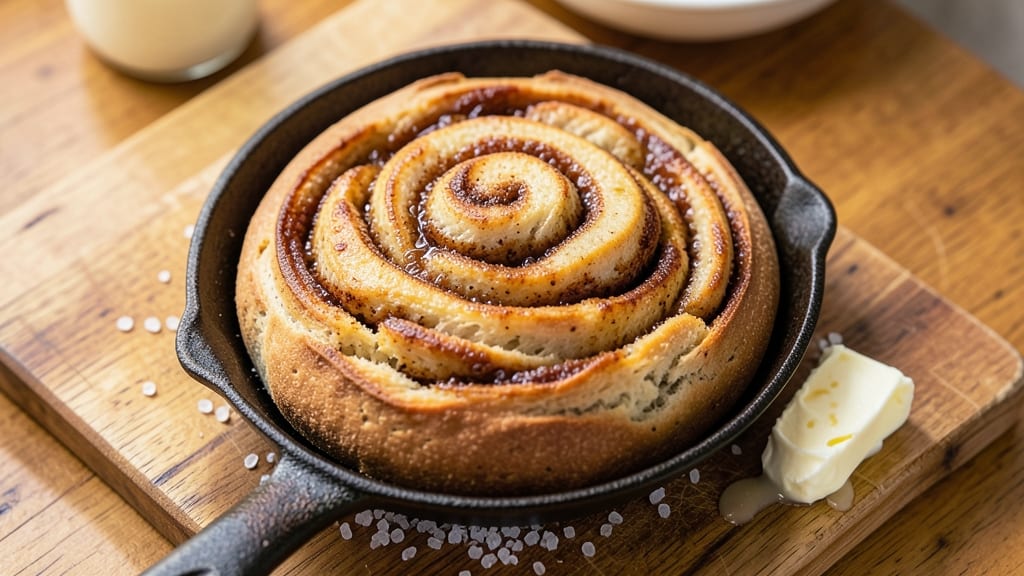
This Amish cinnamon swirl bread recipe delivers the comforting aroma and tender texture of a classic homestyle loaf, with golden swirls of cinnamon-sugar that make every slice irresistible.
The secret lies in a simple no-knead dough that develops rich flavor during slow fermentation, while the swirl technique creates those signature caramelized patterns that make this bread so special.
After years of perfecting this recipe, I've found the right balance between traditional methods and modern convenience—no stand mixer required, just patience and precision.
The dough begins with basic pantry staples—flour, sugar, yeast, and milk—that come together to form a soft, slightly sticky mixture.
The cinnamon-sugar filling, made with just butter, brown sugar, and a pinch of salt, gets rolled into the dough in a way that ensures those warm swirls remain visible after baking.
Proofing overnight in the refrigerator enhances the flavor and makes the dough easier to handle, while baking at a precise temperature ensures a golden crust and tender crumb. This method guarantees a loaf that's both impressive and foolproof.
By the time it emerges from the oven, you'll have a loaf with a crispy, golden crust that gives way to tender, slightly sweet bread with pockets of caramelized cinnamon-sugar.
The aroma alone will fill your kitchen with warmth, while the texture offers just the right balance of chewiness and softness.
Slice it fresh from the oven, and you'll understand why this bread has been a staple in Amish kitchens for generations—it's the kind of treat that feels like a hug in every bite.
Serve this bread warm with butter, jam, or a dollop of whipped cream for a breakfast that feels like a celebration. The leftovers keep well for days, making it perfect for meal prep or gifting.
Whether you're baking for a family gathering or simply craving a taste of homestyle comfort, this recipe delivers results that taste like tradition. Let's get started on creating your own loaf of this beloved classic.
Ingredients for amish cinnamon swirl bread
Pantry staples plus a few simple swirls—this bread needs just 11 ingredients for homestyle perfection.
| Ingredient | Amount | Notes |
|---|---|---|
| All-Purpose Flour 🌾 | 4 cups | Spooned and leveled, not packed |
| Granulated Sugar 🍚 | ¼ cup | White or light brown |
| Instant Yeast 🍞 | 2 ¼ tsp | Single-use packet preferred |
| Warm Whole Milk 🥛 | 1 cup | 110°F, not boiling |
| Large Egg 🥚 | 1 whole | Room temperature |
| Unsalted Butter 🧈 | ½ cup | Cold, cubed for filling |
| Light Brown Sugar 🍚 | ¾ cup | Packed firmly |
| Ground Cinnamon 🌶️ | 2 tbsp | Freshly ground preferred |
| Kosher Salt 🧂 | 1 ½ tsp | Divided for dough and filling |
| Vegetable Oil 🫒 | 2 tbsp | For greasing bowl |
| Coarse Sugar 🍚 | 2 tbsp | For topping (optional) |
The flour is your foundation here. King Arthur or Gold Medal brands yield the best texture—light and airy without being too dense. I always measure by scooping and leveling (no packing!) to avoid a heavy loaf. The yeast? Fresh is best—check the date on that packet. If it's been sitting in your pantry for months, grab a new one. For the milk, warm it until it's like bathwater (110°F)—too hot and you'll kill the yeast. Too cold and it won't activate properly. The butter should be cold for the filling—soft enough to mix but not melted, or your swirls will get greasy.
No brown sugar? White sugar plus a pinch of molasses works in a pinch (about 1 tsp per 1/4 cup). Short on cinnamon? Cinnamon sticks ground in a spice grinder taste fresher than pre-ground. The filling can be prepped ahead—just store it between parchment paper in the fridge for up to 3 days. For the dough, if you're short on time, use active dry yeast with 1 extra tsp sugar (dissolve it in the warm milk first). And that coarse sugar topping? Skip it if you're watching sugar—the bread still tastes amazing.
This dough is a dream to prep ahead. Mix it up, let it rest at room temp for 1 hour, then refrigerate overnight. It keeps for 48 hours that way, making it perfect for lazy mornings. Once baked, let it cool completely on a wire rack—cutting it warm makes it gummy. Store wrapped in a bread bag at room temp for 3 days, or freeze slices for 3 months. I like to reheat wrapped in foil at 350°F for 10 minutes
Why You'll Love This Recipe
- No-Knead Magic: I swear by this—just mix the dough, let it rise, and fold in that gooey cinnamon-sugar swirl without a single punch or roll. The milk and egg make it tender, and the yeast does all the heavy lifting while you sip coffee.
- Swirl Obsession: That caramelized cinnamon-sugar ribbon? It’s the star. The warm milk and sugar create a buttery, slightly tangy crust, while the egg keeps the crumb soft. One bite, and you’ll understand why my kids beg for seconds before the loaf even cools.
- Breakfast-to-Dessert Fix: Serve it warm with butter for breakfast, toast it for a snack, or slice it for a dessert with ice cream. Honestly, I’ve used it in everything from French toast to a quick bread pudding—because why waste such a versatile loaf?
- Budget-Friendly Staple: Flour, sugar, milk, and an egg? That’s it. No fancy ingredients, just pure, reliable comfort. A single batch lasts my family five days, and I freeze half for lazy mornings. (Yes, even on a Tuesday night.)
Instructions for Amish cinnamon swirl bread recipe
Here's the straightforward method to achieve that perfect tender crumb and gooey cinnamon swirl.
Mix the Dough for Maximum Tenderness
In a large mixing bowl, combine the 4 cups all-purpose flour, 1.5 tsp kosher salt, and 2.25 tsp instant yeast. Whisk these dry ingredients together until evenly distributed - you should see no more than a few small flour streaks remaining.
Create a well in the center and pour in the 1 cup warm whole milk (about 110°F), 1 whole large egg, and 0.25 cup granulated sugar. Using a wooden spoon or dough whisk, gradually incorporate the wet ingredients into the dry, mixing just until a shaggy dough forms. Avoid overmixing at this stage - you're looking for a sticky, slightly uneven dough that comes together when pressed.
Once combined, add 2 tbsp vegetable oil and continue mixing until the dough becomes smooth and elastic. It should pull away from the sides of the bowl and form a cohesive ball. If it's still too sticky, add 1-2 tablespoons more flour (though I've never needed it with these exact measurements). Cover the bowl with a clean kitchen towel and let it rest for 10 minutes - this initial rest helps develop gluten structure.
Knead and Shape for Perfect Rise
After the 10-minute rest, turn the dough out onto a lightly floured surface. Gently shape it into a ball, then begin kneading for 8-10 minutes by hand or using a stand mixer with a dough hook attachment. You're looking for a smooth, elastic dough that springs back slowly when poked - this indicates proper gluten development.
Here's the thing - don't worry if your dough doesn't look perfect immediately. The key is consistency: knead until the dough feels uniformly smooth and slightly tacky to the touch. If it starts sticking too much, wet your hands slightly rather than adding more flour.
Once kneaded, shape the dough into a rectangle about 12x8 inches. This rectangular shape is crucial for creating those beautiful swirls later. Place the shaped dough back in the greased bowl, cover with the towel, and let it rise in a warm place for 1 hour or until it has doubled in size. You'll know it's ready when the dough springs back very slowly when poked gently with a finger.
Prepare the Filling and Final Rise
While the dough rises, prepare the cinnamon filling in a small bowl. Combine 0.5 cup unsalted butter (softened but not melted), 0.75 cup light brown sugar, 2 tbsp ground cinnamon, and the remaining 0.5 tsp kosher salt. Mix until the butter and sugars are thoroughly combined, creating a thick, spreadable paste.
After the dough has risen, punch it down gently to release any air bubbles. On a lightly floured surface, roll the dough out into a 12x16 inch rectangle - about ⅛ inch thick. This is where the magic happens: spread the cinnamon butter mixture evenly over the entire surface, leaving about ½ inch border around the edges. This prevents the filling from leaking out during baking.
Starting from the long side, tightly roll the dough into a log, sealing the edge as you go. Place the sealed log seam-side down in the same greased bowl and cover with the towel. Let it rise for another 30-45 minutes until it has puffed up noticeably. This final rise ensures that beautiful swirl pattern when it bakes.
Bake to Golden Perfection
Preheat your oven to 350°F. Once the dough has risen, remove it from the bowl and place it on a parchment-lined baking sheet. If you want that classic crunchy top, sprinkle 2 tbsp coarse sugar evenly over the top of the loaf. Bake for 40-45 minutes until the bread is deep golden brown and sounds hollow when tapped on the bottom.
Here's the test I use: when the bread is done, the internal temperature should reach 190-200°F in the center. The edges should be pulling away slightly from the pan, and you should smell that wonderful cinnamon aroma filling your kitchen. If the top browns too quickly, tent it loosely with aluminum foil after 20 minutes to prevent over-browning while the center finishes baking.
Remove from the oven and let the bread cool on a wire rack for 10-15 minutes before slicing. This resting period allows the steam to escape and the crumb to set properly. The result should be a tender, slightly dense crumb with those beautiful cinnamon swirls peeking through - just like homemade Amish bread should be.
Pro Tips For Making Amish Cinnamon Swirl Bread
- Test Yeast First: Pour ¼ cup warm milk into a small bowl, sprinkle in ¼ teaspoon yeast, and wait 5 minutes—if it doesn’t foam, your yeast is dead. I learned this the hard way after baking a dense, flat loaf that tasted like cardboard. Trust me, this 2-minute check saves hours of frustration.
- Chill the Dough: After kneading, let the dough rise until doubled, then refrigerate it for at least 1 hour before shaping. This step tightens the gluten, prevents overproofing, and makes the swirls stay put when you roll it out. (Yes, even if you’re impatient like me.)
- Sweeten the Milk: Mix 1 tablespoon sugar into the warm milk before activating the yeast—this jumpstarts fermentation and makes the bread rise faster. I was skeptical until I tried it; now I never skip it.
- Roll Tight, Swirl Loose: Press the cinnamon-sugar filling into a thin, even layer before rolling, but don’t overpack it—too much filling bursts through the cracks when baking. Aim for a ½-inch-thick layer, and roll just until the edges meet, not tighter. (Your future self will thank you.)
Best sauces and condiments for amish cinnamon swirl bread
Buttercream Frosting
The classic pairing for Amish cinnamon swirl bread is a smooth vanilla buttercream frosting that balances the warm spices. Whip together ½ cup softened unsalted butter, 2 cups powdered sugar, 2 tbsp heavy cream, and 1 tsp vanilla extract until fluffy.
Spread a thin layer between slices or pipe decorative swirls on top for an elegant touch. 🥛
Honey Butter
For a simpler, equally delicious option, melt ½ cup unsalted butter with ¼ cup honey and a pinch of sea salt until fully combined. Let it cool slightly before spreading on warm bread slices.
The honey enhances the cinnamon's natural sweetness while adding a subtle floral note. I often make a batch ahead and store it in the fridge for up to 2 weeks.
Maple Cream
Swap buttercream for a lighter maple cream by mixing ½ cup softened cream cheese, ¼ cup maple syrup, and 1 tsp vanilla. Whip until smooth and spread between slices.
This option works beautifully with the bread's rich, caramelized flavors while keeping it lighter. Use Grade B maple syrup for deeper flavor—it's less filtered and more robust.
Spiced Whipped Cream
For a festive touch, whip 1 cup heavy cream with 1 tbsp powdered sugar, ½ tsp cinnamon, and ¼ tsp nutmeg until soft peaks form. Dollop alongside slices or pipe a rosette on top.
The subtle spices complement the bread's cinnamon swirls without overpowering them. Store whipped cream in an airtight container for up to 3 days in the fridge.
Caramel Drizzle
Elevate your bread with a salted caramel drizzle made from ½ cup granulated sugar, ¼ cup heavy cream, and 1 tbsp butter. Simmer until golden, then drizzle over warm slices.
The caramel's depth contrasts beautifully with the bread's tender crumb. For extra flair, sprinkle with flaky sea salt right before serving. 💫
Cream Cheese Glaze
Mix 4 oz softened cream cheese, ½ cup powdered sugar, and 1 tbsp milk until smooth. Drizzle over sliced bread while still warm for a glossy finish.
This glaze adds a subtle tang that cuts through the sweetness. I like to dust with powdered sugar right after glaze application for a bakery-style presentation.
Nutrition facts
Frequently asked questions
Why does the dough need two rises?
The first rise develops gluten for structure, while the second rise after adding the filling creates those signature swirls. The second rise also ensures the cinnamon butter stays evenly distributed throughout the loaf. Skipping either can result in dense bread or uneven swirls.
Can I make this without a stand mixer?
This recipe is designed for hand mixing and kneading. Use a wooden spoon for mixing and knead the dough on a lightly floured surface for 8-10 minutes. The dough should feel smooth and slightly tacky. The no-knead method makes it perfect for beginners.
What if my cinnamon swirls don't show through?
This usually happens if the dough is too thick or the filling wasn't spread evenly. Roll the dough thinner (⅛ inch) and leave a ½ inch border around edges. Also, don't overfill—use the full 0.5 cup butter but spread it thinly. The final rise helps the swirls peek through.
How do I store leftovers?
Wrap cooled bread in an airtight container or bread bag at room temperature for 3 days. For longer storage, slice and freeze for 3 months. Reheat slices wrapped in foil at 350°F for 10 minutes to restore freshness. Never store warm bread—it gets soggy.
Can I use a different sweetener instead of sugar?
Yes, but adjust ratios carefully. For brown sugar, use Grade B maple syrup (1:1 replacement) or honey (reduce by 25% due to moisture). Avoid coconut sugar—it burns easily. Test small batches first, as sweetness varies by brand. The filling's caramelization depends on sugar's properties.