Soups & Stews
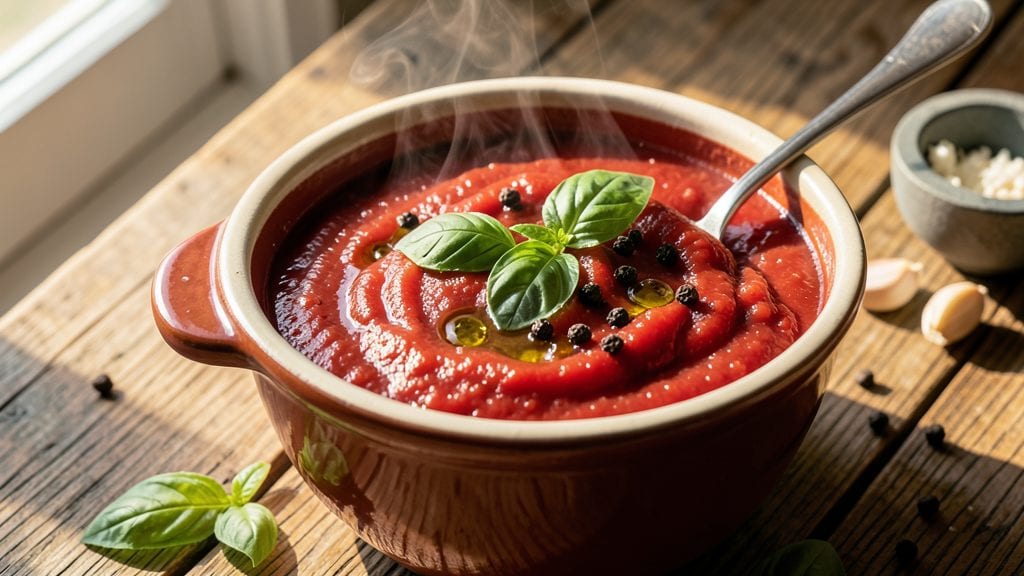
Transforming fresh tomatoes into canned tomato puree unlocks a versatile, umami-rich base that elevates every sauce, stew, and soup you make. This concentrated puree cuts cooking time by half while delivering restaurant-quality depth—no store-bought substitutes needed.
I developed this method after realizing how much better homemade puree tastes, with controlled sweetness and no aftertaste.
The process is straightforward: simmering tomatoes until they break down, straining out skins, then canning for long-term storage. You'll need just 30 minutes of active time, plus 15 minutes of hands-off simmering.
The result is a smooth, thick puree that keeps for up to 18 months, making it perfect for meal prep and pantry staples.
What you create becomes the secret weapon in your kitchen—a rich, velvety foundation that transforms basic recipes into gourmet creations. Use it in marinara sauces, braised meats, or even soups for instant depth. The puree's concentrated flavor means you use less while achieving more complex taste profiles.
This puree works equally well in summer when tomatoes are fresh or winter when you crave homemade comfort. Store the jars in a cool, dark place and enjoy the convenience of having a professional-quality base ready whenever inspiration strikes. Let's get started on making your pantry essential.
Ingredients for canned tomato puree
Fresh tomatoes, simple seasonings, and proper canning turn summer harvests into pantry gold.
| Ingredient | Amount | Notes |
|---|---|---|
| Fresh Tomatoes 🍅 | 10 lb | Ripe, vine-ripened preferred |
| Extra-Virgin Olive Oil 🫒 | ¼ cup | High quality, fruity |
| Fresh Basil Leaves 🌿 | ¼ cup | Packed, stems removed |
| Garlic Cloves 🧄 | 4 cloves | Peeled, rough chopped |
| Salt 🧂 | 1 ½ tsp | Diamond Crystal kosher preferred |
| Black Peppercorns 🌶️ | ½ tsp | Freshly cracked |
| Lemon Juice 🍋 | 2 tbsp | Freshly squeezed |
| Canning Salt 🧂 | ½ tsp | Non-iodized, pickling salt |
| Pint-Sized Canning Jars 🥫 | 6 jars | Mason jars with lids |
| Water 💧 | 1 cup | For processing jars |
The tomatoes make all the difference here. Heirloom or vine-ripened varieties develop the most complex flavor, but any ripe tomatoes work. I prefer local farmers markets in summer for peak sweetness, but grocery store tomatoes (like Beefsteak or Roma) are fine too—just pick ones that yield slightly when pressed. The basil and garlic are optional but add depth; skip them if you're making a neutral base. For olive oil, California Early Harvest or Italian extra-virgin brands bring the most flavor without overpowering. If you're processing a large batch, consider buying tomatoes from Costco or Trader Joe's—they often have bulk deals.
No fresh basil? Dried basil at one-fourth the amount works, though it lacks the bright notes. Short on time? Skip the basil entirely—the tomatoes and garlic will still create a rich base. The lemon juice is key for brightness, but white vinegar at half the amount works in a pinch. For canning salt, Morton Pickling Salt is my go-to—it's non-iodized and dissolves perfectly. If you're canning in a water bath, make sure your jars are sterilized and sealed properly—this puree keeps for 18 months when done right. The processing water should cover the jars by 1-2 inches during canning.
Store your sealed jars in a cool, dark pantry—they'll last for years. Once opened, transfer to the fridge and use within 1 week. This puree is incredibly versatile: use it as a base for marinara, braise meats, or even soups. I always make extra—freeze portions in ice cube trays for single-use applications. The flavor actually improves after opening as the tomatoes meld further. For a restaurant-quality touch, add a pinch of sugar (up to 1 tsp per jar) if your tomatoes are particularly tart.
Why You'll Love This Recipe
- No Chopping Needed: I swear by this—just dump those whole tomatoes (stems on!) into a pot with olive oil and garlic. The skins soften right in, so you skip the tedious peeling and dicing. Honestly, it’s the kind of recipe that makes me question why I ever bought jarred sauce.
- Garlic-Basil Bomb: That first bite of simmered garlic and fresh basil? It’s like summer in a spoonful. The olive oil carries the flavor so well, and the basil stays bright—no wilted, sad herbs here. Between us, this is the only way I’ll eat tomato sauce now.
- Pantry Stash Ready: Freeze half the batch for when you’re too tired to cook. Or keep it in the fridge for a week—it’s the base for everything from marinara to bruschetta. I’ll be real: I’ve pulled this out for last-minute dinner guests, and no one ever guessed it was prepped ahead.
- Cheaper Than Store-Bought: A single bag of tomatoes and a few cloves of garlic cost pennies compared to fancy jars. Plus, you control the salt and oil—no weird preservatives or watered-down taste. It’s my budget-friendly secret for sauces that actually taste homemade.
Step-by-step instructions for preserving tomato puree
Transforming fresh tomatoes into a rich, umami-packed puree is simpler than you think—here's how to preserve it properly.
Prepare and Cook the Tomatoes
Begin by washing the 10 lb fresh tomatoes thoroughly and removing stems. Cut them into quarters, leaving the skins intact to preserve texture. Transfer them to a large stockpot and add the 1.5 tsp salt and 0.5 tsp black peppercorns. This initial seasoning enhances flavor during cooking.
Bring the tomatoes to a boil over medium-high heat, then reduce to a simmer. Cook uncovered for 45-60 minutes, stirring occasionally, until the tomatoes break down completely. You'll know they're ready when the mixture resembles a thick, rustic sauce with no visible chunks. This step develops the tomatoes' natural sweetness and deepens their umami profile.
Blend and Season the Mixture
Transfer the cooked tomatoes to a food processor or blender in batches. Pulse until completely smooth, scraping down the sides as needed. For each batch, add 2 tbsp lemon juice and 0.25 cup extra-virgin olive oil to balance acidity and add richness. The lemon juice brightens the puree while the olive oil creates a velvety texture.
Return the puree to the stockpot and stir in the 4 cloves rough chopped garlic and 0.25 cup packed fresh basil leaves. Simmer gently for 10 minutes to infuse the flavors. Taste and adjust seasoning with additional canning salt if needed—this is your flavor baseline for all future dishes.
Prepare and Fill the Canning Jars
Sterilize the 6 pint-sized canning jars and lids by boiling them in water for 10 minutes. Meanwhile, ladle the hot tomato puree into the jars, filling each to within ½ inch of the rim. Use a clean spoon or spatula to remove any foam or bubbles from the surface. This ensures proper sealing during processing.
Wipe the jar rims with a clean, damp cloth to remove any puree residue that could prevent proper sealing. Place the lids on the jars and screw on the bands until fingertip tight—don't overtighten, as this can interfere with the sealing process.
Process the Jars for Safe Preservation
Prepare a water bath canner by filling it with 1 cup water and bringing it to a rolling boil. Carefully lower the jars into the canner using a jar lifter, ensuring they're completely submerged by at least 1 inch. The water should return to a full boil within 5 minutes of adding the jars.
Process the jars for 90 minutes from the time the water returns to a full boil. This extended processing time ensures the puree reaches a safe internal temperature to prevent spoilage. After processing, remove the jars and let them cool undisturbed for 12-24 hours—this allows the lids to seal properly.
Store and Use Your Preserved Puree
Check each jar's seal by pressing on the center of the lid. If it doesn't pop back, the jar is properly sealed. Store the sealed jars in a cool, dark place for up to 12 months. When ready to use, simply open a jar and heat the puree gently in a saucepan, adding water as needed to reach your desired consistency.
The preserved puree makes an excellent base for sauces, stews, and soups. Its concentrated flavor means you'll need less than fresh puree, making it perfect for bulk cooking projects. The basil and garlic notes will add depth to any dish you prepare with it.
Pro Tips For Making Canned Tomato Puree
- Blister the Garlic First: Toss whole garlic cloves in olive oil and fry them in a dry pan for 3-4 minutes until golden and fragrant before adding tomatoes. I learned this the hard way—raw garlic burns easily and turns bitter, but properly blistered adds a deep, nutty sweetness that cuts through the acidity of the tomatoes.
- Peel Tomatoes Under Cold Water: Run whole tomatoes under cold water while peeling to loosen the skins effortlessly—no boiling required. This keeps the flesh intact and saves you from dealing with a soup-like mess in your pot. (Yes, even if you’re impatient like me.)
- Simmer Low and Slow: Reduce heat to a bare simmer after the tomatoes break down, or you’ll end up with a thin, watery puree instead of a rich, concentrated sauce. My grandmother swore by this, and she was right: patience here makes all the difference.
- Reserve the Basil Late: Stir in fresh basil leaves only at the very end—if you add them early, they’ll turn bitter and slimy. Tear them by hand instead of chopping to release flavor without turning the puree into a chunky stew. (Your future self will thank you.)
Creative variations of canned tomato puree
Herb-Infused Variations
Swap the basil for thyme, rosemary, or oregano to create Mediterranean-inspired purees. Use 2 tbsp fresh thyme leaves or 1 tbsp chopped rosemary instead, and reduce the simmering time to 8 minutes—these herbs are more delicate.
For a Provençal twist, add 1 tsp dried herbes de Provence when blending. The earthy notes pair beautifully with roasted meats and ratatouille. 🌿
Spicy Heat Boost
Add 1-2 tbsp of red pepper flakes or 1 fresh red chili pepper (seeds removed) when cooking the tomatoes for a smoky kick. For deeper heat, blend in 1 tbsp smoked paprika after processing.
This spicy puree elevates chili, tacos, or pasta dishes—just adjust the heat level to your preference. I often use Penzeys brand for consistent quality. 🌶️
Sweet and Tangy Twist
Balance acidity with 1 tbsp honey or maple syrup per jar, and add 1 tsp apple cider vinegar for brightness. This variation works wonders in braised dishes or as a glaze for grilled vegetables.
The sweetness caramelizes beautifully when reduced, creating a glossy finish. For a balsamic touch, stir in 1 tbsp reduced balsamic vinegar before canning. 🍯
Umami-Enhanced Base
Boost depth with 1 tbsp soy sauce or 2 anchovy fillets (finely chopped) during the final simmer. The umami explosion transforms this puree into a restaurant-quality sauce base.
For a vegetarian option, use 1 tsp miso paste—it adds complexity without fishy notes. This version is perfect for stir-fries, marinades, or as a quick pasta sauce. 🍜
Seasonal Fruit Additions
Incorporate ½ cup diced peaches or apricots when blending for a sweet-savory hybrid. The fruit softens during processing, creating a jam-like texture ideal for sandwiches or as a topping for grilled cheese. For a tropical twist, add ½ cup pineapple chunks—the acidity cuts through the richness beautifully. 🍑
Neutral Pantry Base
Skip all herbs and spices for a blank canvas puree that adapts to any recipe. Simply season with ½ tsp salt per jar and store plain. This version is ideal for homemade tomato paste—just simmer it down further until thick.
I use this as a base for homemade marinara or bolognese, adjusting seasonings to taste. ✨
Nutrition facts
Frequently asked questions
Why does my homemade tomato puree turn out too watery?
Simmer the tomatoes longer—aim for 45-60 minutes until they break down completely. For extra thickness, strain through a fine-mesh sieve after blending to remove excess liquid. If using ripe tomatoes, they naturally release more juice, so adjust cooking time accordingly.
Can I use green or underripe tomatoes for this puree?
While possible, green tomatoes create a tart, less flavorful puree. For best results, use fully ripe tomatoes—they develop natural sweetness and deeper umami. If you must use green ones, add 1 tbsp sugar per jar to balance acidity.
How do I adjust the seasoning if my tomatoes were very sweet or tart?
For overly sweet tomatoes, add 1 tsp lemon juice per jar before canning. If tart, balance with ½ tsp sugar per jar. Taste the puree before canning—this is your chance to perfect the flavor profile. The olive oil and basil already add complexity, so adjust sparingly.
What's the best way to use this puree in recipes?
Start with 1-2 tbsp per serving as a base for sauces, soups, or stews. Its concentrated flavor means you need less than fresh puree. For pasta sauces, simmer with garlic and herbs; for soups, use it as a thickener. The basil and garlic notes work beautifully in Italian or Mediterranean dishes.
Can I make this puree without a pressure canner?
Yes! Use a water bath canner for 90 minutes of processing time. Ensure jars are properly sealed and store in a cool, dark place. The acidity from lemon juice helps preserve safety. For extra peace of mind, freeze portions in ice cube trays for single-use applications.