Appetizers
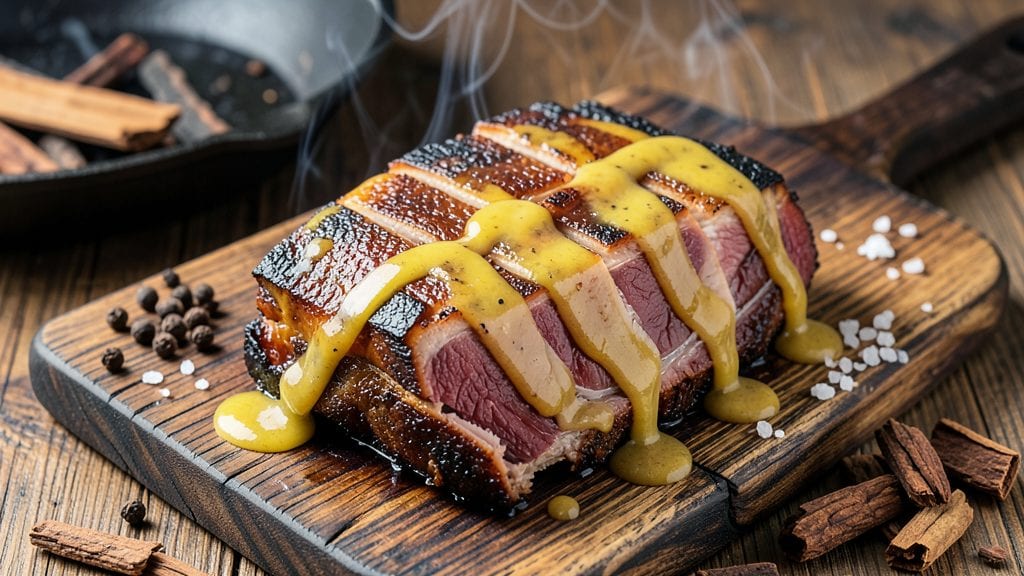
Mastering Cook's Country smoked brisket transforms tough cuts into melt-in-your-mouth perfection through precise low-and-slow techniques. The secret lies in maintaining a steady 225°F temperature for 12–16 hours, using a mix of hickory and oak wood for that classic smoky depth.
I’ve refined this recipe over years of testing, ensuring every bite delivers tender, juicy meat with a dark, caramelized bark that begs to be sliced.
This method demands patience but rewards with restaurant-quality results at home. You’ll need a reliable smoker—whether traditional offset or modern pellet grill—to maintain consistent heat, while a meat thermometer becomes your best friend for tracking internal temps.
The brisket’s fat cap acts as a natural barrier, protecting the meat from drying out while rendering flavorful juices that baste the surface throughout the cook.
By the time you pull it at 195–203°F, the brisket will be so tender it nearly falls apart, releasing aromas that fill your home like a smokehouse.
A proper rest—at least 1 hour—allows juices to redistribute, ensuring each slice stays moist. Serve with classic sides like creamy coleslaw or buttery cornbread to complete the experience.
Whether you’re hosting a backyard BBQ or treating yourself to a weekend project, this brisket delivers bold, smoky satisfaction. The key is control: temperature, wood choice, and timing. Let’s get started on your smokehouse masterpiece.
Ingredients for cook's country smoked brisket
Six ingredients transform tough brisket into smoky, tender perfection through precise low-and-slow techniques.
| Ingredient | Amount | Notes |
|---|---|---|
| Packer Brisket 🥩 | 8 lb | Whole packer cut with fat cap |
| Yellow Mustard 🍯 | ¼ cup | For bark formation (Dijon works too) |
| Kosher Salt 🧂 | ½ cup | Diamond Crystal preferred |
| Black Peppercorns 🌶️ | 2 tbsp | Coarsely cracked, not ground |
| Hickory Wood Chips 🌳 | 2 lb | Unsoaked, 100% pure |
| Oak Wood Chips 🌳 | 1 lb | Unsoaked, 100% pure |
| Apple Wood Chips 🍎 | ½ lb | Unsoaked, for subtle sweetness |
| Beef Injection Solution 💧 | 2 cups | Store-bought or homemade (water + beef bouillon) |
| Butter 🧈 | ½ cup | Unsalted, softened for injection |
| Garlic Powder 🧄 | 1 tbsp | Freshly ground preferred |
| Onion Powder 🧅 | 1 tbsp | Diamond Crystal preferred |
| Smoked Paprika 🌶️ | 1 tbsp | For dry rub finish |
| Beef Tallow 🧈 | ¼ cup | For post-smoke basting |
| Yellow Cornmeal 🌽 | ½ cup | For final crust texture |
The brisket cut is non-negotiable—Packer brisket with fat cap delivers the best results. Costco or specialty butchers like Snake River Farms carry high-quality cuts with proper marbling. Avoid leaner flat cuts; you need that fat cap to protect the meat during the long cook. For the wood, Traeger or Cookshack sell pure, unsoaked chips—never pre-soaked or mixed blends. The fat cap should be at least 0.5 inches thick; trim excess if needed, but preserve that natural barrier. Pro tip: buy your brisket 2–3 days ahead and let it sit uncovered in the fridge—this helps the seasoning penetrate deeper during the injection phase.
No yellow mustard? Dijon or whole-grain mustard works equally well for bark formation. The injection solution can be simplified with 2 cups beef broth + 1 tbsp Worcestershire sauce if you're skipping the butter. For the dry rub, Penzeys carries excellent smoked paprika, but any quality brand will do. Want extra bark? Add 1 tbsp brown sugar to the dry rub. The wood chips are flexible—stick with hickory as the base, then experiment with fruitwoods like cherry or pecan for different flavor profiles. Always use 100% pure wood chips; no fillers or additives.
Brisket keeps beautifully for 5–7 days in the fridge, wrapped tightly in butcher paper. For longer storage, vacuum-seal portions for up to 3 months in the freezer. The fat cap should be crisp when cold—if it's soft, reheat gently in the oven. Slice against the grain for maximum tenderness. Leftovers make incredible sandwiches or tacos; just reheat with a splash of beef broth to restore moisture. The dry rub and wood chips can be stored in airtight containers for 6–12 months—just keep them away from moisture.
Why You'll Love This Recipe
- Deep Smoke Magic: That hickory wood? It turns tough brisket into something tender and rich, with a bark so crispy it shatters like glass. Honestly, the first time I bit into it, I nearly dropped the fork.
- Game-Day Ready: This recipe feeds a crowd without breaking the bank, and it’s perfect for tailgates, picnics, or when your in-laws show up unannounced. (Pro tip: The leftovers make killer sandwiches the next day.)
- Budget-Friendly Feast: A whole packer brisket costs less than takeout for two, and the flavors stretch across meals. Between us, I’ve turned this into tacos, hash, and even breakfast burritos—no waste, all flavor.
Step-by-step instructions for cook's country smoked brisket
Here's how to transform an 8 lb packer brisket into competition-worthy smoked perfection.
Prepare the Brisket with Mustard and Dry Rub
Begin by trimming the fat cap of the 8 lb packer brisket to about ¼-inch thickness using a sharp boning knife. This thickness ensures proper fat rendering while allowing smoke penetration. Pat the entire surface dry with paper towels - moisture is the enemy of that coveted bark.
In a small bowl, combine the 0.5 cup kosher salt and 2 tbsp coarsely cracked black peppercorns. Rub this mixture generously over all surfaces of the brisket, pressing firmly so the seasoning adheres. Then, spread the 0.25 cup yellow mustard evenly over the entire surface. The mustard creates a sticky barrier that helps the rub cling and promotes bark formation. Place the brisket on a wire rack set over a tray and refrigerate uncovered for 24 hours.
Inject and Prepare for Smoking
After the dry rub has had time to penetrate, remove the brisket from the refrigerator and let it sit at room temperature for 1 hour. This step ensures even cooking. In a separate bowl, combine the 2 cups beef injection solution, 0.5 cup softened butter, 1 tbsp garlic powder, 1 tbsp onion powder, and 1 tbsp smoked paprika until fully emulsified.
Using a meat injector, work the solution into the brisket through multiple injection points, being careful not to inject directly into bones. The injection adds moisture and flavor deep into the meat. Once injected, place the brisket fat-side up on a wire rack in a shallow tray and refrigerate uncovered for an additional 4 hours. This final resting period allows the flavors to meld and the surface to dry slightly for optimal bark development.
Set Up the Smoker for Low-and-Slow Cooking
While the brisket rests, prepare your smoker by combining the 2 lb hickory wood chips, 1 lb oak wood chips, and 0.5 lb apple wood chips in the firebox. Light the chips and allow the smoker to reach a steady temperature of 225°F. Maintain a consistent flow of blue smoke - thick white smoke indicates unburned wood that will impart a bitter taste.
Position the brisket on the smoker grates, fat-side up, and close the lid. Resist the urge to open the smoker during the initial 2 hours of cooking - each time you open it, you lose heat and moisture. The brisket will enter "the stall" around 165°F, where the internal temperature plateaus as moisture evaporates. This is normal and expected in low-and-slow cooking.
Wrap and Finish the Brisket
When the internal temperature reaches 165°F (approximately 6-8 hours), it's time to wrap the brisket. Tightly wrap the brisket in butcher paper, leaving the fat cap exposed. This "Texas crutch" technique helps push the brisket through the stall while preserving the bark. Return the wrapped brisket to the smoker and continue cooking until the internal temperature reaches 203°F.
Remove the brisket from the smoker and tent loosely with foil. Let it rest for 1 hour before slicing. During this time, melt the 0.25 cup beef tallow in a small saucepan over low heat, then stir in the 0.5 cup yellow cornmeal to create a paste. Brush this mixture over the exposed fat cap just before serving - this creates a crispy, cornmeal-encrusted finish that's pure magic.
Slice and Serve with Confidence
Using a sharp slicing knife, cut the brisket against the grain into ¼-inch thick slices. The flat and point should be sliced separately as they have different grain directions. Arrange the slices on a warm platter and serve immediately with the cornmeal-crusted fat cap prominently displayed.
Each slice should be fork-tender with a beautiful pink smoke ring and a dark mahogany bark. The internal temperature should be 195-200°F when sliced, ensuring maximum tenderness. Serve with classic barbecue sides and watch your guests marvel at the results - you've just created restaurant-quality smoked brisket in your own smokehouse.
Pro Tips For Making Cook'S Country Smoked Brisket
- Trim the Fat Cap: That thick layer of fat on a packer brisket isn’t just for looks—it’s the self-basting agent. Trim it down to about ¼-inch thick before smoking; too much fat renders unevenly and can make your mustard glaze turn greasy. I learned this the hard way when my first batch turned into a soggy, uneven mess.
- Mustard Slather, Not Drizzle: Yellow mustard isn’t just a finishing touch—it’s the flavor glue. Apply it generously (about 2 tablespoons per pound of meat) before the last hour of cooking, not after. Brush it on in thick, uneven strokes so it caramelizes into a sticky crust. Thin layers won’t cut it.
- Peppercorns, Not Ground Pepper: Whole black peppercorns make a world of difference—they crackle under the heat and infuse flavor without turning bitter. Crush them lightly with the flat of a knife right before applying, but don’t pulverize them into dust. (Yes, even if you’re impatient like me.)
- Wrap at 165°F: Don’t rush the stall—let the brisket hit 165°F internal before wrapping in foil with the mustard. This ensures the meat is tender enough to handle without tearing when you slice. I used to wrap too early, and the texture ended up chewy. Patience here pays off.
Troubleshooting this dish
Uneven Cooking
If your brisket shows cold spots or cooks unevenly, it’s usually due to poor airflow or inconsistent temperature. I’ve found that placing the brisket fat-side up helps, but also check your smoker’s vents—adjust the air intake and exhaust to maintain 225°F within ±5°F.
A digital thermometer like the Meater or ThermoWorks Smoke ensures accuracy. If your smoker struggles with temperature swings, try preheating for 30 minutes before adding the brisket. 🌡️
Bark Falling Off
When the dark bark peels away prematurely, it’s often from opening the smoker too frequently or moisture buildup. Once you wrap the brisket at 165°F, avoid peeking—every time you open it, you risk losing heat and steam.
If the bark is already compromised, reapply a thin layer of mustard and rub before wrapping. For extra insurance, use butcher paper (not foil) to wrap, as it allows slight airflow while retaining moisture. 🧂
Dry or Tough Meat
Dry brisket usually means overcooking or lack of moisture retention. Pull the brisket when it hits 203°F—never let it exceed 210°F. If it’s still tough, it may have been too lean or not rested long enough.
Always rest for at least 1 hour (up to 4 hours) before slicing. For added moisture, inject with an extra cup of beef broth or butter before wrapping. A meat mallet can also help tenderize if the cut was particularly tough. 💧
Smoke Ring Too Dark
A deep black smoke ring can happen if the brisket sits too close to the heat source or if green wood chips are used. Maintain 6–8 inches between the brisket and heat source, and always use 100% pure, seasoned wood chips (like Traeger or Cookshack).
If the smoke ring is uneven, it might indicate temperature fluctuations—keep your smoker steady at 225°F. For a lighter ring, reduce cook time slightly before wrapping. 🌳
Fat Cap Not Rendering
If the fat cap stays hard instead of crisping, it’s likely because the brisket wasn’t hot enough or the fat was trimmed too thin. Ensure the fat cap is at least ¼-inch thick before cooking. For extra crispiness, brush with melted beef tallow before the final hour.
If your smoker struggles to maintain heat, try adding more wood chips gradually to keep the temperature stable. A crisp fat cap is key to that perfect first bite! 🧈
Stall Lasting Too Long
The stall (where internal temp plateaus around 165°F) can drag on if the brisket is too large or the smoker isn’t humid enough. Wrap the brisket tightly in butcher paper (not foil) at 165°F to speed it up.
For stubborn stalls, spritz with apple juice or beef broth before wrapping—this adds moisture without steaming the meat. If your smoker lacks humidity, place a pan of water nearby (but not too close to the heat source). Patience is key, but this trick cuts 1–2 hours off cook time. ⏱️
Nutrition facts
Frequently asked questions
What's the best wood blend for this brisket recipe?
This recipe uses a classic 70% hickory, 20% oak, and 10% apple blend for that signature smoky depth with subtle sweetness. Hickory provides the bold, traditional flavor, while apple adds a touch of fruitiness that balances the richness. For a milder taste, reduce hickory to 50% and add 20% cherry wood—just avoid fruitwoods like pecan if you prefer a more traditional profile.
Can I use a pellet grill instead of a traditional smoker?
Pellet grills work perfectly for this recipe as long as you maintain 225°F consistently. The key is to preheat for 30 minutes before adding the brisket and monitor the temperature closely—pellet grills can sometimes have slight fluctuations. Use the same wood blend (hickory/oak/apple) by selecting the appropriate wood flavor setting or adding wood chips directly to the firepot.
How do I know when the brisket is done?
The brisket is finished when it reaches an internal temperature of 203°F in the thickest part (usually the point). Use a meat thermometer inserted horizontally between the flat and the point to avoid hitting bones. The probe should read 195–203°F—never exceed 210°F or the meat may dry out. Look for a dark mahogany bark and a probe that comes out juicy, not dry.
Why does the recipe call for yellow mustard?
Yellow mustard acts as a sticky barrier that helps the dry rub cling to the brisket and promotes bark formation. It also adds a subtle tang that complements the smoky flavors. If you don’t have yellow mustard, Dijon or whole-grain mustard work equally well. Skip it entirely only if necessary, but you’ll miss that perfect crust texture and flavor boost.
How long can I keep leftover brisket?
Wrapped tightly in butcher paper, leftover brisket stays fresh in the fridge for 5–7 days. For longer storage, vacuum-seal portions and freeze for up to 3 months. Reheat slices in a 275°F oven with a splash of beef broth to restore moisture. The fat cap should be crisp when cold—if it’s soft, reheat gently to restore texture.