
Main Courses
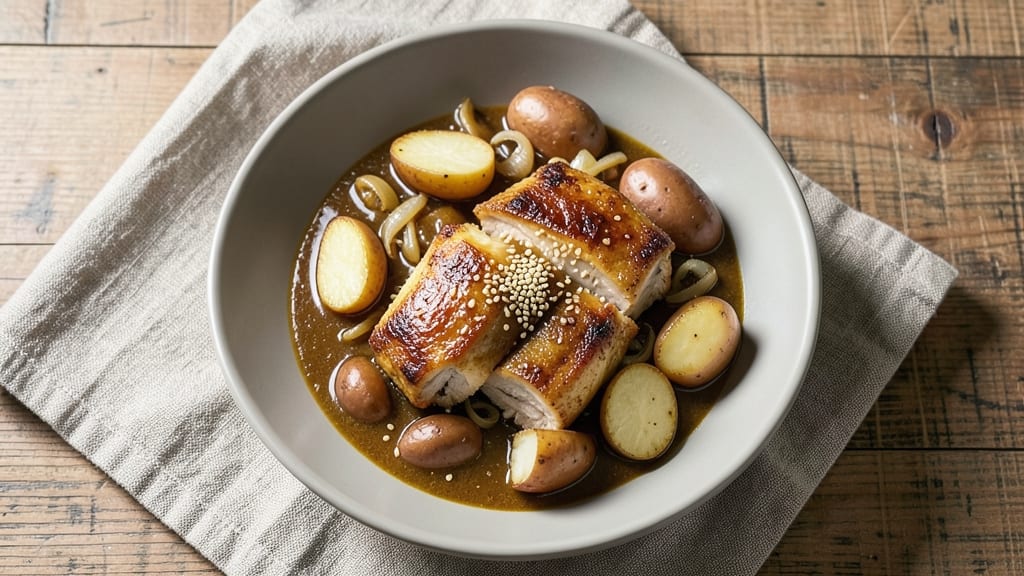
This Japanese curry recipe delivers the umami-rich depth and comforting warmth of a home-cooked meal that rivals restaurant quality. The secret lies in the roux—a fragrant blend of spices and flour that forms the foundation of every flavorful bite.
I’ve perfected this method over years of testing, ensuring the meat stays tender while the potatoes soak up the savory broth perfectly.
The beauty of Japanese curry is its versatility—whether you use chicken, beef, or pork, the slow simmering transforms tough cuts into melt-in-your-mouth perfection. The roux, made with curry powder, flour, and a touch of oil, develops a deep, aromatic base that’s both complex and comforting.
This isn’t just a dish; it’s a technique that turns simple ingredients into something extraordinary.
By the time you serve it, you’ll have a steaming pot of curry with tender meat, hearty potatoes, and a broth so rich it coats every spoonful.
The aroma alone will have everyone gathering at the table, and the first bite delivers that perfect balance of sweet, spicy, and umami flavors. This is the kind of recipe that becomes a household staple.
Serve it over steamed rice to soak up every last drop of that flavorful sauce, or enjoy it as-is for a hearty, satisfying meal. The best part? Leftovers reheat beautifully, making it ideal for meal prep. Let’s get cooking—your taste buds will thank you.
Ingredients for japnese curry
Simple ingredients transform into restaurant-quality Japanese curry with tender meat and rich umami broth.
| Ingredient | Amount | Notes |
|---|---|---|
| Chicken Thighs 🍗 | 1 ½ lb | Bone-in, skin-on preferred |
| Russet Potatoes 🥔 | 2 lbs | Cut into 1-inch chunks |
| Japanese Curry Powder 🌶️ | ½ cup | Store-bought or homemade blend |
| All-Purpose Flour 🌾 | ¼ cup | For roux base |
| Vegetable Oil 🫒 | ¼ cup | For roux cooking |
| Onion 🧅 | 1 whole | Diced, yellow or white |
| Garlic Cloves 🧄 | 6 cloves | Minced, fresh preferred |
| Carrots 🥕 | 1 ½ lbs | Peeled, cut into chunks |
| Chicken Broth 💧 | 2 cups | Low-sodium preferred |
| Applesauce 🍎 | ½ cup | Unsweetened, for sweetness |
| Soy Sauce 🍶 | 2 tbsp | For umami depth |
| Honey 🍯 | 1 tbsp | For balance |
| Salt 🧂 | 1 tsp | Adjust to taste |
| Black Pepper 🌶️ | ½ tsp | Freshly ground |
The curry powder is everything—Mae Ploy or S&B Golden Curry from Asian markets deliver that authentic depth. If you can't find Japanese curry powder, mix 2 tbsp each of curry powder and turmeric with 1 tsp each of coriander, cumin, and fenugreek. The chicken thighs stay juicy when cooked bone-in and skin-on (trust me on this), but boneless works too. For the potatoes, Russets hold up best—they should be firm with no bruises. Carrots? The orange ones with vibrant color, not the pale, limp ones. Trader Joe's usually has great organic options if you're unsure.
No Japanese curry powder? Substitute with curry powder + turmeric (see above) or even garam masala with extra turmeric. Short on applesauce? Pumpkin puree or mashed banana adds sweetness. The soy sauce can be swapped for coconut aminos if you're avoiding sodium. For a vegetarian version, swap chicken for chickpeas or tofu. The roux is non-negotiable though—it's what builds that rich, aromatic base. Skip it, and you'll miss the soul of the dish.
This curry tastes even better the next day—3-4 days in the fridge, 3 months frozen. I always make extra because it disappears fast. Store it in airtight containers with a splash of broth to keep it moist. Reheat gently on the stove with a little extra broth—microwaving makes it watery. Serve over steamed rice to soak up every last drop of that flavorful sauce.
Why You'll Love This Recipe
- One-Pot Magic: I swear by this recipe—just brown the chicken, toss in the potatoes, dump the curry powder, and let it simmer. No chopping, no fuss, and the potatoes soak up that rich, spiced sauce like a dream.
- Sauce Obsession: That Japanese curry powder? It’s the star. Sweet, smoky, and just a hint of heat—it turns simple chicken and potatoes into something dangerously addictive. Honestly, I’ve made it with beef, but chicken thighs stay juicy and soak up the flavor perfectly.
- Leftover Legend: This curry actually gets better the next day. The sauce thickens just enough, and reheating it is my lazy Sunday hack. My roommate’s favorite? The crispy edges on the potatoes after a quick microwave hit.
- Budget Crowd-Pleaser: A few thighs, a bag of potatoes, and a cheap spice blend feed four for under $15. Between us, it’s my go-to for game nights or when friends drop by unannounced. Everyone leaves happy, and I leave with clean pans.
Step-by-step instructions for japnese curry recipe
Here's how to create a rich, umami-packed curry with perfectly tender chicken and vegetables every time.
Prepare the Chicken and Vegetables
Pat the 1.5 lb chicken thighs dry with paper towels, then season generously with 1 tsp salt and 0.5 tsp black pepper. In a large skillet, heat 0.25 cup vegetable oil over medium-high heat until shimmering. Add the chicken and cook for 6-8 minutes per side until golden brown and cooked through. Remove and set aside.
While the chicken cooks, peel and cut the 1.5 lbs carrots and 2 lbs russet potatoes into 1-inch chunks. Dice the 1 whole onion and mince the 6 cloves garlic cloves. Set these vegetables aside for the next steps.
Build the Roux and Curry Base
In the same skillet, reduce heat to medium and add the diced onion. Cook for 5 minutes until softened. Add the minced garlic and cook for 30 seconds until fragrant. Sprinkle in the 0.25 cup all-purpose flour and stir constantly for 1-2 minutes until golden brown—this creates the roux that thickens the sauce.
Gradually whisk in the 2 cups chicken broth until smooth. Stir in the 0.5 cup Japanese curry powder, 2 tbsp soy sauce, and 1 tbsp honey. Bring to a gentle simmer and cook for 5 minutes, stirring occasionally, until the flavors meld together.
Simmer the Curry to Perfection
Add the prepared chicken, potatoes, and carrots to the skillet. Stir gently to coat everything in the sauce. Bring to a boil, then reduce heat to low. Cover and simmer for 25-30 minutes, stirring occasionally, until the vegetables are fork-tender and the sauce has thickened to your desired consistency.
If the sauce is too thick, stir in the 0.5 cup applesauce and any accumulated juices from the chicken. The applesauce adds natural sweetness and helps balance the richness of the curry. Taste and adjust seasoning with additional salt or pepper if needed.
Rest and Serve
Once the curry reaches the perfect consistency, remove it from heat and let it rest for 5 minutes. This allows the flavors to settle and the sauce to thicken slightly. Serve immediately over steamed rice, ensuring each serving gets a generous portion of the tender chicken and flavorful vegetables.
The curry should be rich, aromatic, and perfectly balanced—sweet from the applesauce and honey, savory from the soy sauce, and deeply umami from the curry powder. Enjoy the tender chicken and vegetables swimming in a velvety, well-seasoned sauce that's sure to impress.
Pro Tips For Making Japnese Curry
- Brown the Chicken First: Don’t skip this step—sear the chicken thighs in batches until deep golden, about 5-6 minutes per side. The Maillard reaction builds flavor that flour-and-water roux alone can’t match. (Yes, it’ll take longer, but the curry will taste like you spent all day cooking.)
- Cut Potatoes Uniformly: Dice the russets into 1-inch chunks, not random sizes. Consistent pieces mean even cooking—no mushy centers or undercooked edges. I learned this the hard way when I got lazy and ended up with a pot of uneven mush.
- Bloom the Curry Powder: Toast the Japanese curry powder in the oil for 30 seconds before adding liquid—it releases the spices’ aroma and prevents a flat, dusty flavor. Skip this, and you’re basically drinking a mild, flavorless paste.
- Thicken Gradually: Stir in the flour-and-water roux slowly while simmering, letting it absorb before adding more. Dumping it all at once creates lumps that ruin the silky texture. (Your blender’s not doing you any favors here.)
Regional styles of japnese curry
Okinawa's Sweet-Spiced Version
In Okinawa, the curry takes on a sweeter, almost dessert-like quality thanks to the addition of 1 cup grated daikon radish and 2 tbsp brown sugar in the roux. The locals use a lighter hand with the curry powder—just 0.3 cup—and add 1 tbsp grated ginger for warmth.
I've found that using boneless chicken thighs works best here, as the dish is often served with mochi rice or even as a filling for okonomiyaki pancakes. The secret? Simmer uncovered for 40 minutes to develop a glossy, caramelized sauce. 🌺
Hokkaido's Hearty Beef Curry
Up in Hokkaido, where winters are brutal, this curry becomes a warming staple using 1.5 lbs beef chuck instead of chicken. The roux gets a boost with 1 tbsp miso paste and 1 tsp five-spice powder, giving it a deeper, slightly funky depth.
I like to add 1 cup shiitake mushrooms and 1 block firm tofu for extra heartiness. The dish is traditionally served with thick-cut potatoes and a side of pickled vegetables to cut through the richness. Cook the beef low and slow for 2 hours to achieve melt-in-your-mouth tenderness. ❄️
Kyoto's Luxury Vegetable Curry
Kyoto's version is all about seasonal vegetables and delicate balance. Instead of meat, it features 1 head cauliflower, 1 lb eggplant, and 1 bunch shiitake mushrooms simmered in a sauce made with 0.4 cup Japanese curry powder and 1 tbsp mirin.
The roux is made with 2 tbsp butter instead of oil for a richer texture. I often add 1 tbsp grated yuzu peel for a citrusy brightness. Serve this over jasmine rice and garnish with toasted sesame seeds for an elegant, meat-free option. 🌿
Osaka's Spicy Kick
Osaka's curry is where heat takes center stage. The roux includes 1 tbsp gochugaru (Korean chili flakes) and 1 tsp doubanjiang (Chinese chili bean paste) for a smoky, fiery depth.
I use pork belly instead of chicken, and the dish is often finished with 1 tbsp sesame oil and 1 tsp toasted nori flakes. The sauce is intentionally thicker here, almost like a stew. For an extra punch, add 1 tbsp chili crisp at the end.
This version pairs perfectly with cold beer to cool the palate. 🌶️
Tokyo's Quick Weeknight Curry
In Tokyo, convenience meets tradition. This version swaps the roux for 2 tbsp store-bought Japanese curry roux blocks (like S&B Golden Curry) dissolved in 1.5 cups water. The dish includes 1 lb ground pork, 1 cup frozen mixed vegetables, and 1 can corn for speed.
I add 1 tbsp Worcestershire sauce for umami and simmer for just 20 minutes. It's the perfect weeknight meal—ready in under 30 minutes—and still packed with flavor. Perfect for busy families or last-minute dinners. ⏰
Hawaii's Tropical Twist
Japanese immigrants in Hawaii adapted the curry with local ingredients. This version includes 1 cup pineapple chunks, 1 bell pepper, and 1 tbsp lime juice in the sauce. The roux gets a touch of 1 tsp smoked paprika for depth.
I often use chicken thighs and serve it over jasmine rice with a side of macaroni salad. The sweetness of the pineapple balances the spice beautifully, making it a unique fusion dish. 🍍
Nutrition facts
Frequently asked questions
What makes Japanese curry different from Indian curry?
Japanese curry uses a thicker, sweeter roux made with flour and oil, while Indian curry relies on yogurt or coconut milk for creaminess. Japanese versions often include applesauce or honey for balance, and the spices are milder—think turmeric, coriander, and ginger rather than garam masala's complexity. Plus, Japanese curry is typically served over rice, not naan or flatbread.
Can I make Japanese curry without Japanese curry powder?
Yes! Mix 2 tbsp curry powder with 1 tbsp turmeric, 1 tsp coriander, 1 tsp cumin, and ½ tsp fenugreek for a close substitute. For extra depth, add ½ tsp cinnamon and ½ tsp cardamom. The key is balancing sweetness—use ¼ cup applesauce or 1 tbsp honey to mimic the traditional flavor profile.
Why does my Japanese curry sauce turn out too thin?
Thin sauce usually means the roux didn’t cook long enough or you added too much liquid. For a quick fix, simmer uncovered for 5-10 minutes to reduce the sauce, or stir in 1 tbsp cornstarch mixed with 2 tbsp water until thickened. Pro tip: Always cook the roux until it’s a deep golden brown before adding broth.
What’s the best meat for Japanese curry?
Chicken thighs (bone-in, skin-on) are classic for juiciness, but beef chuck or pork belly work beautifully too. For a budget-friendly option, try ground pork or chicken. Avoid lean cuts like breast—they dry out. If using tougher meats (like beef chuck), simmer for 2+ hours to tenderize. The fat renders into the sauce, making it richer!
How do I store and reheat Japanese curry?
Store in an airtight container in the fridge for 3-4 days or freeze for 3 months. To reheat, warm on the stove over low heat with a splash of broth or water—microwaving makes it watery. For leftovers, add a pinch of salt and a drizzle of soy sauce to revive flavors. The taste actually improves after resting overnight!