Main Courses
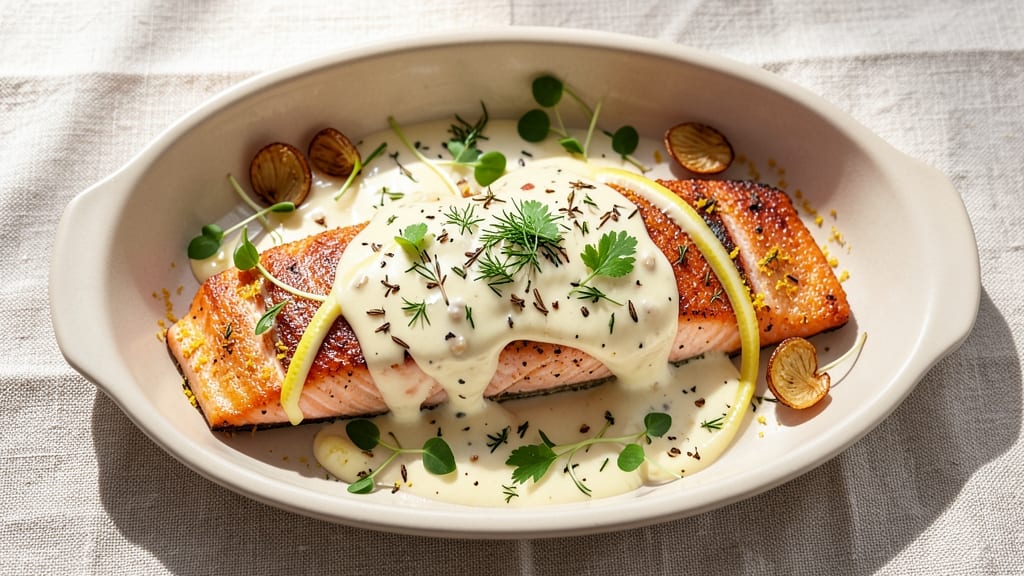
This lemon herb baked salmon recipe delivers a perfect balance of bright citrus and aromatic herbs, creating a restaurant-quality meal right in your home oven.
The key lies in the crispy lemon crust that forms on the outside while the salmon remains flaky and tender inside—every bite is a harmonious blend of zesty and savory notes.
I developed this method after testing countless variations, and it consistently produces results that impress even the most discerning seafood lovers.
The beauty of this recipe is its simplicity: just a few fresh ingredients and 15 minutes of active prep time before sliding it into a 375°F oven. The lemon juice and herbs not only enhance the flavor but also create that signature golden crust that makes the dish visually appealing.
What sets this apart is the precise baking time—too long, and the salmon dries out; too short, and the center stays cold.
By the time you pull this salmon from the oven, you'll have a dish that's flaky enough to melt in your mouth while maintaining a crisp exterior. The lemon-herb crust adds a vibrant color and bright flavor that pairs perfectly with roasted vegetables or a simple side salad.
The best part? It's foolproof once you master the timing, making it ideal for weeknight dinners or special occasions.
Serve with complementary sides like garlic green beans or a fresh arugula salad to complete the meal. This recipe is designed to be both impressive and easy, ensuring you'll have a delicious, restaurant-worthy dish without the fuss. Let's get started on creating your perfect baked salmon.
Ingredients for lemon herb baked salmon
Fresh salmon, bright citrus, and aromatic herbs—just 11 ingredients for a restaurant-worthy dish.
| Ingredient | Amount | Notes |
|---|---|---|
| Fresh Salmon Fillets 🐟 | 4 whole | Skin-on, center-cut preferred |
| Fresh Lemon Juice 🍋 | ¼ cup | Freshly squeezed, no pulp |
| Extra-Virgin Olive Oil 🫒 | 2 tbsp | High quality, fruity flavor |
| Fresh Dill Weeds 🌿 | ¼ cup | Chopped, not dried |
| Fresh Parsley Leaves 🌿 | 0.15 cup | Chopped, for brightness |
| Garlic Cloves 🧄 | 4 cloves | Minced, for depth |
| Salt 🧂 | 1 tsp | Kosher or sea salt |
| Black Peppercorns 🌶️ | ½ tsp | Freshly cracked |
| Zest of 1 Large Lemon 🍋 | 1 tbsp | Finely grated, aromatic |
| Fresh Thyme Leaves 🌿 | 0.1 cup | Chopped, for earthy notes |
| Unsalted Butter 🧈 | 2 tbsp | Cold, for crust |
The salmon is everything here. Center-cut fillets with skin stay together better—ask your fishmonger for them. Whole Foods or Trader Joe's usually have the best quality, but any reputable seafood counter works. Look for fillets with vibrant color and minimal fishy smell. If you can't find fresh, high-quality frozen salmon (thawed overnight in the fridge) is a solid backup. The butter matters too—use unsalted (the salt is already in your seasoning) and keep it cold until you're ready to use it for that perfect crust.
No fresh dill? Fresh parsley works in a pinch—just double the amount. Running low on lemon juice? Lemon zest plus a splash of apple cider vinegar gets you close. The thyme can be swapped for fresh oregano at half the amount, but it'll have a slightly different vibe. For the garlic, garlic powder at half the amount works if you're in a hurry, but fresh is worth the 30 seconds it takes to mince. The olive oil should be extra-virgin—cheap oil will make the crust taste flat. If you're feeling fancy, add a pinch of red pepper flakes for a little heat.
Salmon keeps best in the coldest part of your fridge, wrapped tightly in parchment. Use within 2 days for peak freshness. The lemon juice and herbs can be prepped ahead—store them in a small container with a lid, but add the zest last minute to keep it bright. This dish reheats poorly, so plan to serve it fresh from the oven. If you make extra, portion it into single servings and freeze—it'll be perfect for quick lunches later. The crust is best when served immediately, so don't wait too long!
Why You'll Love This Recipe
- Five-Ingredient Magic: I swear by this combo—salmon, lemon, olive oil, dill, and parsley. That’s it. No fancy marinades or last-minute shopping runs. Just pull it together while dinner’s still on the table.
- Bright & Buttery: The lemon juice cuts through the richness of the salmon while the olive oil keeps it tender. Fresh dill and parsley? That’s the secret—bright, herby, and ridiculously good without overpowering.
- Weeknight & Weekend: Throw it on the table for a lazy Friday night or prep it ahead for Monday lunches. The salmon stays moist, and the flavors only get better after a day in the fridge—honestly, I double the batch just for this.
- No-Waste Win: Use the whole lemon—zest the peel for extra flavor, then juice it. Save the scraps for broth or garnish. And those dill stems? Toss them in the pan for extra aroma. Minimal effort, maximum use.
Step-by-step instructions for lemon herb baked salmon
Here's how to bake salmon with a bright citrus crust and melt-in-your-mouth flakiness every time.
Prepare the Herb Butter Mixture
In a small bowl, combine the 2 tablespoons unsalted butter with the 0.25 cup fresh dill weeds, 0.15 cup fresh parsley leaves, 0.1 cup fresh thyme leaves, 1 tablespoon zest of 1 large lemon, 4 cloves minced garlic, 1 teaspoon salt, and 0.5 teaspoon black peppercorns. Mix until the butter is completely softened and everything is evenly distributed—this should take about 2 minutes with a fork. The mixture should look like a vibrant green herb paste with lemony flecks.
I like to press the herbs into the butter to release their oils, which ensures maximum flavor infusion. If the mixture feels too dry, add 1 teaspoon of the 0.25 cup fresh lemon juice to help bind everything together. This herb butter will create the signature crust and infuse the salmon with bright, aromatic flavors.
Season and Coat the Salmon
Preheat your oven to 400°F—this high temperature is key for achieving that crispy crust while keeping the inside perfectly flaky. Pat the 4 whole fresh salmon fillets dry with paper towels, removing any excess moisture. This step is crucial because water on the skin prevents proper browning.
Spread the herb butter mixture evenly over the top of each fillet, pressing gently to ensure full coverage. The skin side should remain uncovered—this allows the skin to crisp while protecting the delicate flesh. Drizzle each fillet with 1 tablespoon of the 0.25 cup fresh lemon juice, letting it soak in for 5 minutes while you prepare the baking dish. This pre-marinating step ensures the lemon flavor penetrates the salmon rather than just sitting on top.
Bake to Golden Perfection
Place the salmon fillets on a parchment-lined baking sheet, skin side down. Bake for 12-15 minutes until the edges are golden brown and the internal temperature reaches 145°F when measured with an instant-read thermometer. The salmon is done when it flakes easily with a fork and the crust has developed a beautiful caramelized color.
Don't overcook—salmon continues cooking slightly after removal from the oven. If the top isn't brown enough after 12 minutes, broil for 1-2 minutes at the end, watching closely to avoid burning. The lemon juice will help prevent the salmon from drying out while adding that signature bright tang.
Rest and Serve with Fresh Herbs
Remove the salmon from the oven and let it rest for 3-5 minutes before serving. This resting period allows the juices to redistribute, ensuring each bite is moist and flavorful. During this time, garnish each fillet with an additional sprinkle of fresh parsley leaves and a drizzle of any remaining 2 tablespoons extra-virgin olive oil from the baking sheet—this adds extra richness and freshness.
Serve immediately with lemon wedges on the side for squeezing over the top. The contrast of the crispy herb crust, flaky pink centers, and bright citrus makes this dish truly special. The salmon should be tender enough to pull apart with your fork but still hold together in elegant slices—this is the hallmark of perfectly baked salmon.
Pro Tips For Making Lemon Herb Baked Salmon
- PAT THE SALMON DRY: Grab paper towels and press hard on both sides before baking—this isn’t just about crispiness, it’s about sealing in flavor. Wet skin = steam = sad, soggy salmon. I learned this the hard way when my first batch turned out like a boiled fish.
- ZEST THE LEMON FIRST: Use the whole lemon: zest the peel (about 1 tsp) and juice it, then toss the zest into the olive oil with the herbs. The zest adds bright, aromatic layers that plain juice can’t match—my grandmother swore by this, and she was right.
- BAKE AT 375°F, NOT 400°F: Salmon’s delicate—high heat dries it out fast. Stick to 375°F for 12-15 minutes (depending on thickness) and resist the urge to peek. Overbaking turns flaky into rubbery, and nobody wants that.
- CHOP HERBS COARSELY: Finely chopped dill and parsley turn to mush when baked. Rough chop (about ½-inch pieces) keeps texture and releases flavor better. Sounds weird, but it works—your future self will thank you.
Essential equipment for this dish
Parchment-Lined Baking Sheet
I use a 12x17-inch heavy-duty parchment-lined baking sheet from Reynolds because it provides the perfect balance of durability and heat distribution. The parchment prevents sticking and makes cleanup effortless—just lift and toss.
For extra crispiness, I recommend using a half-sheet pan instead of a full sheet pan, as it allows for better air circulation around the salmon fillets. 🔥
Instant-Read Thermometer
A ThermoWorks ThermoPop is my go-to for checking internal temperature—it's fast, accurate, and has a backlit display that makes it easy to read in dim kitchen lighting. Insert the probe into the thickest part of the salmon fillet (avoiding the bone) until it reaches 145°F.
This ensures perfect doneness without overcooking. I keep mine on the counter for quick access during baking sessions.
High-Quality Olive Oil
For the herb butter mixture and drizzling, I always use California Olive Ranch Extra Virgin Olive Oil—its fruity, peppery notes complement the lemon and herbs beautifully. A 4-ounce bottle is perfect for this recipe, and the glass bottle preserves freshness.
Avoid cheaper oils that can make the crust taste flat or metallic. I store my olive oil in a cool, dark place to maintain its quality.
Sharp Knife Set
A Wüsthof Classic 8-inch chef's knife is essential for mincing garlic, chopping herbs, and zesting lemons with precision. The razor-sharp edge ensures clean cuts that release maximum flavor from the ingredients.
I also keep a microplane handy for zesting lemons—it's faster than a grater and produces finer, more aromatic zest. A dull knife can crush garlic and herbs, leading to bitter flavors.
Mixing Bowls (Various Sizes)
I use a pyrex 1-quart mixing bowl for combining the herb butter mixture because it's sturdy and doesn't warp under heat. A smaller 4-ounce ramekin works well for prepping the lemon juice and zest separately.
Having multiple bowl sizes keeps ingredients organized and prevents cross-contamination. I wash them immediately after use to avoid any lingering flavors from previous recipes.
Butter Softener
For the herb butter mixture, I use a small microwave-safe bowl to soften the butter in 10-second intervals on 50% power until just pliable. Over-softening can cause the butter to separate, ruining the texture.
Alternatively, I let it sit at room temperature for 10-15 minutes—this method is gentler on the butter's flavor. A rubber spatula helps mix the butter and herbs smoothly without tearing the ingredients.
Nutrition facts
Frequently asked questions
Can I use frozen salmon for this recipe?
Thaw the salmon overnight in the refrigerator for best results. Place it in a sealed bag and submerge it in cold water (changing the water every 30 minutes) if you're short on time. Never thaw at room temperature, as this can promote bacterial growth. Pat the fillets completely dry before seasoning to ensure a crispy crust.
What's the best way to substitute fresh herbs?
If you don't have fresh dill, parsley, or thyme, try these swaps: Use 1 tablespoon dried herbs (about 1/4 the fresh amount) for each type, or substitute with 1 teaspoon dried oregano for thyme. For dill, 1 tablespoon fresh basil works in a pinch, though the flavor will differ slightly. Always adjust seasoning after substituting dried herbs, as they're more concentrated.
Why did my salmon turn out rubbery instead of flaky?
Overcooking is the most common cause. Use an instant-read thermometer to check for 145°F internal temperature—salmon continues cooking after removal from the oven. Bake at 400°F for no longer than 15 minutes (depending on thickness). Also, avoid drying the fillets too much before baking, and resist the urge to cut into them while they're hot. Let them rest for 3-5 minutes first.
Can I bake this salmon in foil instead of parchment?
Yes, but parchment is preferred for crispiness. If using foil, place the salmon on a foil-lined tray with the foil slightly crinkled to allow air circulation. The crust won't be as crisp, but the salmon will still be flavorful. For extra crispiness, broil for 1-2 minutes at the end, watching closely to avoid burning.
How do I make this dish ahead of time?
Prep the herb butter mixture and store it in the fridge for up to 24 hours. You can also marinate the salmon with lemon juice and herbs for 2 hours before baking, but don't add the butter until just before baking. For make-ahead meals, portion the cooked salmon into single servings and freeze—reheat gently in the oven at 300°F for 8-10 minutes to maintain moisture. The crust won't be as crisp, but the flavor remains excellent.