
Soups & Stews
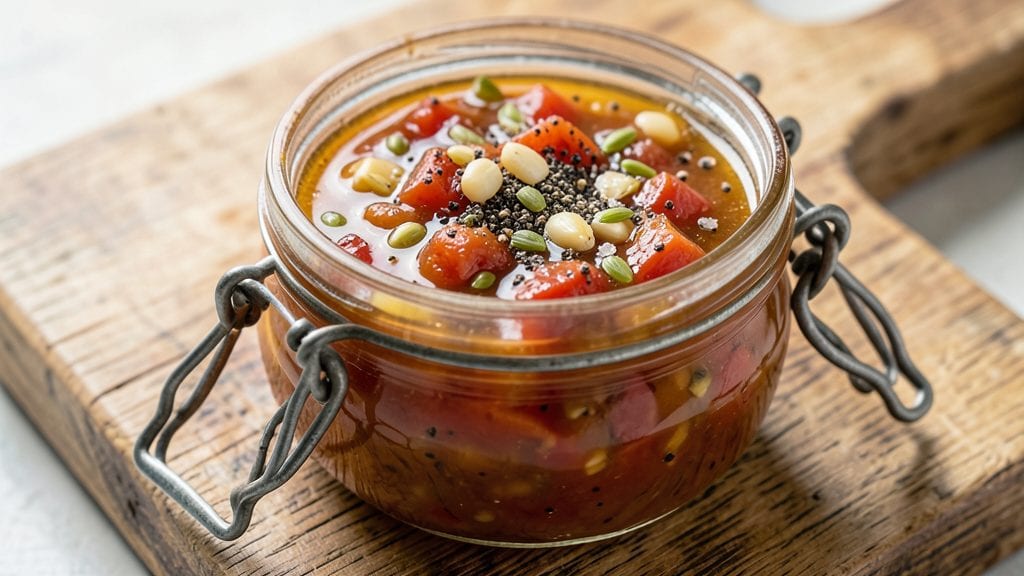
This old-fashioned tomato relish recipe brings back the nostalgic, sweet-tangy condiment that elevates sandwiches and hot dogs with every bite. The chunky texture and balanced flavors—where ripe tomatoes meet sharp vinegar and warm spices—create something truly special.
I’ve perfected this recipe over years of testing, ensuring the perfect harmony of sweetness, acidity, and subtle spice that makes it irresistible.
The beauty of this relish lies in its simplicity and versatility. With just a handful of ingredients—ripe tomatoes, vinegar, sugar, and classic spices like mustard seed and celery seed—you’ll create a condiment that’s rich in flavor and texture.
It’s the kind of recipe that transforms ordinary meals into something memorable, whether spread on a classic Reuben sandwich or served alongside crispy bacon.
What makes this recipe stand out is its ability to stay fresh for weeks when stored properly. Whether you choose to can it for long-term preservation or keep it refrigerated for immediate use, the flavors only deepen over time.
The result is a sweet-tangy, chunky relish that’s perfect for sandwiches, charcuterie boards, or even as a topping for grilled meats.
Once you try this old-fashioned tomato relish, you’ll never go back to store-bought versions. The process is straightforward, and the reward is a condiment that adds depth and character to any dish. Let’s get started on making yours today!
Ingredients for old fashioned tomato relish
Ripe tomatoes, vinegar, and sugar create this nostalgic, sweet-tangy condiment perfect for sandwiches and charcuterie.
| Ingredient | Amount | Notes |
|---|---|---|
| Ripe Tomatoes 🍅 | 4 lbs | Roma or vine-ripened preferred |
| White Vinegar 💧 | 1 ½ cups | Distilled white preferred |
| Granulated Sugar 🍚 | 1 ½ cups | White or light brown |
| Yellow Mustard Seeds 🌶️ | 2 tsp | Whole seeds, toasted |
| Celery Seeds 🥬 | 1 tsp | Ground or whole |
| Ground Black Pepper 🌶️ | ½ tsp | Freshly ground preferred |
| Salt 🧂 | 1 ½ tsp | Diamond Crystal kosher |
| Fresh Onion 🧅 | 1 whole | Yellow or white, chopped |
| Fresh Garlic 🧄 | 4 cloves | Peeled, minced |
| Allspice Berries 🌿 | ½ tsp | Crushed for warmth |
The tomatoes are the foundation—Roma or vine-ripened varieties yield the best texture and sweetness. Local farmers markets often have perfect specimens in late summer, but grocery store tomatoes work too if they're firm and red. Avoid bruised tomatoes—they'll make the relish mushy. For vinegar, distilled white is standard, but apple cider vinegar adds subtle depth if you prefer. The sugar should be white or light brown—dark brown molasses can overpower the delicate balance. Toast your mustard and celery seeds in a dry pan for 30 seconds before adding to deepen their flavors. Penzeys or local spice shops carry the best quality seeds if you're looking for premium options.
No mustard seeds? Dijon mustard at half the amount works in a pinch, though it'll alter the texture slightly. Substitute celery seeds with caraway seeds at the same quantity for a similar earthy note. Running short on allspice? Ground cinnamon at one-third the amount provides warmth without overpowering. The onion and garlic are non-negotiable for depth, but if you're avoiding raw garlic, garlic powder at half the amount is acceptable. For sugar, honey or maple syrup can replace granulated at a 1:1 ratio, though the texture will be slightly different. Always taste as you go—adjust sweetness or acidity to your preference.
This relish improves with time, developing deeper flavors over 2-3 weeks in the fridge. For long-term storage, can it in sterilized jars with a 1/4-inch headspace, processed in a water bath for 10 minutes. Properly canned relish lasts 12-18 months on the shelf. If refrigerating, store in airtight glass containers with a layer of vinegar on top to preserve color. The relish keeps for 6 months this way. Freezing isn't recommended as it alters the texture, but you can freeze portions for up to 3 months if needed. Always use clean utensils when scooping to prevent contamination.
Why You'll Love This Recipe
- No Chopping Needed: I swear by this—just toss whole tomatoes into boiling water for 10 minutes, then crush them with my hands. The seeds and skins stay behind, leaving you with a smooth, jammy texture without the mess of dicing or peeling.
- Sweet-Tangy Magic: That balance of sugar and vinegar? It’s chef’s kiss—bright enough to cut through rich meats but sweet enough to make your taste buds dance. The mustard and celery seeds add a subtle kick that keeps it interesting.
- Pantry Staple Power: Honestly, you’re probably already making this if you’ve got tomatoes, sugar, and vinegar on hand. No fancy ingredients, no last-minute grocery runs—just pull what you’ve got and go.
- Months of Leftovers: I make a big batch in summer and it lasts through winter. Spread it on sandwiches, mix it into deviled eggs, or just eat it straight from the jar—it’s the ultimate lazy-day hero. (Yes, even on a Tuesday night.)
Step-by-step instructions for old fashioned tomato relish
Transforming fresh garden produce into this classic sweet-tangy relish requires precision and patience.
Prepare and Cook the Tomato Base
Begin by washing the 4 lbs ripe tomatoes thoroughly, then remove the cores and chop them into ½-inch chunks. Transfer them to a large, heavy-bottomed pot with the 1 whole fresh onion (chopped) and 4 cloves fresh garlic (minced). Cook over medium-high heat for 10-12 minutes until the tomatoes begin to soften and release their juices.
Add the 1.5 cups white vinegar and 1.5 cups granulated sugar, stirring constantly to dissolve the sugar completely. The mixture should bubble vigorously as it comes to a gentle boil. Reduce heat to medium-low and let it simmer uncovered for 20-25 minutes until the tomatoes break down into a thick, jam-like consistency. You'll know it's ready when the mixture coats the back of a spoon and the raw tomato flavor transforms into a rich, sweet-tangy base.
Add Aromatics and Spices
While the tomato mixture simmers, toast the 2 tsp yellow mustard seeds and 1 tsp celery seeds in a dry skillet over medium heat for 2-3 minutes until fragrant and lightly golden. Immediately transfer them to a small bowl to cool slightly. Crush the 0.5 tsp allspice berries between your palms or with a mortar and pestle to release their aromatic oils.
Once the tomato mixture has thickened, stir in the toasted seeds, crushed allspice berries, 0.5 tsp ground black pepper, and 1.5 tsp salt. Taste the mixture and adjust the seasoning if needed—you want a balance of sweetness from the sugar, acidity from the vinegar, and a subtle heat from the spices. This is where the relish develops its signature complexity, so don't rush this step. Let it simmer for an additional 5 minutes to allow the spices to infuse fully.
Simmer to Perfection
Continue simmering the relish over low heat for 30-40 minutes, stirring occasionally to prevent sticking. The mixture should reduce slightly, becoming thicker and more concentrated. You're looking for a texture that's neither too runny nor too stiff—it should hold its shape when spooned but still be spreadable. The relish is ready when it reaches a thick, chunky consistency with no visible liquid.
Real talk: The final texture is critical. If it's too thin, simmer uncovered for another 5-10 minutes to evaporate excess moisture. If it's too thick, add 1 tablespoon water or vinegar at a time until it reaches the desired consistency. Once satisfied, remove the pot from heat and let the relish cool completely to room temperature. This resting period allows the flavors to meld and the texture to set properly.
Store and Preserve
Transfer the cooled relish to clean, sterilized canning jars, leaving about ½-inch headspace at the top. Seal the jars tightly and process them in a boiling water bath for 15 minutes to ensure proper preservation. This step is non-negotiable—it prevents spoilage and extends shelf life.
Let the jars cool completely before storing them in a cool, dark place. When properly canned, this relish will keep for up to 1 year unopened. The flavors actually improve with time, developing deeper sweetness and complexity. Use it generously on sandwiches, hot dogs, or as a topping for burgers—this is the kind of relish that turns ordinary meals into something special.
Pro Tips For Making Old Fashioned Tomato Relish
- Peel Tomatoes Fast: Drop whole tomatoes into boiling water for exactly 30 seconds—no more, or they’ll turn to mush. Then plunge into ice water and slip off skins with your fingers. I learned this the hard way after spending 20 minutes peeling by hand and wondering why my relish tasted dull.
- Toast the Seeds: Dry-toast the mustard and celery seeds in a skillet over medium heat for 30 seconds until fragrant. This unlocks their flavor instead of letting them sit bland in the vinegar. Skip this, and your relish will taste like it’s missing something—trust me, it’s not your imagination.
- Simmer Slow and Steady: Reduce heat to a bare simmer after the first 10 minutes. Boiling too hard makes the vinegar sharp and the texture watery. Think "gentle bubble," not "rolling boil." My first batch ended up vinegary and sad because I didn’t believe me.
- Strain for Smoothness: Use a fine-mesh sieve or cheesecloth to strain the cooked mixture, pressing with a spoon to remove excess liquid. This keeps the relish thick and jam-like, not soupy. I used a regular strainer once—big mistake. The texture was all wrong.
Regional styles of old fashioned tomato relish
Midwest Sweet-Tangy
This is the classic version you’ll find in Midwest kitchens, where tomato relish is a staple for hot dogs and sandwiches. The key here is a 1:1 ratio of vinegar to sugar, creating that signature sweet-tangy balance.
I like to add an extra ½ tsp of ground allspice for warmth, which gives it that nostalgic flavor. Serve it on corn dogs or Reuben sandwiches—it’s a Midwest favorite for a reason. 🌽
Southern Smoky Heat
In the South, tomato relish gets a smoky twist with the addition of ½ cup smoked paprika and 1 tsp cayenne pepper. This version pairs perfectly with pulled pork sandwiches or fried chicken.
The heat from the cayenne cuts through the sweetness, creating a bold contrast. For extra depth, I sometimes add 1 diced jalapeño to the initial tomato cook. 🔥
New England Zesty Twist
New Englanders prefer a brighter, more acidic relish, so they often use apple cider vinegar instead of white vinegar and add 1 tbsp fresh dill for a herbal note.
This version works wonderfully on lobster rolls or as a condiment for clams on the half shell. The dill adds a freshness that balances the sweetness beautifully. 🦞
Texas Bold & Spicy
Texas takes tomato relish to another level by incorporating chopped chipotle peppers in adobo sauce and 1 tsp smoked salt. This version is perfect for brisket sandwiches or tacos.
The smoky chipotle adds depth, while the smoked salt enhances the overall flavor profile. For an extra kick, I sometimes add ½ tsp of ground chipotle powder to the spices. 🌶️
Pacific Northwest Herb-Forward
Out West, they lean into fresh herbs like 1 tbsp chopped fresh thyme and 1 tbsp chopped fresh rosemary. This version is lighter and more herbaceous, making it ideal for grilled salmon sandwiches or charcuterie boards.
The herbs add a bright, aromatic quality that pairs well with the sweet-tangy base. 🌿
Appalachian Mountain Style
The Appalachian region often adds 1 cup of grated apple to the relish for extra fruitiness and a slight tartness. This version is fantastic on biscuits or cornbread as a sweet spread or alongside fried chicken.
The apple adds a unique texture and flavor that’s both comforting and refreshing. 🍎
Nutrition facts
Frequently asked questions
Can I make this relish without canning it?
For short-term storage, transfer the cooled relish to sterilized glass jars and refrigerate. It'll keep for 6 months this way, with flavors deepening over time. Just ensure the jars are properly sealed and submerged in vinegar to preserve color. The texture remains perfect for spreading on sandwiches or charcuterie boards.
What's the secret to getting the right texture?
The key is patience! Simmer the relish until it reaches a thick, jam-like consistency with no visible liquid. If too thin, cook uncovered for 5-10 more minutes to evaporate moisture. For thickness adjustments, add 1 tbsp vinegar at a time—never water, as it dilutes flavors. The perfect texture should hold shape when spooned but remain spreadable.
Can I substitute apple cider vinegar for white vinegar?
Yes, apple cider vinegar works beautifully! It adds subtle fruitiness that complements the sweetness. Use a 1:1 ratio and reduce simmering time by 5 minutes since it's slightly less acidic. The flavor profile becomes more complex, making it ideal for charcuterie boards or grilled meats. Just be aware the color may darken slightly.
Why does my relish turn out too sweet or sour?
This usually happens from improper sugar-vinegar balance. For sweetness, add 1 tsp more vinegar and simmer 5 minutes longer. For sourness, stir in 1 tsp sugar and cook until dissolved. Always taste as you go—adjustments should be made gradually. The ideal ratio is 1:1 vinegar to sugar by volume, but personal preference varies!
How can I use this relish beyond sandwiches?
This versatile condiment elevates burgers, hot dogs, and grilled meats beautifully. Try it as a dipping sauce for fries, mixed into deviled eggs, or as a glaze for roasted vegetables. The sweet-tangy profile also works well in bloody mary cocktails or as a marinade base for chicken. Get creative—it's delicious anywhere acidity and sweetness complement savory flavors!