
Soups & Stews
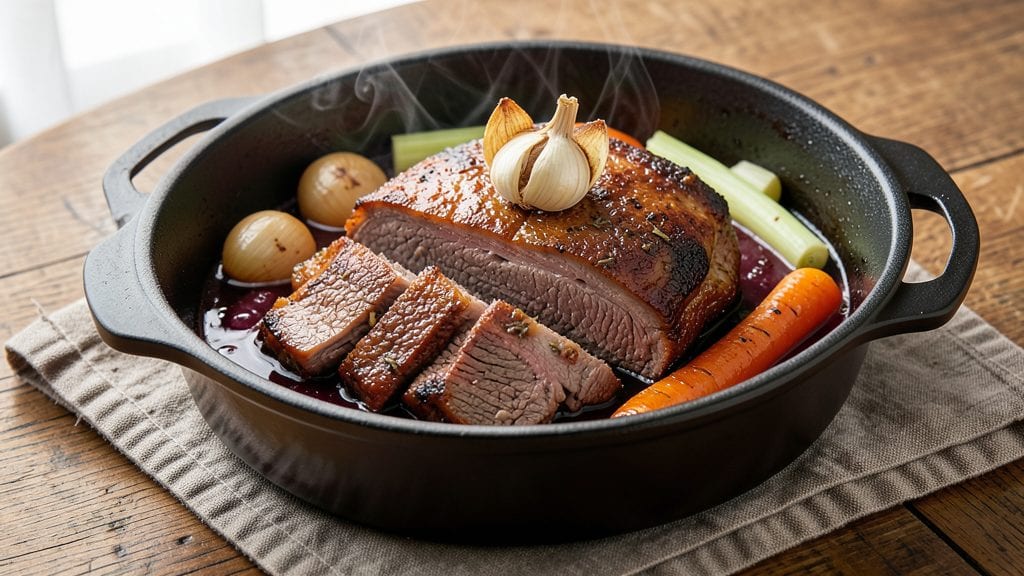
This braised corned beef brisket recipe transforms tough cuts into melt-in-your-mouth perfection through slow simmering and rich seasoning. The key lies in layering flavors—caramelized onions, aromatic spices, and a deep red wine reduction—that penetrate the meat over hours, creating a dish that tastes like a Sunday roast.
I perfected this method after years of testing, ensuring every bite delivers tender, flavorful meat with a sauce so rich it deserves its own bowl.
The process begins with a dry rub of coarse salt and pepper, followed by a long braise in liquid that builds complexity through onions, garlic, and herbs.
Unlike quick-cooking methods, this recipe rewards patience—8 to 10 hours of gentle simmering at 300°F breaks down collagen, turning the brisket into fork-tender slices. The result? A dish where the meat practically falls apart, swimming in a sauce that clings to every bite with savory depth.
What makes this recipe stand out is its versatility—serve it as a centerpiece for St. Patrick’s Day or a hearty weeknight dinner. The brisket pairs beautifully with creamy mashed potatoes, buttery cabbage, or crusty bread to soak up the sauce.
Even better, the leftovers taste just as good reheated, making it ideal for meal prep.
For those new to braising, don’t worry—this method is foolproof when you follow the temperature and timing precisely. The secret is maintaining a gentle simmer, never a boil, to keep the meat tender and the sauce velvety. Once you try it, you’ll never go back to store-bought corned beef again.
Ingredients for braised corned beef brisket
Sixteen ingredients, eight hours of patience, and a brisket that falls apart with a fork.
| Ingredient | Amount | Notes |
|---|---|---|
| Corned Beef Brisket 🥩 | 4 lb | Flat-cut, 1-1.5 inch thickness |
| Yellow Onions 🧅 | 2 whole | Medium, thinly sliced |
| Garlic Cloves 🧄 | 8 cloves | Peeled, smashed |
| Carrots 🥕 | 4 whole | Medium, cut into chunks |
| Celery Stalks 🌿 | 4 whole | Cut into 1-inch pieces |
| Dry Red Wine 🍷 | 2 cups | Cabernet Sauvignon preferred |
| Beef Broth 💧 | 4 cups | Low-sodium preferred |
| Tomato Paste 🍅 | ½ cup | Smooth, not chunky |
| Bay Leaves 🍃 | 2 whole | Fresh preferred |
| Black Peppercorns 🌶️ | 1 tbsp | Coarsely cracked |
| Kosher Salt 🧂 | 1 ½ tbsp | Diamond Crystal preferred |
| Fresh Thyme 🌿 | ¼ cup | Leaves only, chopped |
| Fresh Parsley 🌿 | ⅛ cup | Leaves only, chopped |
| Balsamic Vinegar 🍶 | 1 tbsp | Aged, for depth |
| Olive Oil 🫒 | 2 tbsp | Extra-virgin, for searing |
The brisket is non-negotiable—look for a flat-cut with visible marbling and a thickness of 1-1.5 inches for even cooking. Whole Foods or your local butcher will have the best quality, but most grocery stores carry pre-packaged briskets that work fine. For the wine, Cabernet Sauvignon adds depth, but any dry red will suffice. The beef broth should be low-sodium—you're controlling the seasoning here. Fresh herbs elevate the dish, but if you're using dried, reduce the amount to one-third of what's listed. The tomato paste? Rao's or Mutti brands are reliable for smooth texture without chunks.
No red wine? Substitute with beef broth plus 1 tablespoon balsamic vinegar—it mimics the acidity and depth. Short on fresh thyme? Dried thyme works at one-third the amount, but fresh is ideal for that bright aroma. The onions, carrots, and celery form your aromatic base—don't skip browning them first, as this builds flavor. For the salt, Diamond Crystal dissolves more easily than table salt, so adjust to taste. The brisket should be dry-rubbed with coarse salt and pepper before searing—this creates a flavorful crust that locks in moisture during the long braise.
This dish rewards planning—prepare the brisket and aromatics a day ahead if possible, as flavors meld beautifully overnight. The braised brisket keeps 4-5 days in the fridge, with the sauce improving in richness as it sits. For longer storage, freeze portions for up to 3 months, though the texture may change slightly upon reheating. The leftovers reheat best in a 300°F oven with a splash of broth to keep the sauce velvety. Serve with creamy mashed potatoes or crusty sourdough to soak up every last drop of that deep, savory sauce.
Why You'll Love This Recipe
- One-Pot Magic: I swear by this recipe—just toss the brisket, onions, carrots, and celery into a pot with the spices, add water, and let it simmer. No chopping like a fine chef, no fancy techniques—just set it and forget it while you handle life’s other chaos.
- Deep Umami Bomb: That corned beef brisket? Already packed with flavor, but the garlic and onions caramelize into something unreal—sweet, savory, and rich enough to make you close your eyes. The carrots and celery soak it all up like little flavor sponges.
- Weeknight Superstar: Between us, this is my go-to when I need to feed a crowd without stressing. Double the batch, and you’ve got Monday lunches, potluck leftovers, or even a last-minute dinner covered. (Yes, even on a Tuesday night.)
- Budget-Friendly Powerhouse: A whole brisket feeds eight for less than takeout, and the leftovers? Even better the next day. I brown the extra slices, toss them in a sandwich, and suddenly, I’ve got a $2 lunch that tastes like a restaurant. No guilt, just satisfaction.
Step-by-step instructions for braised corned beef brisket
Master this slow-cooked technique for melt-in-your-mouth brisket with deep, complex flavors.
Sear the Corned Beef Brisket for Deep Flavor
Heat a heavy Dutch oven over medium-high heat until hot. Add the 2 tablespoons olive oil and swirl to coat the bottom evenly. Place the 4 lb corned beef brisket fat-side down and sear undisturbed for 8-10 minutes until a deep golden-brown crust forms. You'll see the fat begin to render and the surface develop a caramelized exterior.
Flip the brisket and sear the other side for another 6-8 minutes. This initial searing creates the Maillard reaction that forms the foundation of flavor. Don't rush this step—proper searing takes time. Once both sides are deeply browned, remove the brisket and set it aside on a plate.
Sauté Vegetables and Aromatics
In the same Dutch oven, add the 2 whole yellow onions, 8 cloves garlic, 4 whole carrots, and 4 whole celery stalks. Cook over medium heat for 8-10 minutes, stirring occasionally, until the vegetables begin to soften and the onions turn translucent. You should notice the aromatics releasing their natural oils and filling your kitchen with an inviting scent.
Add the 0.5 cup tomato paste and stir well to coat the vegetables. Cook for another 2 minutes until the tomato paste darkens slightly and begins to caramelize. This creates a rich, concentrated base for your braise. Remove the vegetables from the pot and set them aside with the brisket.
Deglaze and Build the Braising Liquid
Return the Dutch oven to medium-high heat and pour in the 2 cups dry red wine. Scrape up all the browned bits from the bottom of the pot with a wooden spoon—these contain concentrated flavor. Let the wine simmer for 3-4 minutes until reduced by half and slightly thickened.
Add the 4 cups beef broth, 1.5 tablespoons kosher salt, 1 tablespoon black peppercorns, 2 whole bay leaves, 0.25 cup fresh thyme, and 1 tablespoon balsamic vinegar. Stir well to combine all ingredients. The liquid should be rich and aromatic with deep red undertones from the wine and tomato paste.
Braise Until Fork-Tender
Return the brisket to the Dutch oven, fat-side up, along with the sautéed vegetables. Bring the liquid to a gentle simmer, then reduce heat to low. Cover tightly with a lid and transfer to a preheated 300°F oven. Braise for 3-3.5 hours, checking occasionally to ensure there's always enough liquid to cover the brisket by at least 1 inch.
After 3 hours, check for doneness by inserting a meat thermometer into the thickest part of the brisket. It should read 200-205°F and the meat should be fork-tender with no resistance. If needed, continue braising for another 30-60 minutes until perfectly tender. The brisket will continue cooking slightly as it rests.
Rest and Serve with Braising Liquid
Remove the brisket from the pot and transfer it to a cutting board. Tent loosely with aluminum foil and let it rest for 15-20 minutes. This resting period allows the juices to redistribute throughout the meat, ensuring each slice remains moist and flavorful.
While the brisket rests, skim any excess fat from the surface of the braising liquid. You can reduce the liquid further on the stovetop if you prefer a thicker sauce. To serve, slice the brisket against the grain into ¼-inch thick slices. Ladle the rich braising liquid over the top and garnish with the 0.125 cup fresh parsley. Each bite should deliver perfectly tender meat with layers of wine, herb, and vegetable flavors.
Pro Tips For Making Braised Corned Beef Brisket
- Brown the Brisket First: Skip the slow start—sear that brisket in a hot Dutch oven for 5-7 minutes per side before adding liquid. I learned this the hard way: rushing to the braise without browning means flavor stuck in the pan instead of the meat. The crust locks in juices and deepens the taste.
- Chop Onions Like a Pro: No need for perfect slices—roughly chop yellow onions into ½-inch chunks (skin on or off, your call). They’ll soften faster and blend into the braise without turning to mush. My grandmother swore by this, and she was right: even cooking matters more than presentation here.
- Don’t Crowd the Pot: Give the brisket space in the Dutch oven—it needs room to steam, not suffocate. Packing it in too tight turns the braise into a stew. After burning three batches, I finally figured out: leave at least an inch of space around the meat for even cooking.
- Deglaze with Beer (or Broth): After browning, splash in ½ cup of beer (or broth) and scrape up those browned bits—this isn’t just flavor, it’s necessary for depth. I was skeptical until I tried it: the difference between a good braise and a great one often comes down to this 30-second step. (Yes, even if you’re impatient like me.)
Flavor customization for braised corned beef brisket
Classic Irish Style
For an authentic St. Patrick’s Day twist, add 1 teaspoon ground mustard and 1 teaspoon smoked paprika to the braising liquid. The mustard brightens the sauce, while the paprika adds a subtle smokiness that pairs beautifully with the wine.
I also recommend serving with colcannon—mashed potatoes mixed with sautéed cabbage and scallions—for a true Irish meal. 🍀
Sweet & Tangy Glaze
Create a caramelized finish by adding ¼ cup brown sugar and 2 tablespoons apple cider vinegar to the braising liquid during the last 30 minutes of cooking. This sweet-tangy glaze clings to the brisket, balancing the richness with a bright, fruity note.
For extra depth, finish with 1 teaspoon cinnamon—it sounds unusual, but it complements the wine beautifully. 🍯
Spicy Cajun Kick
Transform this into a Louisiana-inspired dish by adding 1 tablespoon Cajun seasoning (like Tony Chachere’s) and ½ teaspoon cayenne pepper to the braising liquid. The heat cuts through the richness, making each bite exciting.
Serve with dirty rice and cornbread to complete the Cajun experience. For a smoky touch, finish with 1 teaspoon liquid smoke in the last 10 minutes of braising. 🌶️
Herb-Infused Variations
Swap out thyme for 1 tablespoon fresh rosemary or 1 teaspoon dried oregano for a Mediterranean twist. The rosemary adds piney brightness, while oregano brings earthy depth. For a French bistro vibe, add 1 sprig fresh tarragon and a pinch of fennel pollen to the braising liquid.
These herbs elevate the dish without overpowering the wine and beef flavors. 🌿
Umami Bomb Boost
Deepening the umami profile is easy—add 2 tablespoons soy sauce or 1 tablespoon fish sauce to the braising liquid. For a vegetarian-friendly option, stir in 1 tablespoon mushroom powder (like Better Than Bouillon) or 2 sliced shiitake mushrooms during the braise.
These additions add layers of savory complexity that make the sauce even more irresistible. 🍄
Cheesy Finish
For a decadent touch, stir ½ cup grated Gruyère or sharp cheddar into the braising liquid during the last 15 minutes of cooking. The cheese melts into the sauce, creating a velvety, rich consistency.
Top each serving with an extra sprinkle of cheese and a drizzle of honey for a sweet-savory contrast. This works especially well with crusty bread for dipping. 🧀
Nutrition facts
Frequently asked questions
Can I use a slow cooker instead of an oven for this recipe?
Yes! Transfer the braised brisket to a slow cooker after searing and sautéing the vegetables. Cook on low for 8-10 hours or high for 5-6 hours, ensuring the liquid covers the brisket. The texture will be slightly different but still tender. Just check for doneness with a meat thermometer—it should reach 200-205°F.
What's the best way to reheat leftovers without drying out the brisket?
Reheat leftovers in a 300°F oven with a splash of beef broth or water to keep the sauce moist. Cover with foil and warm for 20-30 minutes until heated through. Avoid microwaving—it turns the meat tough. For quick reheating, simmer in the braising liquid on the stovetop over low heat for 10-15 minutes.
Can I substitute red wine with something else?
Replace the 2 cups red wine with 2 cups beef broth plus 1 tablespoon balsamic vinegar to mimic acidity and depth. For a non-alcoholic option, use 1 cup beef broth + 1 cup apple cider. The wine adds complexity, but these substitutes still deliver rich flavor.
Why does my brisket turn out tough instead of tender?
Overcooking or high heat are the usual culprits. Keep the oven at 300°F and maintain a gentle simmer—never a boil. Use a meat thermometer to check doneness at 200-205°F. If the brisket isn't tender, it likely didn't cook long enough. Patience is key—8-10 hours of slow braising breaks down collagen for melt-in-your-mouth texture.
How do I make the sauce thicker for dipping?
Simmer the braising liquid uncovered on the stovetop for 15-20 minutes to reduce it. For extra thickness, mix 1 tablespoon cornstarch with 2 tablespoons cold water, stir into the sauce, and cook until it thickens. Avoid over-reducing—you want a velvety consistency, not gluey.