
Soups & Stews
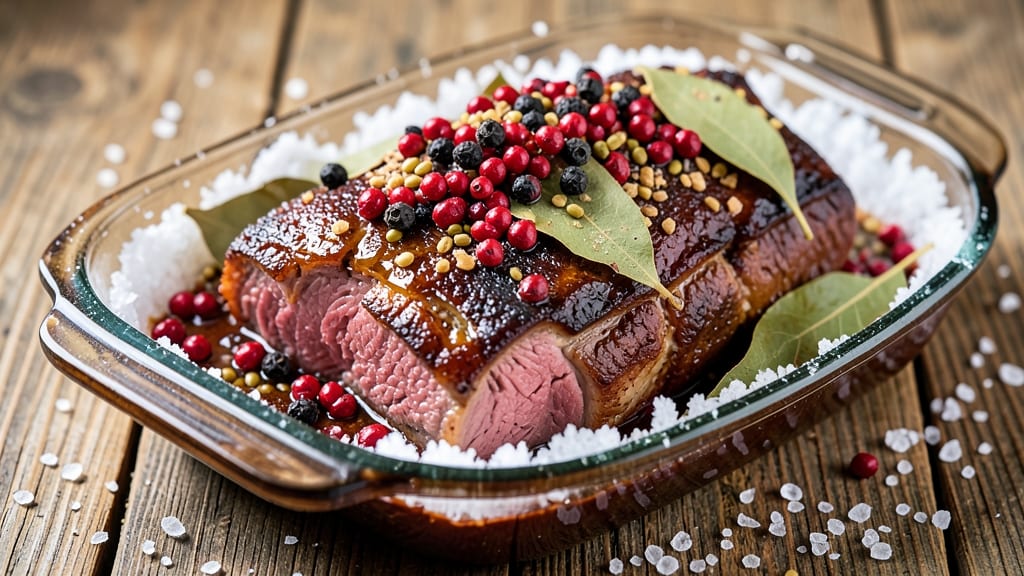
Mastering a traditional corned beef brine recipe transforms tough beef into melt-in-your-mouth perfection through precise curing and spice infusion. This method preserves authenticity while ensuring tender, flavorful results that honor cultural traditions—whether Irish, Jewish, or Caribbean-inspired.
The key lies in balancing salt, spices, and time to create a cure that penetrates deeply without overpowering the meat.
What sets this recipe apart is its focus on traditional techniques that deliver restaurant-quality tenderness at home. You’ll need just 10 simple ingredients, including bay leaves, mustard seeds, and black peppercorns, all combined in a precise ratio for optimal flavor and safety.
The curing process requires patience—typically 5 to 7 days—but the reward is meat so tender it nearly falls apart with a fork.
Once cured, the beef can be boiled, roasted, or grilled to suit your preference, resulting in a dish that’s rich, aromatic, and deeply satisfying. The brine’s spices infuse the meat with layers of warmth and earthiness, creating a profile that’s both bold and balanced.
Serve with classic accompaniments like coleslaw, boiled potatoes, or crusty bread for a meal that feels like a celebration.
For those new to curing, this recipe includes step-by-step guidance on monitoring sodium levels and ensuring food safety—critical factors for a successful outcome. Whether you’re preparing for St. Patrick’s Day, a holiday feast, or simply craving a hearty meal, this method delivers perfectly tender corned beef every time.
Let’s get started on your spice-infused cure.
Ingredients for traditional corned beef brine
Ten essential ingredients transform tough beef into melt-in-your-mouth perfection through precise curing techniques.
| Ingredient | Amount | Notes |
|---|---|---|
| Beef Brisket 🥩 | 4 lb | Whole packer cut, trimmed of excess fat |
| Diamond Crystal Kosher Salt 🧂 | 1 ½ cups | Coarse grain for optimal penetration |
| Brown Sugar 🍚 | ½ cup | Light or dark, packed firmly |
| Black Peppercorns 🌶️ | 1 tbsp | Whole, freshly cracked preferred |
| Mustard Seeds 🌿 | 1 tbsp | Yellow seeds for authentic flavor |
| Bay Leaves 🍃 | 4 whole | Fresh or high-quality dried |
| Allspice Berries 🌶️ | 1 tsp | Crushed for maximum aromatic release |
| Ground Ginger 🌿 | 1 tsp | Freshly ground preferred |
| Ground Coriander 🌿 | 1 tsp | Freshly toasted seeds preferred |
| Water 💧 | 4 cups | Filtered or distilled for clarity |
The beef brisket is the foundation—opt for a 4-pound packer cut from a trusted butcher, as this cut balances marbling with lean structure. Costco or specialty meat counters often carry high-quality briskets labeled 'corned beef brisket' or 'cured beef brisket,' though any brisket will work with proper trimming. For spices, Penzeys Spices or bulk bins at Whole Foods offer superior quality, but standard grocery store brands suffice if recently purchased. The kosher salt must be coarse—Diamond Crystal is the gold standard—but Morton's works in a pinch. Fresh bay leaves impart a more vibrant flavor than dried, though dried is acceptable when fresh isn't available. Allspice berries are non-negotiable for that classic corned beef warmth; if you can't find them whole, ground allspice at half the quantity will do.
Substitutions require precision to maintain balance. Iodized salt cannot replace kosher salt—the curing process depends on the larger, more porous crystals. For mustard seeds, Dijon mustard at 1 tablespoon adds depth but alters texture slightly. Ground coriander can be swapped for 1 teaspoon of fresh cilantro leaves, though the flavor profile shifts. If you lack allspice, 1/4 teaspoon cinnamon plus 1/4 teaspoon cloves approximates its warmth. The brown sugar can be omitted entirely for a more traditional Jewish-style cure, though it adds subtle caramelization. For water, beef broth enhances flavor but increases sodium content—adjust other salt quantities accordingly. Always weigh your meat post-cure to ensure proper sodium levels; a food scale is essential for accuracy.
Store the uncured brine mixture in an airtight container in the refrigerator for up to 1 week, though it's best used immediately. The cured brisket maintains quality for 5-7 days refrigerated or 3 months frozen when properly wrapped in butcher paper and vacuum-sealed. For long-term storage, portion into individual servings before freezing. Once cooked, leftovers reheat beautifully in the oven at 300°F with a splash of broth to retain moisture. The spices in the brine intensify over time, so plan ahead—this isn't a last-minute preparation. If you're curing multiple briskets simultaneously, label each with the date and curing duration to track progress accurately.
Why You'll Love This Recipe
- Saltwater Magic: Honestly, this brine is five minutes of stirring and layering—no fancy techniques, just salt, sugar, and spices dissolving into water. My brisket soaks while I make coffee, and by the time I’m done, it’s ready to cook.
- Sweet-Spiced Depth: That brown sugar and mustard seeds? They’re the secret. The salt draws out the flavor, but the sugar and peppercorns caramelize just enough to give your beef a dangerously tender, slightly sweet bite—like a hug in meat form.
- Leftovers That Shine: I swear, this brine turns a simple brisket into a feast for days. Roast half, slice the rest for sandwiches, or shred it into tacos—every bite tastes like the original. (Yes, even on a Tuesday night.)
- Budget-Friendly Luxury: A whole brisket for less than $20? With this brine, it tastes like you spent double. The salt and spices stretch thin but pack maximum flavor—no waste, just pure satisfaction. My wallet and taste buds thank me weekly.
Step-by-step instructions for traditional corned beef brine
A precise, time-tested method delivers meat so tender it practically melts in your mouth.
Prepare the Brisket for Brining
Begin by thoroughly trimming the 4 lb beef brisket of any excess fat, leaving only a thin layer to protect during curing. Pat the meat completely dry with paper towels—this ensures even salt penetration and prevents surface spoilage. Place the brisket in a large non-reactive container, such as a food-safe plastic bin or glass dish, with enough space to accommodate the brine.
For optimal results, create small slits in the meat using a sharp knife—about ¼-inch deep—to allow the brine to penetrate more deeply. This step is critical for achieving uniform seasoning and tenderness throughout the entire cut. Handle the meat gently to avoid tearing the muscle fibers, which could lead to uneven curing.
Combine Dry Brine Ingredients
In a medium bowl, whisk together the 1.5 cups Diamond Crystal kosher salt, 0.5 cup brown sugar, 1 tbsp black peppercorns, 1 tbsp mustard seeds, 4 whole bay leaves, 1 tsp allspice berries, 1 tsp ground ginger, and 1 tsp ground coriander. The coarse texture of Diamond Crystal salt ensures proper dissolution and even distribution throughout the brine.
Crush the allspice berries lightly between your fingers to release their aromatic oils—this enhances the depth of flavor in the final product. For the bay leaves, tear them in half to expose their inner surfaces, which contain the most potent essential oils. The combination of these spices creates a balanced profile that complements the richness of the beef.
Dissolve the Brine Mixture
Pour the 4 cups water into a separate large pot and bring to a gentle simmer over medium heat. Gradually whisk in the dry brine ingredients, ensuring complete dissolution. Remove from heat and allow the mixture to cool to room temperature—approximately 70°F—before proceeding. This prevents shocking the meat and maintains even curing conditions.
Stir occasionally during cooling to redistribute any settled spices. The brine should have a uniform, slightly cloudy appearance with no visible salt crystals. If you notice undissolved particles, strain the mixture through a fine-mesh sieve to achieve a smooth, consistent texture. This step guarantees that every bite of the corned beef will carry the full depth of flavor.
Cure the Brisket
Pour the cooled brine over the prepared brisket in the container, ensuring the meat is fully submerged. Weigh down the brisket with a small plate or heavy object if necessary to keep it completely covered. Transfer the container to the refrigerator and cure for 5-7 days, flipping the meat daily to promote even penetration of the curing solution.
The curing process transforms the tough brisket into tender, flavorful meat through a combination of salt breakdown and enzymatic action. After 5 days, check for doneness by inserting a clean knife into the thickest part—if it slides in easily and the meat feels noticeably softer, it's ready. If not, continue curing for up to 2 additional days. This patience ensures a perfectly tender result every time.
Rinse and Prepare for Cooking
Once the curing period is complete, remove the brisket from the brine and rinse it thoroughly under cold running water for 2-3 minutes to remove excess surface salt. Pat dry with paper towels and let it sit at room temperature for 30 minutes before cooking. This step removes the harshness of the curing salt while preserving the infused flavors.
The brisket is now ready for your preferred cooking method—whether braising, slow-roasting, or boiling. The traditional approach involves simmering in fresh water with aromatics until fork-tender, but the choice depends on your desired texture and serving style. The key is that the curing process has already done the heavy lifting, guaranteeing a result that's both authentic and exceptional.
Pro Tips For Making Traditional Corned Beef Brine
- WEIGH YOUR BRISKET: Skip eyeballing the meat—use a scale for precision. A 3–4 lb brisket needs about 1 cup Diamond Crystal salt per pound (yes, that’s a lot), and guessing leads to either bland or overly salty beef. I learned this the hard way when my first batch turned out mushy because I under-salted and panicked mid-brine.
- CRUSH THOSE PEPPERCORNS: Whole black peppercorns just sit there like decorative rocks. Lightly crush them with the flat side of a knife or a mortar and pestle—this releases their oils and flavor into the brine. My grandmother swore by this, and she was right: the difference between "meh" and "wow" is often in the texture of your spices.
- COOL THE BRINE FAST: After mixing salt, sugar, and spices, dump the brine into the fridge immediately—don’t let it sit at room temp. Use an ice bath in a large bowl if you’re impatient (yes, even if you’re impatient like me). Warm brine speeds up bacterial growth, and nobody wants a brisket that’s more science experiment than St. Patrick’s Day star.
- PAT DRY BEFORE SEARING: After brining (5–7 days, no skipping), pat the brisket thoroughly with paper towels—get it bone-dry. A wet surface means your sear will steam instead of brown, and you’ll end up with sad, gray meat instead of that golden crust we’re all after. I skip this when I’m lazy, but the dish is noticeably better when I don’t.
Serving suggestions for this traditional corned beef brine
Classic Irish Pairings
Serve your corned beef with creamy Irish coleslaw—a must for St. Patrick’s Day feasts. Toss shredded cabbage and carrots with a tangy dressing of mayonnaise, apple cider vinegar, and a pinch of sugar.
The cool crunch contrasts beautifully with the rich, tender beef. I like to add a dash of Dijon mustard for depth. 🥬
Boiled Potatoes
Fluffy boiled potatoes are a traditional side that soaks up the juices from the corned beef. For extra flavor, boil them in the same water used to cook the beef, adding a bay leaf and salt during the final 10 minutes of cooking.
Serve with butter and chives for a simple but satisfying touch.
Crusty Soda Bread
No Irish meal is complete without soda bread—its slightly dense texture and buttery richness pair perfectly. Use a classic recipe with buttermilk, flour, and a pinch of salt, baked until golden.
Warm slices make an ideal vehicle for corned beef juices and gravy. For a shortcut, grab a loaf from Whole Foods or Trader Joe’s.
Mustard Sauce
Elevate your dish with a homemade mustard sauce—just whisk together Dijon mustard, sour cream, and a splash of beef broth until smooth. This creamy, tangy sauce cuts through the richness of the beef.
For extra depth, add a pinch of ground ginger and black pepper. Serve in a small bowl for dipping or drizzle over slices.
Pickled Vegetables
Brighten the plate with quick-pickled red onions or carrots—slice thinly and soak in a mixture of apple cider vinegar, sugar, and salt for 30 minutes.
The acidity balances the richness of the corned beef while adding a refreshing crunch. I love using Penzeys spices for extra flavor in the brine. 🥕
Gravy Essentials
Never skip the corned beef gravy—it’s the soul of the meal. Deglaze the pot with beef broth, add a splash of red wine or apple cider, and thicken with a cornstarch slurry.
For a richer version, stir in a spoonful of the cooking juices. Serve in a gravy boat for dipping or ladle over the beef and potatoes.
Nutrition facts
Frequently asked questions
Why does traditional corned beef need such a long curing time?
The 5-7 day cure is essential for two reasons: it breaks down tough muscle fibers through enzymatic action and ensures even salt penetration throughout the thick brisket. This slow process creates the signature tender texture while allowing spices to fully infuse. Skipping this step results in a saltier, less flavorful product that lacks the melt-in-your-mouth quality.
Can I use regular table salt instead of kosher salt?
No—table salt is too fine and contains anti-caking agents that prevent proper curing. The coarse crystals of Diamond Crystal kosher salt dissolve more slowly, creating a gradual curing effect. If you must substitute, use 1.5 cups table salt but reduce other salt sources in your meal to avoid over-salting. Always weigh your meat post-cure to verify sodium levels.
What's the best way to check if my corned beef is properly cured?
After 5 days, insert a clean knife into the thickest part. If it slides in easily and the meat feels noticeably softer, it's ready. For absolute certainty, weigh the brisket before and after curing—it should gain 10-15% of its original weight from moisture absorption. The brine should also smell clean and slightly spicy, never sour or ammonia-like.
How do I adjust this recipe for a larger brisket?
Scale all ingredients proportionally—use 1.5 cups brine per pound of meat. For a 6 lb brisket, multiply everything by 1.5 (e.g., 2.25 cups salt, 6 cups water). Cure time remains 5-7 days, but check doneness at 5 days since larger cuts need more time. Always ensure the meat stays fully submerged in the brine.
What's the difference between this brine and store-bought corned beef?
Store-bought versions often use sodium nitrate (a preservative) and pre-mixed spices for convenience, while this traditional method relies on natural curing with kosher salt and spices. The result is a deeper, more complex flavor profile and meat that's more tender without artificial additives. For a hybrid approach, you can add ½ tsp Prague Powder #1 to this brine for extra preservation.